Between December 1974 and March 1976, three teenage girls were murdered in north Manchester. Janet Stewart was fifteen. Wanda Skala was seventeen. Sharon Mosoph was seventeen. Each was attacked as she walked home alone at night, and each was left where she fell — in a shallow grave, on a building site, in a canal. The man who killed them was Trevor Hardy, a labourer from Manchester who confessed to all three murders after his arrest in August 1976. He was convicted in 1977, sentenced to three terms of life imprisonment, and remained in prison for 35 years until his death in 2012. He was one of the longest-serving prisoners in England and Wales, and his case is remembered in Manchester as that of the “Beast of Manchester” — a killer whose crimes went unconnected for almost two years.
Hardy was born Trevor Joseph Hardy on 11 June 1945. He had already served prison time before the murders began, and he was known to the police. The three girls he killed were strangers to him. What connected the cases, once they were finally seen together, was the pattern: teenage girls, attacked at night, in the same part of the city, within fifteen months of one another.
Three Girls in Fifteen Months
The first victim was Janet Lesley Stewart, 15. On New Year’s Eve 1974 she was stabbed to death and buried in a shallow grave in Newton Heath, in north Manchester. For almost two years, no one knew she was dead: she was listed as a missing person, and her body was not found until Hardy confessed to killing her.
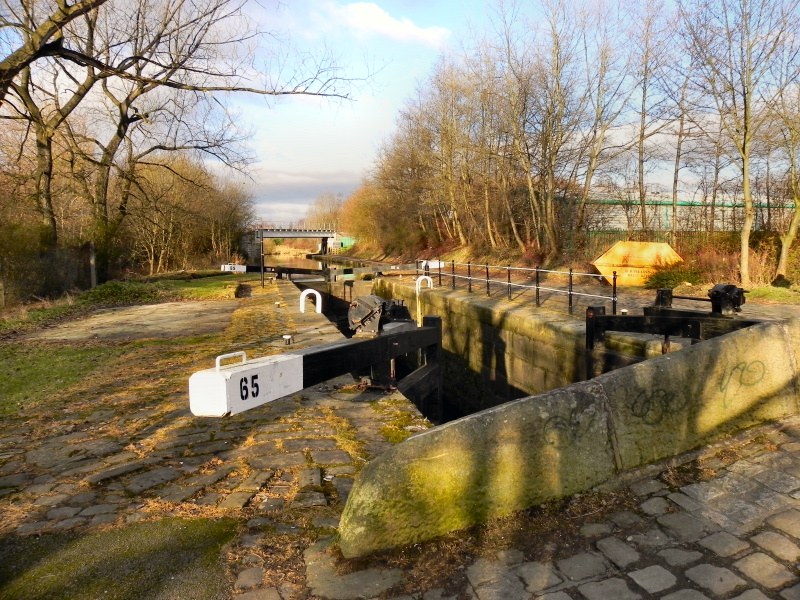
The second was Wanda Skala, 17, who worked as a barmaid in a hotel. On 19 July 1975, while walking home along Lightbowne Road in Moston, she was hit over the head with a brick, robbed and sexually assaulted. Her body was found partially buried on a building site. The third was Sharon Mosoph, 17, who was walking home from a staff party in March 1976 when Hardy attacked her. She was stabbed and strangled with a pair of tights, and her body was dumped in the Rochdale Canal at Failsworth, where it was found stripped and mutilated.
The three murders were not immediately linked. It was only when Hardy was arrested that the connection became clear — and with it, the answer to what had happened to Janet Stewart, whose disappearance had been a mystery since the last night of 1974.
Arrest and Conviction
Hardy was arrested in August 1976 for the murders of Skala and Mosoph. A 21-year-old woman named Christian Campbell, who had survived an attack by Hardy, had given police crucial information that helped lead them to him. Once in custody, Hardy confessed to both murders — and then, unprompted, to the killing of Janet Stewart, whose fate had been unknown until that moment.
At his trial he dismissed his own barrister and tried to plead guilty to manslaughter on the grounds of diminished responsibility. The plea was refused, and the jury found him guilty of all three murders; the verdict is dated to 1977 in some accounts. On 2 May 1978, at Manchester Crown Court, he was sentenced to three terms of life imprisonment, with a minimum term of thirty years. That minimum was later replaced by a whole-life tariff, upheld by the High Court in June 2008, meaning he would never be released.
Hardy spent the next 34 years in prison, most of them at HMP Wakefield. On 23 September 2012 he collapsed in his cell after suffering a heart attack, and he died in hospital two days later, on 25 September, aged 67. He had been in prison for 35 years — one of the longest periods served by any prisoner in England and Wales.
The Unanswered Question
One question was never resolved. In 1971, days after Hardy was released from an earlier prison sentence, a young woman named Dorothy Leyden was murdered in Manchester. Her case remains unsolved, and detectives who worked on the Hardy case suspected he was responsible, but he was never charged with her murder and the suspicion was never proven. It is the one part of the story that has no ending — a fourth death, in the same city, that may or may not belong to the same man.
The three girls Hardy was convicted of killing — Janet Stewart, Wanda Skala and Sharon Mosoph — were all teenagers, all walking home alone, all in the part of Manchester where he lived. Their families waited between two months and two years for answers. The case is remembered in Manchester not only for the killings themselves but for the way a missing girl could vanish for almost two years before anyone knew she was dead.
What Is Documented — and What Is Not
Documented: Trevor Joseph Hardy was born on 11 June 1945 and died on 25 September 2012, aged 67. He murdered three teenage girls in north Manchester: Janet Lesley Stewart, 15, stabbed to death on 31 December 1974 and buried in a shallow grave in Newton Heath; Wanda Skala, 17, killed on 19 July 1975 on Lightbowne Road, Moston, after being struck with a brick, robbed and sexually assaulted; and Sharon Mosoph, 17, killed in March 1976 and found in the Rochdale Canal at Failsworth. He was arrested in August 1976 for the murders of Skala and Mosoph and confessed to all three killings, including Stewart’s, whose fate had been unknown. He was convicted of three murders, the verdict dated to 1977, and on 2 May 1978 at Manchester Crown Court he was sentenced to three terms of life imprisonment with a minimum of 30 years, later replaced by a whole-life tariff upheld by the High Court in June 2008. He collapsed with a heart attack in his cell at HMP Wakefield on 23 September 2012 and died in hospital two days later.
Not documented / unverified: Some accounts date Hardy’s conviction to 1977 and others to the sentencing on 2 May 1978; the verdict and the sentencing were separate events. Wanda Skala’s age is given as 17 in most accounts and 18 in one. Janet Stewart’s name is rendered as “Janet Lesley Stewart” in some sources and “Lesley Jane Stewart” in others. The date of Sharon Mosoph’s murder is given as 8 March 1976 in the record of the case, but some accounts give only the month. Dorothy Leyden, murdered in 1971, is suspected by some detectives of having been a fourth victim, but the case is unsolved and Hardy was never charged with it. The role of Christian Campbell, who survived an attack and gave police information, is described in some accounts as crucial to the arrest and in others only briefly.