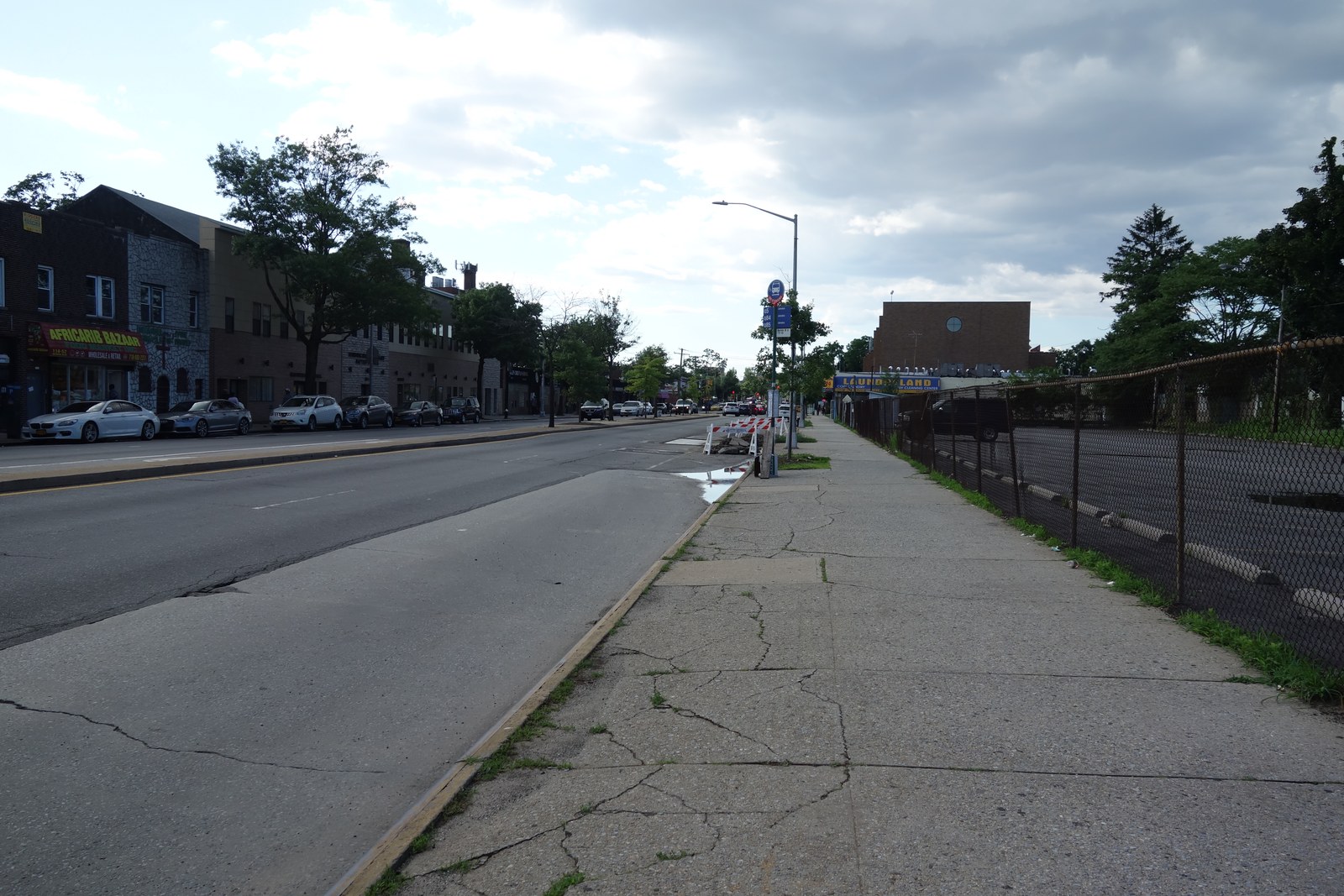
On the evening of 30 October 2002, Jason William Mizell — known to the world as Jam Master Jay, the DJ of the pioneering hip-hop group Run-DMC — was inside his recording studio on Merrick Boulevard in Jamaica, Queens, when armed men entered the building and opened fire. Mizell, 37, was shot in the head at close range and pronounced dead at the scene. Another man in the studio was shot in the leg and survived.
The murder of one of hip-hop’s most beloved figures became one of New York City’s most high-profile unsolved cases. For nearly two decades, no one was charged. Witnesses would not talk. Leads went nowhere. It was not until August 2020 — eighteen years after the shooting — that federal prosecutors indicted two men. In February 2024, both were convicted. But the case has not ended there. In December 2025, a federal judge overturned one of the murder convictions, and in April 2026 a third man pleaded guilty to his role in the killing. More than twenty-three years after the shots were fired, the case is still moving through the courts.
The DJ
Jason Mizell was born in 1965 and grew up in Hollis, Queens. As the DJ of Run-DMC, alongside Joseph Simmons and Darryl McDaniels, he helped take hip-hop from the streets of New York to the top of the charts around the world. Run-DMC were the first rap group to have a gold album, the first to have a platinum album, and the first to appear on the cover of Rolling Stone. Mizell’s turntable work — the scratches and cuts that drove songs like “Walk This Way” and “It’s Tricky” — made him one of the most respected DJs in the music.
By 2002, Run-DMC’s commercial peak had passed, but Mizell was still a central figure in Queens. He ran a recording studio, 24/7 Studio, on Merrick Boulevard, where he worked with young local artists and mentored teenagers from the neighbourhood. He was, by every account, a man who had stayed close to his roots, and who was trusted by the community around him.
The night of the shooting
At around 7:30 p.m. on 30 October 2002, two armed men entered the studio building. Prosecutors later said they had been let in through a locked fire-exit door by a third man, Jay Bryant, who was inside the building. Mizell was shot in the head at close range. Urieco Rincon, another man in the studio, was shot in the leg and survived.
The police investigation stalled almost immediately. People who had been in the building gave conflicting accounts. Some said the attackers wore masks. Others said they recognised them. The security camera was reported to have had problems. No one was arrested, and no one was charged. The case joined the murders of Tupac Shakur and the Notorious B.I.G. as one of the great unsolved killings in hip-hop history.
For years, two names circulated in connection with the case: Ronald Washington, a childhood friend of Mizell’s, and Karl Jordan Jr., Mizell’s own godson. Both were known to investigators, and both were suspected of involvement. But there was not enough evidence to charge them, and the case stayed cold.
The breakthrough
The case broke in August 2020, when federal prosecutors in Brooklyn indicted Washington and Jordan for Mizell’s murder. Prosecutors alleged that the killing had grown out of a dispute over a cocaine distribution arrangement: Mizell had obtained about ten kilograms of cocaine on consignment, intended for sale in Maryland, and had cut Washington and Jordan out of the deal. They alleged that the two men had killed him in retaliation.
The trial opened in federal court in Brooklyn in early 2024. Prosecutors argued that Jordan, Mizell’s godson, had fired the fatal shots, while Washington had participated in the attack. Witnesses placed Jordan at the scene. On 27 February 2024, a federal jury convicted both men of murder while engaged in a narcotics trafficking conspiracy and firearm-related murder. It looked, at last, like the case had been closed.
It had not. On 19 December 2025, U.S. District Judge LaShann DeArcy Hall overturned Jordan’s murder convictions, ruling that prosecutors had not presented sufficient evidence to prove the government’s theory — that Jordan had participated in the killing as retaliation for the disputed drug transaction. The judge called the motive theory, as it applied to Jordan, unsupported by the evidence, and granted Jordan a judgment of acquittal, while conditionally denying his motion for a new trial. She upheld Washington’s conviction, finding the evidence against him legally sufficient. Federal prosecutors challenged Jordan’s acquittal, and Jordan was ordered released in April 2026, while still facing separate drug charges. Washington has continued to challenge his own conviction through the courts.
The third man
A third defendant, Jay Bryant, had been charged in May 2023, after his DNA was found on a hat at the scene, and added to the murder indictment. His trial was scheduled separately. On 27 April 2026, Bryant pleaded guilty in a Brooklyn federal courtroom to his role in Mizell’s murder. He told the court: “On October 30th, 2002, in Queens, New York, I helped them kill Jason Mizell by helping them gain entry into the recording studio.” He said he had opened the locked fire-exit door, allowing Washington and Jordan to enter without Mizell seeing them approach. He did not identify the gunmen by name. The judge said she would recommend an agreed sentence of 15 to 20 years in prison, with credit for time already served.
Bryant’s plea capped one of the longest-running murder investigations in hip-hop history. More than twenty-three years after the killing, prosecutors had a conviction that stood, a conviction that had been overturned, and a guilty plea from the man who had opened the door.
What remains
The Jam Master Jay case was solved, in the sense that men were charged, tried, and convicted. But it has not produced the clean ending that the 2024 verdicts seemed to promise. One of the two convicted men has had his murder conviction overturned by a judge who found the prosecution’s motive theory unproven. The other is challenging his conviction. And the third man pleaded guilty only in 2026, nearly a quarter of a century after the shooting.
The case is also a record of how long justice can take, and of what it costs. For eighteen years, no one was charged at all. Witnesses who might have helped were afraid to talk. The investigation depended, in the end, on federal prosecutors and a drug-conspiracy theory that a judge later found insufficient as to one defendant. The family of Jason Mizell has waited more than two decades for a final answer, and the answer is still being argued in court.
For the community in Queens, the case has never been only about a murder. Jam Master Jay was a neighbourhood figure, a mentor, and a pioneer, and his killing was felt as a loss that went beyond one man. The studio on Merrick Boulevard is gone, but the music he made with Run-DMC is still played, and the question of who killed him — and why — has been argued over for a generation. The courts have now given part of an answer. Whether it is the whole answer is still, as of 2026, an open question.
What is documented — and what is not
Documented: Jason William Mizell, 37, known as Jam Master Jay, DJ of Run-DMC, was shot dead at his 24/7 recording studio on Merrick Boulevard in Jamaica, Queens, on the evening of 30 October 2002, at about 7:30 p.m. Another man in the studio, Urieco Rincon, was shot in the leg and survived. No one was charged for eighteen years. In August 2020, federal prosecutors indicted Ronald Washington and Karl Jordan Jr. for the murder, alleging a dispute over about ten kilograms of cocaine intended for sale in Maryland. On 27 February 2024, a Brooklyn federal jury convicted both men of murder while engaged in a narcotics trafficking conspiracy and firearm-related murder. On 19 December 2025, Judge LaShann DeArcy Hall overturned Jordan’s murder convictions for insufficient evidence of motive, while upholding Washington’s conviction. Jay Bryant, charged in May 2023, pleaded guilty on 27 April 2026 to helping the gunmen enter the studio, and faces an agreed sentence of 15 to 20 years. Federal prosecutors have challenged Jordan’s acquittal.
Unverified or unproven: That the killing was motivated by the disputed cocaine transaction is the prosecution’s theory; a federal judge found it was not sufficiently proven as to Karl Jordan Jr., and Jordan’s acquittal is under appeal. That Jordan fired the fatal shots is the prosecution’s case, not a finding that has survived judicial review. Whether other people were involved in planning the killing beyond the three men charged has not been established. Early accounts of masked or unidentified attackers were never reconciled with the later prosecutions.
Sources
- https://crimesolverscentral.com/homicide/113200
- https://thesource.com/2026/10/30/today-in-hip-hop-history-run-d-m-c-s-jam-master-jay-was-shot-and-killed-in-his-queens-studio-24-years-ago/
- https://christiannewsalerts.com/third-suspect-admits-role-in-jam-master-jay-killing-nearly-25-years-after-hip-hop-icon-was-gunned-down/
- https://mixmag.asia/read/conviction-overturned-judge-murder-run-dmc-jam-master-jay-news
- https://blackamericaweb.com/playlist/jam-master-jay-killing-convicted-murderers-karl-jordan-jr-ronald-washington/