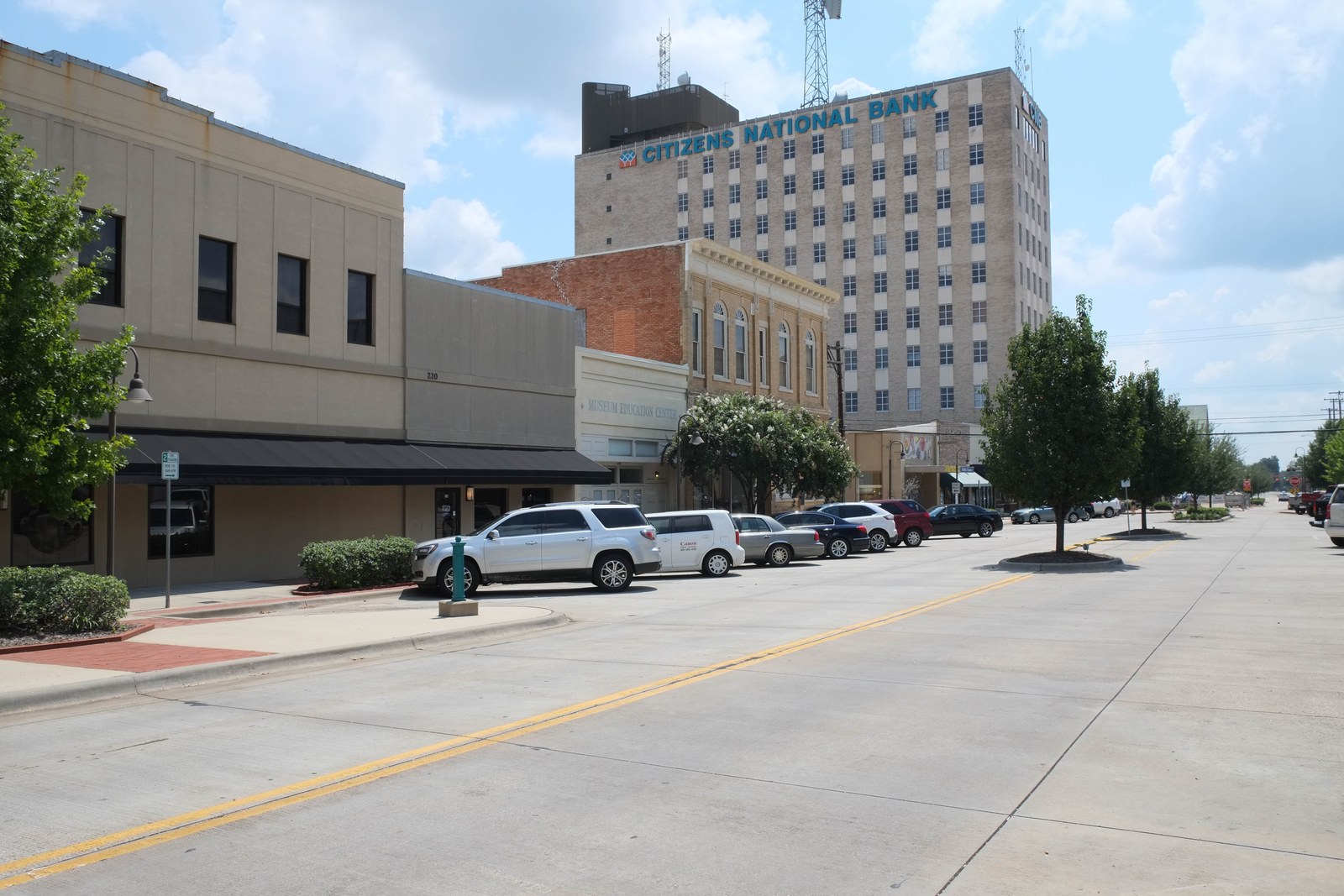
On Christmas Eve 2010, in the driveway of a house in Longview, Texas, a 42-year-old woman named Lori Erica Ruff died by suicide. She was, by every account, a private person, a woman who kept to herself, who had few friends, and who had never spoken about her past. Her husband, Blake Ruff, had moved back into his parents’ house, and the marriage was ending. Lori lived in a small town nearby, Leonard, Texas, with their young daughter. On the day she died, she drove to Longview, to the house where her husband was living, and she took her own life in her car, in the driveway.
It was a tragedy, and it would have ended there, as a private grief for a private family, if not for what the family found after she was gone. In Lori’s closet, in a locked box, they found documents that did not add up. There was a birth certificate, a Social Security card, and a collection of papers that belonged, not to Lori Erica Ruff, but to a dead child. The woman they had known as Lori had never been who she said she was. She had invented herself, and she had done it so thoroughly that no one in her life, not her husband, not his family, not her friends, had ever suspected. The question was not who had killed her. The question was who she had been.
A life built from nothing
Lori Erica Ruff was born, as the world would eventually learn, as Kimberly Maria McLean, on 16 October 1968, in Philadelphia, Pennsylvania, in the suburb of Wyncote. Her parents were James McLean and Deanne McLean, née Cassidy. She grew up in a comfortable home, and she was, by her family’s account, a bright, artistic girl. But in the fall of 1986, at the age of 18, after her parents’ divorce, and after a period of friction with her mother and her stepfather, she left home. She told her family she was going to live with a friend. She never came back, and she never contacted them again.
Within two years, she had built a new identity, from the ground up, using the oldest trick in the book of false identities. She obtained the birth certificate of a child who had died young: Becky Sue Turner, a two-year-old girl who had died with her two sisters in a house fire in Fife, Washington, in 1971. A dead child’s birth certificate is, or was, one of the easiest documents in America to obtain, and it is the foundation of a false identity, because a dead child has no credit history, no school records, and no one to contradict the claim. With the birth certificate, Lori obtained an Idaho identification card, and then, in Texas, she legally changed her name to Lori Erica Kennedy. The name was her own invention. The identity was, from that moment on, hers.
She moved to Texas, and she lived there for more than twenty years. She married Blake Ruff, a young man from a well-off Longview family, and they had a daughter. She was, by all accounts, a devoted mother, and a woman who kept her past entirely to herself. She had no photographs of her childhood. She had no family. She had no stories about where she came from. Her husband’s family accepted her, and they did not ask questions, until the day she died, and they found the box.
The search for a name
After Lori’s death, her husband’s family wanted to know who she had been, and they wanted to know why. They contacted a Social Security Administration investigator named Joe Velling, in September 2011, and they asked him to help them find out who Lori really was. Velling took the case, and he worked on it for years, following the paper trail of the false identity, and finding, again and again, that the trail ended at a dead child in Washington, and at a name that had been legally changed in Texas. The paper trail could not tell him who she had been before she became Lori.
In 2013, the Seattle Times published a long feature about the case, written by Maureen O’Hagan, and the story became famous around the world. Online sleuths took up the case, and they spent years trying to identify Lori, comparing photographs, searching databases, and following leads that went nowhere. The case became one of the most famous unidentified-person cases in America, not because Lori had been murdered, but because she had erased herself so completely that no one could find her.
The breakthrough came from a woman named Colleen Fitzpatrick, a forensic genealogist and a former nuclear physicist, who had learned about the case in 2013 and had decided to take it on. Fitzpatrick understood that the answer was not in the paper trail, but in the DNA. She obtained a sample of Lori’s DNA, indirectly, by testing her husband and her daughter, and by a technique called phasing, in which the husband’s DNA is subtracted from the daughter’s DNA, leaving the mother’s genetic profile. With that profile, she searched the databases of direct-to-consumer DNA testing companies, looking for a relative, however distant, who shared Lori’s DNA.
It took more than two years. In the end, Fitzpatrick found a third cousin, a man whose family name was Cassidy, and who was related to Lori through her mother’s side. From that single match, she built a family tree, working backwards through the generations, until she found a family in Pennsylvania, in the suburbs of Philadelphia, with a daughter who had left home in 1986 and never come back. The daughter’s name was Kimberly Maria McLean.
In September 2016, six years after Lori’s death, Velling flew to Pennsylvania, and he met with Kimberly’s family. A relative recognised her immediately, from a photograph. Her mother took a DNA test, and the test confirmed it: Lori Erica Ruff was Kimberly Maria McLean. The case was closed. The woman who had erased her own name had been found.
What we still do not know
The identification of Lori Erica Ruff answered the question of who she was, but it did not answer the question of why. Why did an 18-year-old girl from a comfortable home in Pennsylvania leave, and build a new identity, and never contact her family again? Why did she choose the name of a dead child, and why did she keep the secret for twenty-four years, even from her husband, even from the family she had married into? Her family has said that they do not know, and that they may never know. Kimberly’s mother has said that she does not blame her daughter, and that she is grateful to know, at last, what happened to her. But the reason for her flight remains a mystery, and it is likely to remain one.
There are theories. Some have suggested that Kimberly was running from an abusive home, or from a trauma she never spoke about. Others have suggested that she was simply a young woman who wanted to start over, and who chose the most complete way of doing it. None of these theories has ever been confirmed, and none of them can be confirmed, because the only person who knew the answer is dead. The case of Lori Erica Ruff is, in the end, a case about identity, and about the lengths to which a person will go to escape the life they were born into. It is also a case about the power of genetic genealogy, and about the way in which a single DNA match, and a single determined investigator, can solve a mystery that paper alone could never solve.
Lori Erica Ruff was not murdered. She died by her own hand, on Christmas Eve 2010, in a driveway in Longview, Texas, at the age of 42. The “solved” part of her story is not her death, but her identity. For six years, she was a woman without a name, a woman whose past was a locked box in a closet. Today, we know who she was. We know where she came from. We know that she was loved, and that she was missed, and that her family spent twenty-four years wondering what had happened to her. What we do not know, and what we may never know, is why she left, and why she never came back.
What is documented — and what is not
Documented: Lori Erica Ruff was born Kimberly Maria McLean on 16 October 1968 in Philadelphia (Wyncote), Pennsylvania, to James and Deanne McLean (née Cassidy). She left home in the fall of 1986, aged 18, after her parents’ divorce. She obtained the birth certificate of Becky Sue Turner, a two-year-old who died in a house fire in Fife, Washington, in 1971, used it to obtain an Idaho ID, moved to Texas, and legally changed her name to Lori Erica Kennedy. She married Blake Ruff and had a daughter. She died by suicide on 24 December 2010 in the driveway of her former in-laws’ home in Longview, Texas, aged 42. A lockbox found in her closet after her death revealed the falsified identity. Her husband’s family sought help from Social Security Administration investigator Joe Velling in September 2011. The Seattle Times published a feature on the case in 2013. Forensic genealogist Colleen Fitzpatrick identified her in September 2016 using DNA from her husband and daughter, phasing, and a third-cousin match on the Cassidy side; her mother’s DNA test confirmed the identification.
Unverified or unproven: Why Kimberly McLean left home and built a new identity is unknown; no letter, diary or statement from her explaining her reasons has ever been found. Theories about abuse, trauma or a desire to start over are speculation. The exact date of her marriage to Blake Ruff and the birth year of her daughter are not stated here because they were not confirmed in the sources consulted.
Sources
https://en.wikipedia.org/wiki/Lori_Erica_Ruff
https://www.grunge.com/340317/the-bizarre-truth-about-lori-ruff-the-woman-without-an-identity/
https://www.seattletimes.com/seattle-news/lori-erica-ruff-identified-as-kimberly-mclean/
https://www.dnadoeproject.org/case/lori-erica-ruff/