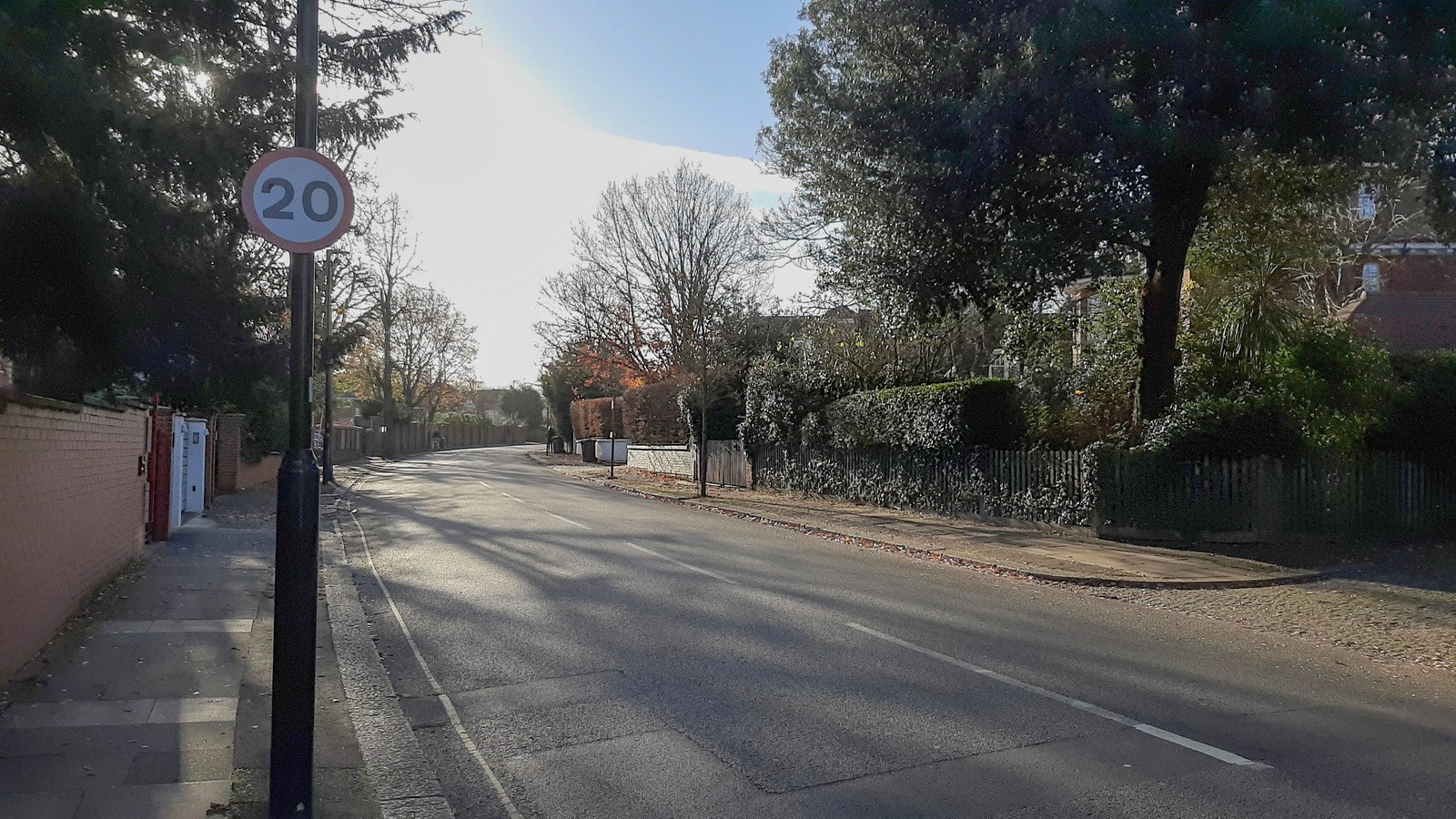
On the evening of 29 December 1969, Alick McKay came home to his Wimbledon house and found the front door unlocked, the telephone torn from the wall, and his wife’s handbag scattered across the stairs. Muriel McKay was gone. Within hours, a caller demanding £1 million would make clear that this was a kidnapping. But the kidnappers had taken the wrong woman. They had meant to abduct Anna Murdoch, the wife of media proprietor Rupert Murdoch. Muriel McKay, the 55-year-old wife of one of Murdoch’s executives, was seized because she lived in the house the kidnappers thought was the Murdochs’ — and because her husband was using the Murdochs’ car. She was never seen alive again.
A life in Adelaide and London
Muriel Freda McKay was born on 4 February 1914 in Adelaide, South Australia. She and her husband Alick were both born and raised in Adelaide. In 1958 they moved to London for Alick’s work as a newspaper executive with Rupert Murdoch’s News Limited, where he became Murdoch’s deputy. They settled at St Mary’s House on Arthur Road in Wimbledon. Their three adult children were Jennifer, Dianne and Ian.
She had reason to be cautious about her safety: three months earlier, jewellery had been stolen in a burglary at the house. That caution was not enough. On 29 December, while her husband was at work, intruders entered the house and took her. When Alick returned at 7:45 pm and found the house empty, he reported her missing at 8 pm.
The wrong target
The kidnappers were two brothers, Arthur and Nizamodeen Hosein. Arthur, 34, was a tailor in Hackney, born in Trinidad; Nizamodeen, 22, was his youngest sibling, who had been working as a labourer on the farm Arthur had bought. The brothers had decided to kidnap Anna Murdoch after watching her husband being interviewed on television on 3 October 1969 about his recent purchase of the News of the World and The Sun newspapers.
Their plan went wrong at the first step. They followed Murdoch’s chauffeured Rolls-Royce to the house in Arthur Road, assuming it was the Murdoch family residence. In fact, Murdoch had lent the car to Alick McKay for a few weeks while he and his wife were in Australia. When they broke in on 29 December, they took Muriel McKay instead of Anna Murdoch. They telephoned Alick and told him: “We tried to get Rupert Murdoch’s wife. We couldn’t get her so we took yours instead. You have a million by Wednesday night or we will kill her.” The mistake did not make them release her. It made her a substitute hostage.
Forty days of calls and letters
After the telephone was repaired at 1 am, a caller identifying himself as “M3” — said to stand for “Mafia 3” — contacted the house and demanded a £1 million ransom. Over the next forty days, M3 made eighteen further calls and sent three letters, postmarked in Tottenham or Wood Green, demanding the money and repeatedly threatening to kill Muriel. Five letters written by Muriel herself, pleading for compliance, were enclosed as proof that she was alive, along with three pieces cut from her clothing.
Two attempts to deliver half the ransom failed. The first, on 1 February 1970, asked Ian McKay to bring £500,000 to the A10 crossroads; a policeman went in his place, and the drop was abandoned because of a large police presence. For the second attempt, on 6 February, the kidnappers asked for Dianne to make the drop. Following M3’s instructions, two disguised police officers, instead of Dianne, placed the ransom — two lots of £500,000, mostly fake banknotes — in two suitcases and left them at a telephone box in Church Street, Tottenham.
At 4 pm, M3 rang and sent the officers on a trail of telephone boxes — first to Bethnal Green, then by Underground to Epping, then by taxi to a used car yard in Bishop’s Stortford, where they were to leave the cases next to a minivan on the forecourt. Police surveillance noted a blue Volvo with a broken tail-light, registration XGO 994G, passing the garage slowly four times between 8 pm and 10:30 pm, and again at 10:47 pm carrying two men. But a local couple noticed the suitcases, and the husband reported them to the local police, who were unaware of the drop-off and took the cases to Epping police station. The ransom was never paid.
The Volvo and Rooks Farm
The investigation soon shifted to the blue Volvo, which was registered to a man at Rooks Farm near Stocking Pelham in Hertfordshire. Reviewing earlier reports, police noted that witnesses had described a dark-coloured Volvo saloon driving near Arthur Road in the hours before Muriel McKay’s disappearance, and another had reported it parked in the McKay driveway at around 6 pm.
It was raided by police at 8 am on 7 February 1970. The owners were Arthur Hosein and his German-born wife, Elsa; Nizamodeen also lived there. Inside the farmhouse, investigators found a notebook with torn pages that matched the tear patterns in the ransom letters. Twine and a matching roll of tape were recovered. Arthur’s fingerprints matched those found on the ransom letters and on a newspaper recovered from the McKay house, and Nizamodeen’s voice matched recordings of M3 when tested on the telephone. But there was no trace of Muriel McKay at the farm, even after several weeks of searching.
Trial without a body
The Hosein brothers were sent to trial on 14 September 1970 at the Old Bailey. At trial it emerged that Arthur had been experiencing financial difficulty after buying Rooks Farm in May 1968. Throughout the case, each brother attempted to place responsibility on the other, although it was soon established that Arthur was the dominant sibling. The prosecution’s case rested on the fingerprints, the notebook, the twine and tape, the voice identification, the Volvo, and the ransom letters — a chain of physical evidence that pointed to the brothers even though the victim herself could not be found.
On 6 October 1970, the Hoseins were convicted of murder, kidnapping and blackmail. It was one of the earliest murder convictions in the United Kingdom without a body. When imposing life sentences on both men, plus 25 years in Arthur’s case and 15 in Nizamodeen’s, the trial judge, Mr Justice Shaw, said their “conduct was cold-blooded and abominable.”
The aftermath
The brothers were sent to prison, where they attempted to appeal their sentences in March 1971 and failed. Arthur unsuccessfully applied for parole in November 1987 and September 1994, and died at Ashworth Secure Hospital in 2009. Nizamodeen served twenty years and was deported to Trinidad following his release.
The search that never ended
The trial was not an ending for the family: their mother had never come home, and no grave existed to visit.
In 2021 it was reported that Nizamodeen had told a lawyer that Muriel McKay died of a heart attack shortly after the kidnapping, and had provided details of where her body lay at the farm. His account prompted a search in 2022, which proved unsuccessful; he alleged police had excavated the wrong area, a view later shared by the family. In November 2023, he asked to be allowed to return to the United Kingdom to show where he had buried her, and signed a £40,000 settlement with the family to reveal the site — then declined the money and freely described how and where she had died.
In January 2024, the Home Office refused to allow Nizamodeen to return to Britain. Dianne and her son Mark travelled to Trinidad on 27 January 2024 to interview him, and said he had disclosed the exact location of the burial. In March 2024, police interviewed him in Trinidad over three days, and afterwards told the family he had been “unable to provide a location with any consistency.” A new search ran from 15 to 22 July 2024, covering an area three times the size of the original search zone, and found nothing.
In June 2025, the family offered the original £1 million ransom as a reward for evidence leading to the recovery of her remains. Three new leads emerged, including one pointing to Bethnal Green. On 10 November 2025, the High Court formally declared her dead, with a presumed time of death of 11:59 pm on 31 December 1969. More than fifty-five years after she was taken from Arthur Road, her family was still searching.
Why the case still matters
The kidnapping of Muriel McKay is a case about a mistake that changed everything. The Hosein brothers set out to kidnap one of the most famous women in Britain and instead took a 55-year-old woman whose only connection to their target was her husband’s job and a borrowed car. The £1 million they demanded was never paid, and the woman at the centre of it all was never found. Yet the case made legal history: a murder conviction without a body, built on fingerprints, torn paper, twine, a voice on a recording and a blue Volvo with a broken tail-light. And it left a family with a grief that could not be closed, because there was no body to bury and no place to mourn. The ransom was about money. The search, in the end, was about bringing Muriel McKay home.
What is documented — and what is not
Documented: Muriel McKay, 55, was abducted from her home on Arthur Road, Wimbledon, on 29 December 1969, after being mistaken for Anna Murdoch. The Hosein brothers demanded a £1 million ransom in eighteen further calls and three letters over forty days. Two ransom drops, on 1 February and 6 February 1970, failed. Fingerprints, a notebook with matching torn pages, twine, tape and voice identification linked the brothers to the crime. Arthur and Nizamodeen Hosein were convicted of murder, kidnapping and blackmail at the Old Bailey on 6 October 1970, receiving life sentences plus 25 and 15 years respectively. Her body has never been found. On 10 November 2025, the High Court formally declared her dead, with a presumed time of death of 11:59 pm on 31 December 1969.
Not documented or disputed: The exact circumstances of Muriel McKay’s death were never established in court. Nizamodeen Hosein has at different times denied knowledge of the kidnapping and claimed she died of a heart attack shortly after being taken, giving varying accounts of where she was buried; police have said he has been unable to provide a location with consistency, and his claims should be treated as unproven. Suggestions about her remains being fed to guard dogs or pigs are speculation, not established fact. The June 2025 lead suggesting her remains were moved to Bethnal Green is unverified.
Sources
- https://en.wikipedia.org/wiki/Murder_of_Muriel_McKay
- https://www.radiotimes.com/tv/documentaries/true-crime/the-wimbledon-kidnapping-true-story-muriel-mckay/
- https://www.perspectivemedia.com/muriel-mckay-would-like-to-come-home-as-family-bid-to-scan-garden-for-remains/
- https://www.thefreelibrary.com/Mission+to+find+kidnap+case+victim.-a0865083684