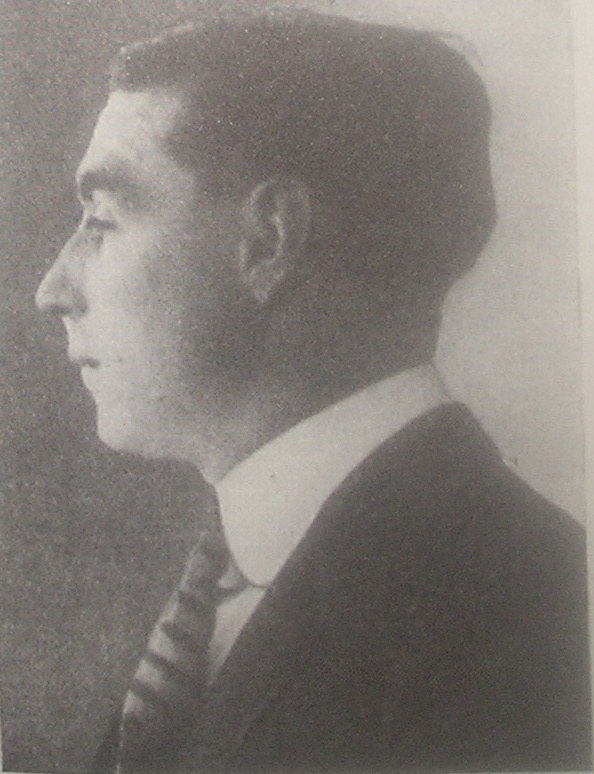
Owney Madden was one of the few gangsters of his generation to die in bed. Born in an English mill town, raised in the slums of Hell’s Kitchen, shot eleven times before his twenty-first birthday and imprisoned for manslaughter, he went on to run the most famous nightclub in America and to become one of the richest men in the New York underworld. Then, when the heat grew too much, he walked away from it all and spent his last thirty years in a quiet Arkansas spa town. He died of emphysema in 1965, aged 73, a respectable citizen with a violent past that no one in Hot Springs cared to mention.
The Killer of Hell’s Kitchen
Owen Vincent Madden was born in Leeds, England, on 18 December 1891, to Irish parents. The family emigrated to New York in 1902 and settled in Hell’s Kitchen, the tough Irish neighbourhood on Manhattan’s West Side. As a boy, Madden fell in with the Gopher Gang, the street gang that ruled the area. By the age of 21, he was its leader.
He earned the nickname “The Killer” early. By the time he was 19, he was suspected of killing as many as five members of a rival gang, the Hudson Dusters. In February 1912, he shot a store clerk named William Henshaw on a crowded trolley, after an argument over a young woman. Henshaw lived long enough to name Madden as his killer, but the other passengers would not testify, and Madden walked free.
The Dusters tried to settle the score. On 6 November 1912, three of them surrounded Madden outside the Arbor Dance Hall on 52nd Street and shot him eleven times. Doctors removed six bullets from his body and left five where they were. Madden survived, and within days, six of the men who had tried to kill him were dead.
Sing Sing
Madden’s luck ran out in November 1914. He had been feuding with William “Little Patsy Doyle” Moore, a Duster who had been waging a campaign against the Gophers for three years. On 28 November, Madden ambushed Moore and killed him. This time there was a trial. In May and June 1915, a jury refused to convict him of first-degree murder, which would have sent him to the electric chair, and instead found him guilty of manslaughter. He was sentenced to twenty years at Sing Sing prison in Ossining, New York.
He served seven years, at Sing Sing and at Auburn, and was paroled in 1923. He came out of prison a legend in the underworld — and into a city transformed by Prohibition. The Gopher Gang was gone, but the money to be made from illegal beer and liquor was enormous, and Madden knew how to make it.
The Cotton Club
With his former rival turned partner George “Big Frenchy” DeMange, Madden bought the Club Deluxe, a nightclub on Lenox Avenue in Harlem, from the former heavyweight champion Jack Johnson. They rebuilt it and reopened it as the Cotton Club, which became the most famous nightclub in America. Its orchestra was led by Duke Ellington, and its stage launched the careers of Lena Horne, Cab Calloway and others. The club’s audiences were white; its performers were Black. That was the rule of the house, and it was Madden’s rule.
Madden’s interests spread far beyond one club. He ran a large brewery, promoted boxers, and backed the film careers of George Raft and Mae West. He was, by the early 1930s, one of the most powerful men in New York’s underworld, and one of the richest. He was also, by all accounts, a generous man in his own way: during the Depression, the Cotton Club fed hundreds of families every winter.
In 1932, he was caught up in the murder of Vincent “Mad Dog” Coll, a young gangster who had been extorting money from Madden and others. Coll was killed in a phone booth in February 1932; Madden was never charged, and his exact role has never been established. That same year, in a crackdown on organised crime ordered by Governor Franklin D. Roosevelt, Madden was sent back to Sing Sing for a parole violation. He was released after a year.
Hot Springs
By 1935, Madden had had enough of New York. He moved to Hot Springs, Arkansas, a resort town whose corrupt local government made it a haven for gangsters, gamblers and bootleggers. He bought into the town’s hotels and casinos, married Agnes Demby, the daughter of the city postmaster, and became a naturalised American citizen in 1943. He lived quietly, played golf, and minded his health, which had never recovered from the bullets still lodged in his body.
He stayed in Hot Springs for the rest of his life, even after the state government shut down the town’s illegal gambling in the 1960s. He died of chronic emphysema at St Joseph’s Hospital on 24 April 1965, aged 73, and was buried in Greenwood Cemetery. The New York newspapers that had once called him “The Killer” ran his obituary as a curiosity: a gangster who had got out alive.
What is documented — and what is not
Documented: Owen Vincent Madden was born in Leeds on 18 December 1891 and emigrated to New York in 1902. He led the Gopher Gang, shot William Henshaw in February 1912, and survived being shot eleven times on 6 November 1912. He killed William “Little Patsy Doyle” Moore on 28 November 1914 and was convicted of manslaughter in 1915, serving seven years at Sing Sing and Auburn before his parole in 1923. With George DeMange he bought the Club Deluxe from Jack Johnson and reopened it as the Cotton Club. He was returned to Sing Sing for a parole violation in 1932 and released in 1933. He moved to Hot Springs, Arkansas, in 1935, became a United States citizen in 1943, and died of emphysema on 24 April 1965, aged 73.
Unverified or unproven: The number of men Madden killed before his imprisonment — he was suspected in as many as five deaths, but was convicted of only one. His role in the murder of Vincent “Mad Dog” Coll in 1932 — he was linked to it by association, but was never charged and no evidence tied him to the shooting. The exact date of his family’s emigration — most sources say 1902, though some say 1903.