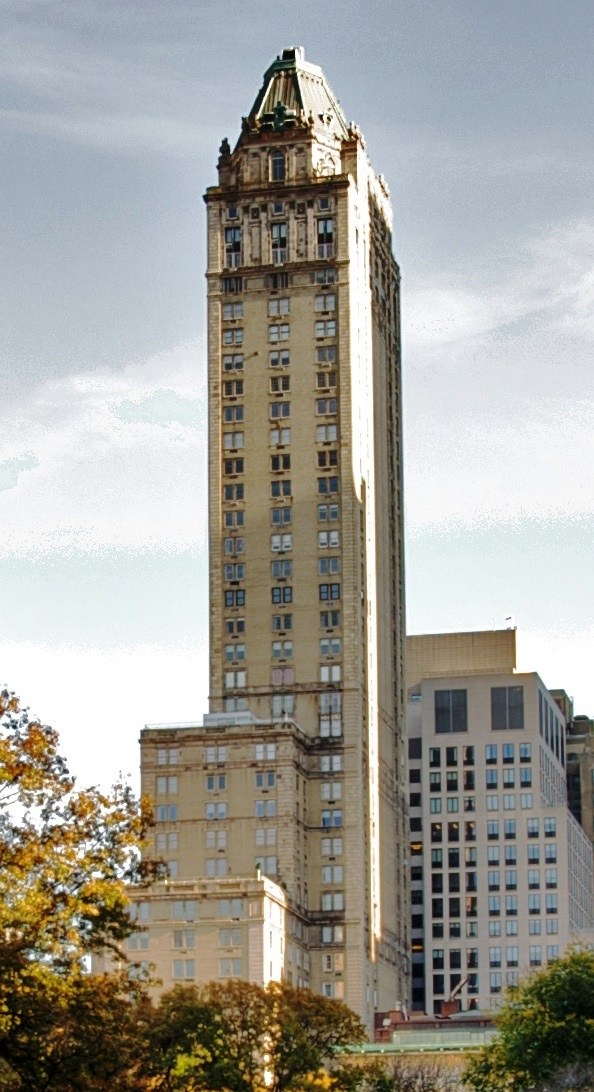
The Pierre Hotel stands at Fifth Avenue and 61st Street in Manhattan, facing Central Park. For almost a century it has been one of New York’s most elegant hotels, the kind of place where wealthy guests keep jewellery and cash in the hotel’s safe-deposit boxes. In the early hours of 2 January 1972, a gang of armed men walked through its doors and, in less than three hours, carried out what the Guinness Book of World Records later listed as the largest and most successful hotel robbery in history.
The reported take was 3 million dollars — worth roughly 27 million dollars in today’s money by some estimates, and considerably more by others. The true total was probably higher. Many of the victims, who included wealthy guests with undeclared valuables in their boxes, are believed to have underreported what they lost. No one was killed. That is part of why the case is remembered as a heist rather than a tragedy, but it should not be forgotten that about two dozen people were held at gunpoint for hours in their own workplace and hotel.
The Planners
The robbery was organised by two professional burglars, Samuel Nalo and Robert “Bobby” Comfort. Both men had long criminal records and a history of robbing New York hotels. They had previously stolen a reported 1 million dollars in cash and jewellery from the actress Sophia Loren at the Sherry Netherland Hotel, and they claimed to have robbed or burgled other grand hotels including the Drake, the Carlyle and the Regency. Nalo was the main planner; Comfort was a major organiser.
They chose the Pierre for a simple reason: on a holiday weekend, in the small hours of the morning, the hotel had only two security guards on duty. The date was deliberate. 2 January was the day after New Year’s Day, when the hotel would be running on a skeleton staff and many guests would be away or asleep.
Nalo and Comfort took the plan to Christie “the Tic” Furnari, a consigliere of the Lucchese crime family, to get the family’s backing and to arrange for the stolen goods to be fenced. Furnari, according to later accounts, demanded a third of the take. Comfort was an associate of the Rochester crime family as well as working with the Lucchese family, and he later fenced some of the jewellery to mobsters in Rochester, New York.
The Night of the Robbery
The gang arrived at the Pierre in three cars at about 3 a.m. — some accounts give the time as 3:50 a.m. — and entered through the 61st Street door. The number of men in the gang is reported as seven or eight, depending on the source. They included Lucchese associate Robert “Bobby” Germaine, whose job was to open the lock boxes; burglar Nick “the Cat” Sacco; Alan Visconti, another Lucchese associate; Ali Ben, a Turkish contract killer; his brother-in-law Al Green; and contract killer Donald “the Greek” Frankos. Sacco, who later entered the federal Witness Protection Program, became the last surviving member of the crew to tell the story publicly.
Inside, the men moved quickly. They seized the security guards, handcuffed staff and guests — about twenty people, by most accounts — and took control of the lobby and the vault area. Then, while some of the gang held the hostages, Nalo, Comfort and Germaine went to work on the safe-deposit boxes. The vault held 208 lock boxes for guests. Using the hotel’s index records, the gang opened a quarter of them, selecting the boxes most likely to hold valuables.
The robbery took about two and a half hours. At about 6:15 a.m., Comfort told the hostages that the gang was leaving and warned them not to tell the police if they could identify anyone, or they would be killed. The gang left in their cars, and the getaway cars and other evidence were later destroyed on the Lucchese family’s instructions. By the time the police were called, the men were gone.
The Aftermath
Stolen jewels were later traced to Detroit and Rochester, New York, but most of the loot was never recovered. The Pierre robbery remains officially unsolved: no one was ever convicted of the robbery itself. Nalo and Comfort were arrested and charged, but the charges that stuck were for possession of stolen property, not for the heist. Each served time for that lesser offence — the length is reported differently in different sources, as either about four years or about 19 months — and both men were dead within two decades. Comfort died of cancer in 1986. Nalo was murdered in 1988.
The other members of the crew scattered. Frankos was later murdered, in 1991 according to some accounts, before he could settle a dispute with Nalo over the division of the loot. Sacco, who cooperated with crime writer Daniel Simone on a book about the heist, The Pierre Hotel Affair, lived for decades in witness protection. He was, by his own account and by the accounts of others, the last man alive who had been inside the Pierre that night.
Why does the case still fascinate? Partly because of the scale: a reported 3 million dollars from a single hotel, taken in a few hours, with no one hurt and almost nothing recovered. Partly because of the setting: the Pierre was not a bank with armed guards, but a hotel whose guests trusted it with their most valuable possessions.
What Is Established, and What Is Not
Documented facts: The robbery took place in the early hours of 2 January 1972 at the Pierre Hotel, Fifth Avenue and 61st Street, Manhattan; the reported take was 3 million dollars in cash, jewellery and other valuables from guest safe-deposit boxes; the gang held about two dozen staff and guests for about two and a half hours and opened about a quarter of the vault’s 208 lock boxes; the robbery was organised by Samuel Nalo and Robert “Bobby” Comfort with backing from Lucchese family associate Christie Furnari; it was listed in the Guinness Book of World Records as the largest hotel robbery in history; no one was convicted of the robbery itself, and Nalo and Comfort served time for possession of stolen property; most of the loot was never recovered.
Unverified or disputed: The exact number of robbers is reported as seven or eight, and the exact number of hostages as 19 to about two dozen. The true value of the loot is disputed: the reported figure is 3 million dollars, but later estimates are much higher, because some victims are believed to have underreported their losses. The length of the sentences served by Nalo and Comfort is reported as four years in some sources and 19 months in others. The detailed membership of the crew and the division of the loot rest largely on the later account of Nick Sacco, the last surviving participant, and on Daniel Simone’s book written with him; those accounts have not been tested in court.