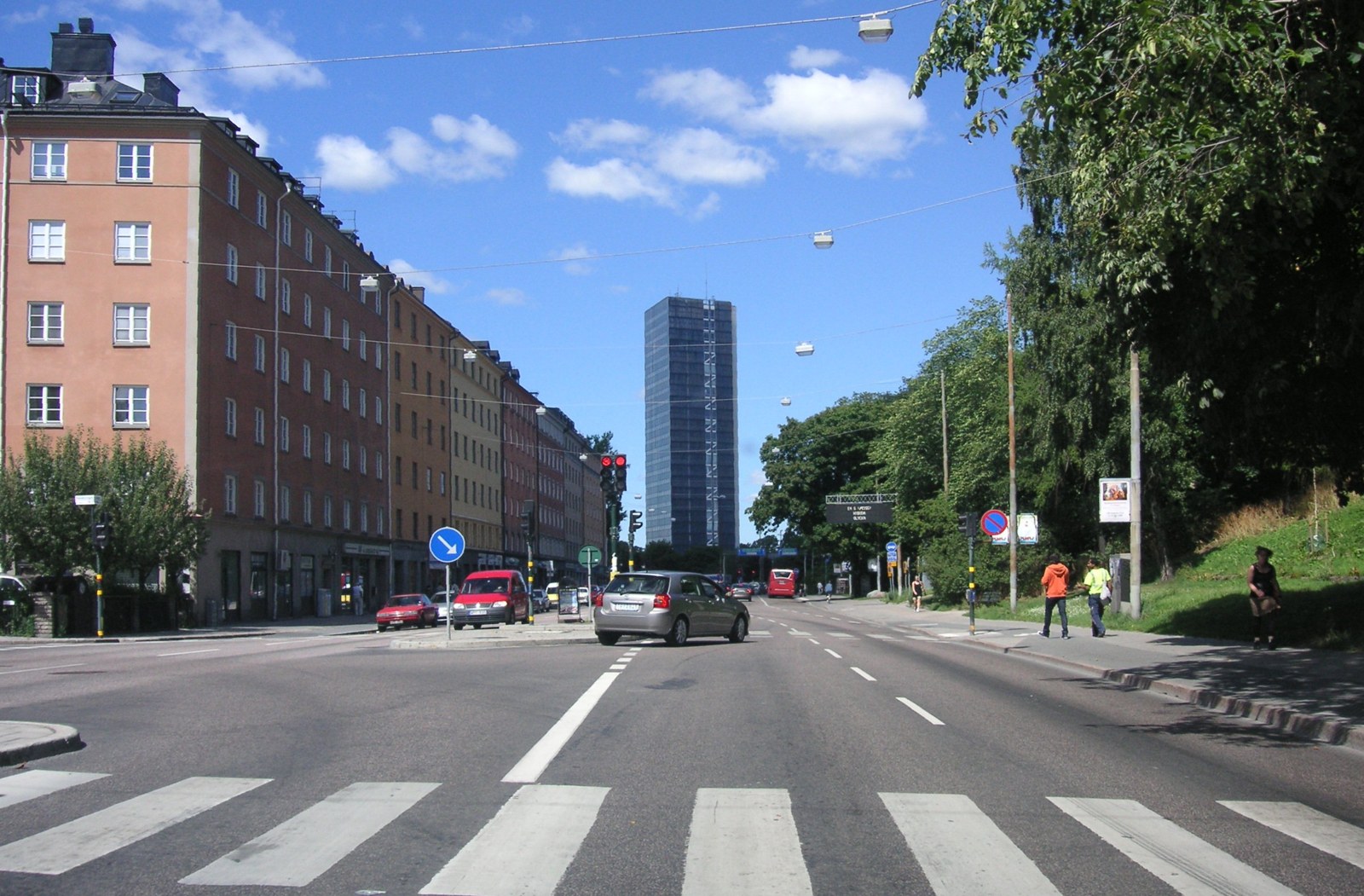
At 23:21 on Friday, 28 February 1986, Olof Palme, the Prime Minister of Sweden, was shot on Sveavägen, a central street in Stockholm, while walking home from the cinema with his wife, Lisbet Palme. He had no bodyguards with him that night. A second shot wounded Lisbet Palme in the back; her injury was superficial, and she survived. Olof Palme died from his wound.
Sweden had not experienced the assassination of a prime minister in modern times, and the murder shocked the country. The investigation that followed — the Palme investigation — became the largest criminal investigation in Swedish history. It ran for 34 years. It ended in 2020 with a prosecutor naming a dead man as the most likely perpetrator, and no conviction. This article presents that record as it stands. It does not endorse any theory about who killed Olof Palme.
The night of 28 February 1986
Palme and his wife had spent the evening at the Grand cinema in central Stockholm, and were walking home along Sveavägen when a man approached from behind and fired. The weapon was a .357 Magnum revolver. Two shots were fired. The murder weapon has never been recovered, and because a revolver was used, no spent cartridge cases were left at the scene. The only physical evidence recovered from the scene was the two bullets, identified as Winchester-Western .357 Magnum rounds.
Palme was 59 years old. He had been prime minister for much of the previous decade and a half, leading the Social Democratic Party, and he was one of Europe’s most internationally prominent political figures. His death was not only a murder; for Sweden, it was the loss of a head of government in peacetime, on a public street, with no warning and no protection.
The investigation
Within hours, Stockholm’s police commissioner, Hans Holmér, personally took charge of the investigation. The early years were marked by a rapid focus on one line of inquiry: that the Kurdish political organisation the PKK had carried out the killing. That line of inquiry collapsed. By 1988, the evidence did not support it, and Holmér resigned under pressure. A parliamentary inquiry later described the early years of the investigation as a failure — witnesses pressured, alternative leads abandoned, evidence mishandled.
A second phase of the investigation began from near scratch, under different officers. Over the decades, the investigation processed between 90,000 and 100,000 lead reports from the public and from police, across more than 130 separate lines of inquiry. Swedish law was amended to prevent the case from expiring under the standard 25-year statute of limitations for murder.
Christer Pettersson
The investigation’s most dramatic chapter concerned Christer Pettersson, a Stockholm man with a criminal record that included a manslaughter conviction in an unrelated case in 1970, and a documented history of carrying weapons. Pettersson was arrested in December 1988. Lisbet Palme identified him in a police lineup as the man she had seen shoot her husband, and he was convicted of the murder at trial.
The conviction did not stand. The Svea Court of Appeal acquitted Pettersson, ruling that a single eyewitness identification made years after the event — without the murder weapon, without supporting physical evidence, and without corroborating testimony — could not sustain a conviction. A petition for a new trial was denied by the Supreme Court of Sweden. Pettersson died on 29 September 2004, legally innocent of the Palme assassination.
The 2020 closure
On 10 June 2020, Chief Prosecutor Krister Petersson — no relation to Christer Pettersson — announced that the investigation was being closed. His conclusion was that Stig Engström, known as the “Skandia Man,” was the most likely suspect. Engström had worked at the Skandia insurance company, whose headquarters stood a short walk from the crime scene.
The prosecutor’s announcement was a naming, not a conviction. No direct evidence was presented linking Engström to the shooting. The prosecutor cited circumstantial points, including Engström’s knowledge of weapons, his associations with circles hostile to Palme, and clothing said to resemble witness descriptions. Because Engström had died on 26 June 2000, no charges could be filed and no court could test the conclusion. The decision to name him was widely criticised, including by journalists and investigators who had worked on the case.
In December 2025, Swedish authorities announced at a press conference that Engström was no longer considered the main suspect, while confirming that the investigation would not be reopened. That development underlines the provisional nature of the 2020 closure: the case was closed without a trial, and the naming of a suspect in those circumstances could not settle the question of who killed Olof Palme.
What remains
Numerous alternative theories about the murder have been proposed over the decades. None of them has resulted in charges, and none of them is endorsed here. What the record establishes is narrower, and it is enough: a prime minister was shot dead on a public street; the murder weapon was never found; one man was convicted and then acquitted; and after 34 years, the investigation was closed by naming a man who had been dead for twenty years.
Olof Palme’s assassination remains, in legal terms, unsolved. It is also a case about the limits of even the most resourced investigation. Sweden spent decades, hundreds of millions of kronor, and the labour of generations of detectives on a single murder — and still could not produce evidence that would stand up in court. The street corner where Palme fell is marked today by a small memorial plaque. The question of who fired the shots has outlived the victim, the acquitted suspect, and the man named in 2020.
What is documented — and what is not
Documented: Olof Palme was fatally shot at 23:21 CET on 28 February 1986 on Sveavägen, Stockholm, while walking home from the cinema with his wife Lisbet, who was wounded by a second shot. The weapon was a .357 Magnum revolver, never recovered. Christer Pettersson was convicted at trial after Lisbet Palme identified him, and acquitted on appeal by the Svea Court of Appeal; he died on 29 September 2004, legally innocent. On 10 June 2020, Chief Prosecutor Krister Petersson closed the investigation, naming the deceased Stig Engström as the most likely suspect; Engström had died on 26 June 2000. In December 2025, authorities said Engström was no longer the main suspect and the investigation would not be reopened.
Unverified or unproven: That Stig Engström killed Olof Palme — the 2020 conclusion was a prosecutor’s assessment of circumstantial evidence, never tested in court, and the main-suspect designation was later withdrawn. That Christer Pettersson killed Palme — he was acquitted, and died legally innocent. Any theory attributing the murder to a foreign government, an intelligence service, an arms deal, or a domestic conspiracy — such theories have been proposed and investigated, none has resulted in charges, and none is endorsed in this article.