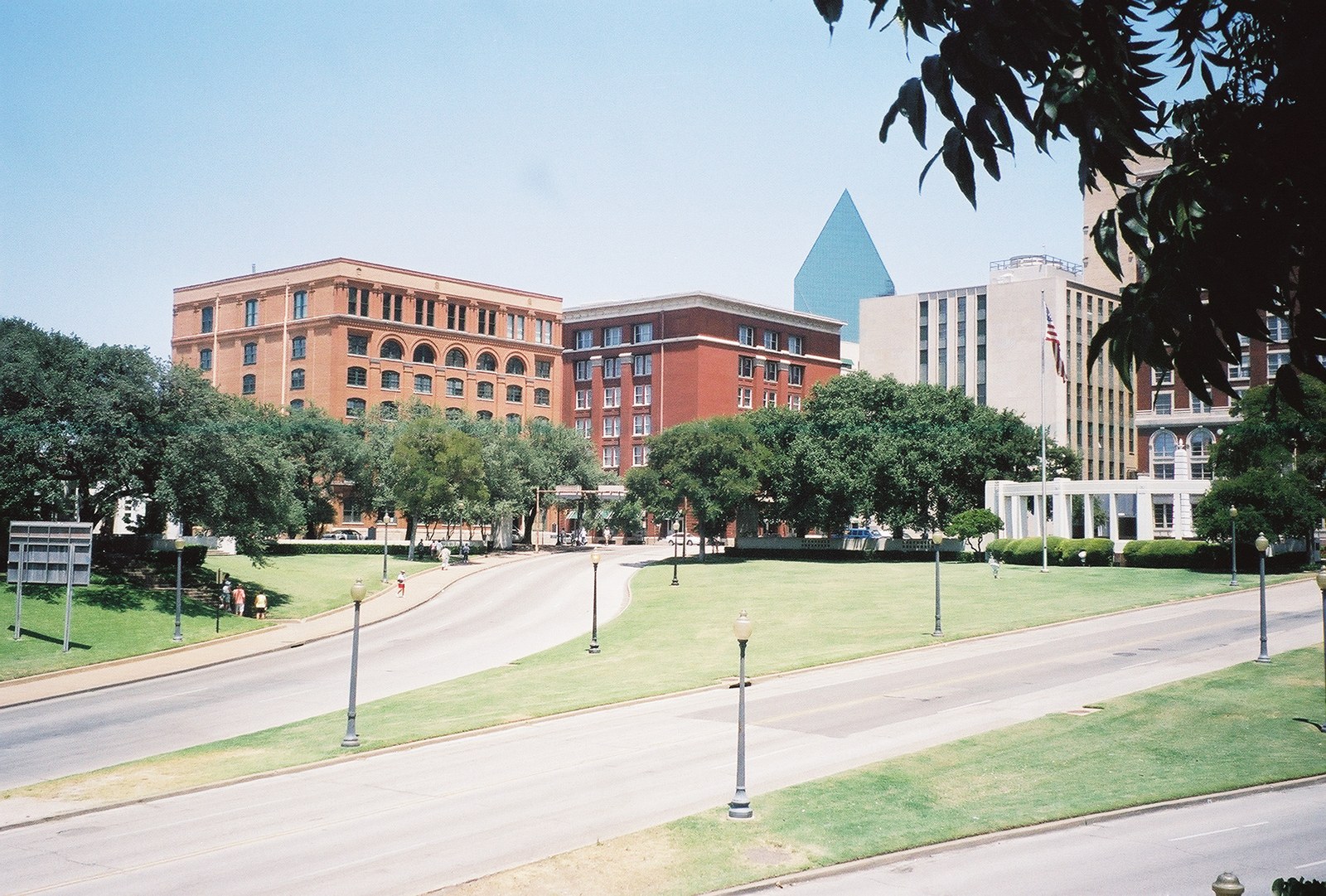
On November 22, 1963, President John F. Kennedy was shot and killed while riding in a motorcade through Dallas, Texas. It is the most investigated assassination in American history, and it produced two major federal inquiries that reached different conclusions on a central question: whether the assassin acted alone. This article presents what those inquiries found, where they agreed, where they differed, and what has happened to their findings since. It does not endorse any theory about the assassination.
November 22, 1963
Kennedy was visiting Texas as part of a political trip. At about 12:30 p.m., his open-top limousine turned into Dealey Plaza in downtown Dallas. Shots were fired. Kennedy was struck, and Texas Governor John Connally, who was riding in the same car, was seriously wounded. The limousine was driven to Parkland Memorial Hospital, where Kennedy was pronounced dead at 1:00 p.m. He was forty-six years old.
Within hours, Dallas police arrested Lee Harvey Oswald, a twenty-four-year-old former Marine who worked at the Texas School Book Depository, a building overlooking Dealey Plaza. Oswald was charged with the murder of Kennedy and with the murder of Dallas police officer J. D. Tippit, who had been shot in a separate incident that afternoon. Oswald denied killing anyone.
Two days later, on November 24, 1963, Oswald was shot and killed by Jack Ruby, a Dallas nightclub owner, in the basement of the Dallas police headquarters, as officers were transferring him to the county jail. The shooting was broadcast live on television. Oswald never stood trial, and no court ever found him guilty of the assassination.
Lyndon B. Johnson, who had been Kennedy’s vice president, was sworn in as president on the afternoon of November 22, aboard Air Force One in Dallas.
The Warren Commission, 1964
On November 29, 1963, one week after the assassination, President Johnson created the President’s Commission on the Assassination of President Kennedy by executive order. It was chaired by Chief Justice Earl Warren and is known as the Warren Commission. After ten months of work, the commission published its report on September 24, 1964, together with twenty-six volumes of supporting testimony and evidence.
The commission’s principal findings were as follows. Lee Harvey Oswald fired three shots from the sixth-floor window at the southeast corner of the Texas School Book Depository. Two of those shots struck Kennedy. The commission concluded that Oswald acted alone, that he was not part of any foreign or domestic conspiracy, and that Jack Ruby likewise acted alone when he killed Oswald, with no significant link to organised crime.
The commission also concluded that a single bullet had passed through Kennedy’s neck and then struck Governor Connally, causing several of his wounds. This finding, often called the single-bullet theory, has been one of the most contested parts of the report.
The Warren Commission’s conclusions were criticised almost immediately, and doubts about them have persisted for decades in books, films, and public debate. Polls have consistently shown that a majority of Americans do not accept the commission’s finding that Oswald acted alone. That public doubt, however, is not itself evidence about what happened.
The House Select Committee on Assassinations, 1979
In 1976, following revelations about intelligence agency operations, the United States House of Representatives created the House Select Committee on Assassinations to reinvestigate the assassinations of Kennedy and of Martin Luther King Jr. The committee worked for about thirty months and submitted its final report on March 29, 1979.
On most factual questions, the committee agreed with the Warren Commission. It agreed that Oswald fired the shots that struck Kennedy and Connally from the sixth floor of the Texas School Book Depository, using a Mannlicher-Carcano rifle. But on the central question of conspiracy, it broke sharply with the earlier finding.
The committee concluded that President Kennedy was “probably assassinated as a result of a conspiracy”. The finding rested on acoustic analysis of a recording from a Dallas police radio channel, known as the Dictabelt recording, which analysts said indicated a fourth shot had been fired from the grassy knoll in front of the motorcade, in addition to Oswald’s shots from behind. The committee was unable to identify the other gunman or the extent of the conspiracy.
That finding has never been officially rescinded, but the evidence behind it was challenged soon after. In 1982, a panel of the National Academy of Sciences reviewed the acoustic analysis and concluded that it was flawed and that the sounds on the recording did not support the conclusion that four shots had been fired. The panel found that the sounds identified as gunshots had in fact been recorded about a minute after the shooting.
The result is an unusual situation in the official record. Two federal investigations agreed on the identity of the shooter and the weapon. They disagreed on whether a conspiracy existed, and the evidence for the second investigation’s conspiracy finding was later undermined by scientific review.
The Records and the Years After
In 1992, Congress passed the President John F. Kennedy Assassination Records Collection Act, which required the federal government to gather assassination-related records into a single collection at the National Archives and to release them to the public, with limited exceptions for national security and other reasons. Large numbers of documents have been released in the decades since, including further releases in the 2020s. No release has produced documentation of a second shooter or of an alternative perpetrator.
The assassination also produced lasting changes. It led to the creation of the Warren Commission’s extensive record, to reforms in presidential security, and to the establishment of the Sixth Floor Museum at Dealey Plaza in Dallas, which preserves the site and the documentary history of the case.
What Is Documented — and What Is Not
Documented: President Kennedy was shot on November 22, 1963, in Dealey Plaza, Dallas, and pronounced dead at Parkland Memorial Hospital. Lee Harvey Oswald was arrested the same day and charged with the murders of Kennedy and Officer J. D. Tippit; he was killed by Jack Ruby on November 24, 1963, before any trial. The Warren Commission (1964) concluded that Oswald acted alone, fired three shots from the Texas School Book Depository, and that Ruby acted alone. The House Select Committee on Assassinations (1979) agreed that Oswald fired the shots, but concluded that Kennedy was “probably assassinated as a result of a conspiracy”, based on acoustic analysis of a Dictabelt recording. A 1982 National Academy of Sciences panel concluded that the acoustic analysis was flawed. The HSCA could not identify any other gunman or the extent of any conspiracy.
Not established: The existence of a second shooter. The identity of any conspirator. Any connection between Oswald and any organisation, government, or individual in planning the assassination. The many theories advanced about the assassination since 1963 — involving intelligence agencies, organised crime, foreign governments, or other actors — are theories, not findings, and none has been confirmed by the documentary record. This article presents the findings of the two federal investigations without endorsing any of them.