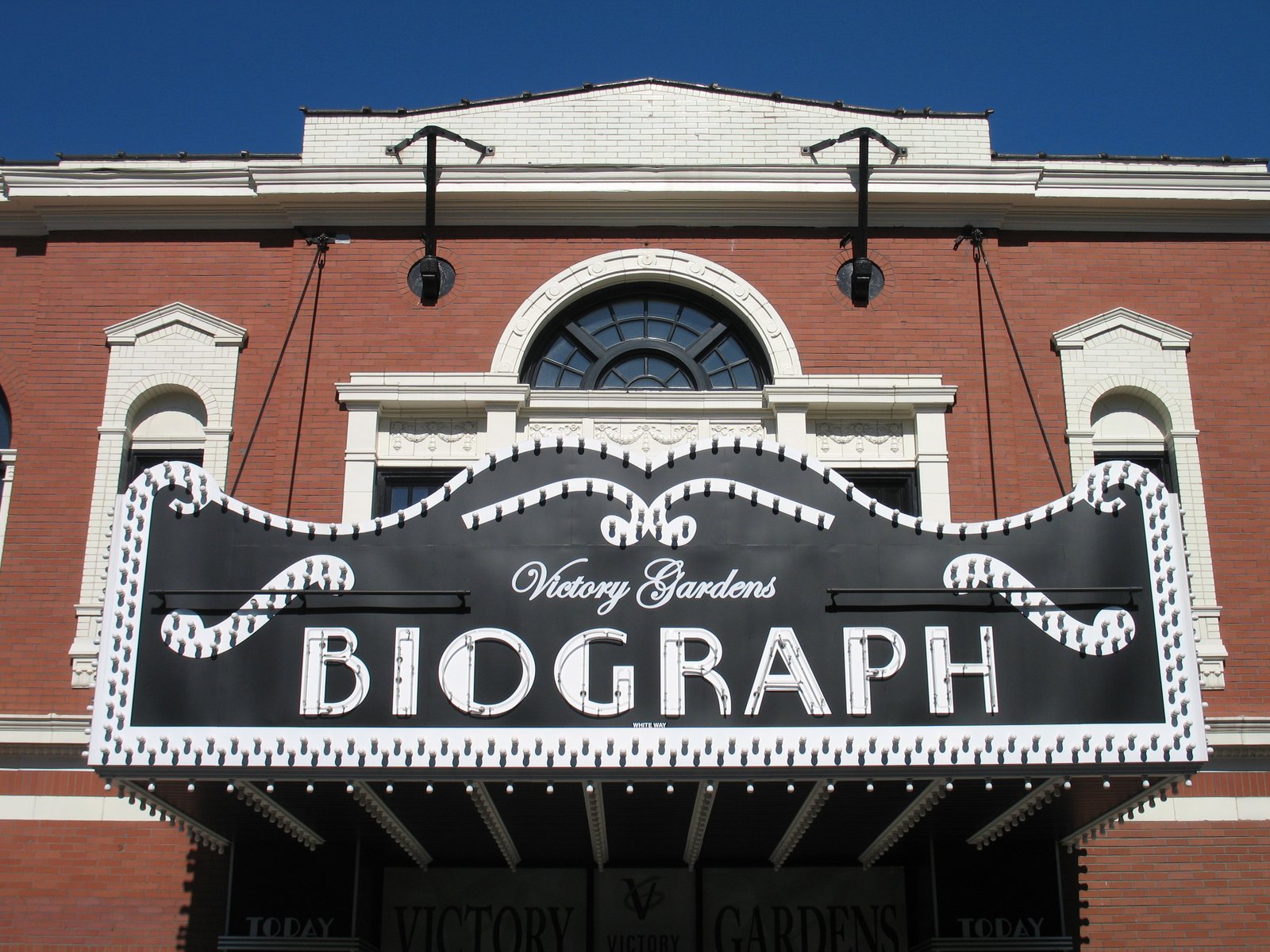
On the evening of 22 July 1934, John Dillinger walked out of the Biograph Theater in Chicago after watching a gangster film, Manhattan Melodrama. Federal agents were waiting. Within minutes he was dead on the pavement, and the most famous manhunt of the Depression era was over. He was thirty-one, and his career as a bank robber had lasted barely fourteen months.
Dillinger is often remembered as a folk hero. The documented record is darker: the FBI states that between September 1933 and July 1934, his gang killed ten men and wounded seven others, robbed banks and police arsenals, and staged three jailbreaks.
A harsh sentence, a bitter prisoner
John Herbert Dillinger was born on 22 June 1903 in the Oak Hill neighbourhood of Indianapolis, Indiana. His mother died when he was three. In 1924 he and an older acquaintance, Ed Singleton, attempted to rob a grocer in Mooresville, Indiana. The attempt failed and both men were arrested.
Singleton pleaded not guilty and received a short sentence. Dillinger, on his father’s advice, confessed. He was convicted of assault and battery with intent to rob and conspiracy to commit a felony, and received sentences of two to fourteen years and ten to twenty years in the Indiana State Prison. He served eight and a half years before being paroled on 10 May 1933.
In prison he learned the craft of bank robbery from older inmates, including Harry Pierpont, and left determined to free the men who had taught him. Within weeks of his release, he had robbed his first bank, in Bluffton, Ohio.
The gang forms
Dillinger was arrested again in Dayton, Ohio, on 22 September 1933 and held in the county jail at Lima. When police searched him they found what appeared to be a plan for a prison break. Four days later, eight of his associates escaped from the Indiana State Prison using smuggled firearms, shooting two guards in the process.
On 12 October 1933, three of the escaped men — Harry Pierpont, Russell Clark and Charles Makley — arrived at the Lima jail claiming they had come to return Dillinger to prison for a parole violation. When the sheriff asked for credentials, one of them shot him. The sheriff died, and the gang freed Dillinger. Pierpont, Makley and Clark were later returned to Ohio, convicted of the sheriff’s murder, and Pierpont and Makley were sentenced to death.
Now free and organised, the gang moved fast. They robbed banks across the Midwest and raided police arsenals at Auburn and Peru, Indiana, taking machine guns, rifles and bulletproof vests. On 14 December 1933, gang member John Hamilton shot and killed a police detective in Chicago. A month later, during the robbery of the First National Bank of East Chicago, Indiana, a police officer was killed. Dillinger was charged with that officer’s murder but was never convicted of it, and the charge should not be treated as proven fact about who fired the shot. In total the gang carried out about a dozen bank robberies between June 1933 and June 1934, taking more than $153,000 — a large sum in the depths of the Great Depression.
Crown Point and the wooden gun
In January 1934 the gang was arrested in Tucson, Arizona, after a fire at their hotel drew the attention of firemen who recognised them from photographs. Dillinger was taken to the county jail at Crown Point, Indiana, to await trial for the East Chicago officer’s murder. Officials boasted the jail was “escape-proof.”
On 3 March 1934, Dillinger escaped, cowing the guards with what he later said was a wooden gun he had whittled, then seizing two machine guns and locking the guards up. The precise details remain debated — one deputy later claimed he had a real pistol — but the escape is not in doubt.
Stealing the sheriff’s car across the Indiana–Illinois line violated the National Motor Vehicle Theft Act, a federal crime. A grand jury indicted him, and the FBI — then still formally the Division of Investigation — joined the hunt in force.
Little Bohemia
Dillinger regrouped in St. Paul, Minnesota, with new associates including Homer Van Meter and Lester Gillis, known as “Baby Face” Nelson. In April 1934 agents surrounded the Little Bohemia Lodge in Wisconsin, but Dillinger escaped through a back window. Elsewhere that night, Nelson shot and killed Special Agent W. Carter Baum, the first FBI agent killed in the investigation. In June 1934, FBI Director J. Edgar Hoover designated Dillinger the Bureau’s “Public Enemy Number One” — the first criminal to hold the title.
The Biograph Theater
The end came through a tip. On 21 July 1934, Ana Cumpanas, known as Anna Sage, contacted the authorities. Sage, who ran a brothel in Gary, Indiana, was facing deportation proceedings and offered information in exchange for a cash reward and help with her case. She said Dillinger would probably go to the cinema the following evening with her friend Polly Hamilton, at the Biograph or the Marbro Theater, and that she would wear an orange dress so agents could identify her.
On the evening of 22 July, Sage called to confirm they were going to the Biograph. Agents staked out both theatres, then concentrated on the Biograph after Sage, Dillinger and Hamilton were seen entering at about 8:30 p.m. to watch Manhattan Melodrama. Hoover instructed the agents to wait outside rather than risk a shooting inside the crowded theatre.
At about 10:30 p.m., Dillinger left the theatre with the two women. Special Agent in Charge Melvin Purvis, standing nearby, lit a cigar — the signal to close in. Dillinger realised what was happening, reached for a pistol in his trouser pocket and ran toward an alley. Three agents — Clarence Hurt, Charles Winstead and Herman Hollis — fired. Five shots were fired in total; three struck Dillinger. He fell face down on the pavement and was pronounced dead at 10:50 p.m. at Alexian Brothers Hospital. Two bystanders were wounded in the gunfire. Sage’s orange dress looked red under the theatre lights, which is how the press came to call her “the woman in red.”
The disputed details
Two aspects of Dillinger’s death have been questioned ever since. Some researchers have claimed that the man killed outside the Biograph was not Dillinger at all, pointing to apparent discrepancies between the autopsy findings and Dillinger’s known medical record. The FBI and the official record identify the dead man as Dillinger, and no credible evidence has established otherwise, but the claim continues to circulate and should be recognised as disputed rather than settled fact. Reports also differ on the number of shots fired, with some historians reporting four hits rather than three.
What the record shows
Dillinger’s fame has always outrun the facts. He was not a Robin Hood figure: there is no evidence he shared his takings with the poor, and the banks he robbed were often small, local institutions whose losses fell on ordinary depositors.
The hunt for Dillinger helped transform a small federal investigative division into the modern FBI. The Biograph Theater still stands at 2433 North Lincoln Avenue in Chicago, listed on the National Register of Historic Places.
Sources
- https://www.fbi.gov/history/famous-cases/john-dillinger
- https://www2.fbi.gov/page2/july08/dillinger_072208.html
- https://www.history.com/this-day-in-history/july-22/dillinger-gunned-down
- https://www.chicagohistory.org/public-enemy-number-one-the-complicated-historical-legacy-of-john-dillinger/
- https://themobmuseum.org/blog/john-dillingers-wooden-gun-and-death-mask-preserve-notorious-moments-in-his-life/