Frank Nitti was the quietest of the Chicago bosses, and for twelve years he was the most powerful of them. He was Al Capone’s money man and enforcer, known as “the Enforcer,” and when Capone went to prison in 1931, Nitti became the public face of the Chicago Outfit. He ran it with a businessman’s discipline, expanding it from bootlegging and gambling into labour racketeering and the extortion of Hollywood’s film studios. He survived a tax-evasion sentence and being shot by the police. What he could not survive was the prospect of going back to prison. On 19 March 1943, the day after he was indicted in the Hollywood extortion case, he walked to a railway line near his home in North Riverside, Illinois, and shot himself. He was fifty-seven years old.
Nitti was born Francesco Raffaele Nitto on 27 January 1886 in Angri, in Campania, Italy. Sources disagree on the year — some give 1888, which is the year carved on his gravestone, while his draft registration card gives 1886 — and the disagreement has never been settled. He emigrated to the United States as a boy of about twelve and settled first in Brooklyn. He worked as a barber in his youth, and the trade gave him nothing but a skill he would soon abandon. By the time he moved to Chicago he had fallen in with the criminal circles around Johnny Torrio and Al Capone, and he became one of Capone’s most trusted men: the one who handled the money, who kept the books, who made sure the organisation ran.
The Enforcer
Nitti’s reputation was built on efficiency rather than violence, but he was no stranger to either. In 1931 he was convicted of tax evasion and served eighteen months in prison — the experience left him with a lasting dread of confinement. In 1932 he was shot by Chicago police during a raid on his office and survived. When Capone was convicted of tax evasion later in 1931 and sent to federal prison, Nitti took over the day-to-day running of the Outfit. Paul Ricca, his underboss, held great influence behind the scenes, but it was Nitti who was the boss in public, the man other criminals and the authorities alike treated as the head of the organisation.
Under Nitti the Outfit moved beyond its Prohibition roots. With bootlegging gone after repeal in 1933, he pushed the organisation into labour racketeering, and its most ambitious scheme ran through Hollywood. Two of Nitti’s men, Willie Bioff and George Browne, took control of the stagehands’ union, the IATSE, with the Outfit’s backing. Browne became the union’s president and Bioff his “special representative,” and together they shook down the major studios — Warner Bros., 20th Century Fox, Paramount, MGM, Columbia and RKO — which paid to avoid strikes that would shut down production. In less than three months, by one account, Bioff collected a quarter of a million dollars in cash from the studios. It was a scheme that worked on a single choke point, and it made the Outfit a fortune.
The Hollywood Case
The scheme unravelled when Bioff and Browne were convicted of extortion in 1941. To save themselves, they began talking, and they talked about Nitti. In March 1943 a federal grand jury in New York indicted Nitti, Ricca, Louis Campagna and other senior Outfit men for the Hollywood extortion. On 18 March, the day before the indictments were announced, Ricca and the other underbosses drove to Nitti’s house in the Chicago suburb of Riverside and blamed him for the trouble: the scheme had been his, and the informant had been his man, so he should take the fall and go to prison.
Nitti had already served eighteen months, and he dreaded the idea of going back. He was also, by several accounts, suffering from claustrophobia brought on by his first prison term, and there were rumours — never confirmed — that he was seriously ill. On the morning of 19 March, after his wife had gone to church, he left his house with a revolver and walked to the Illinois Central railway tracks near his home in North Riverside. Two railway workers heard the shot and found him there. A coroner’s jury ruled the following day that he had taken his own life while temporarily insane and in a despondent frame of mind.
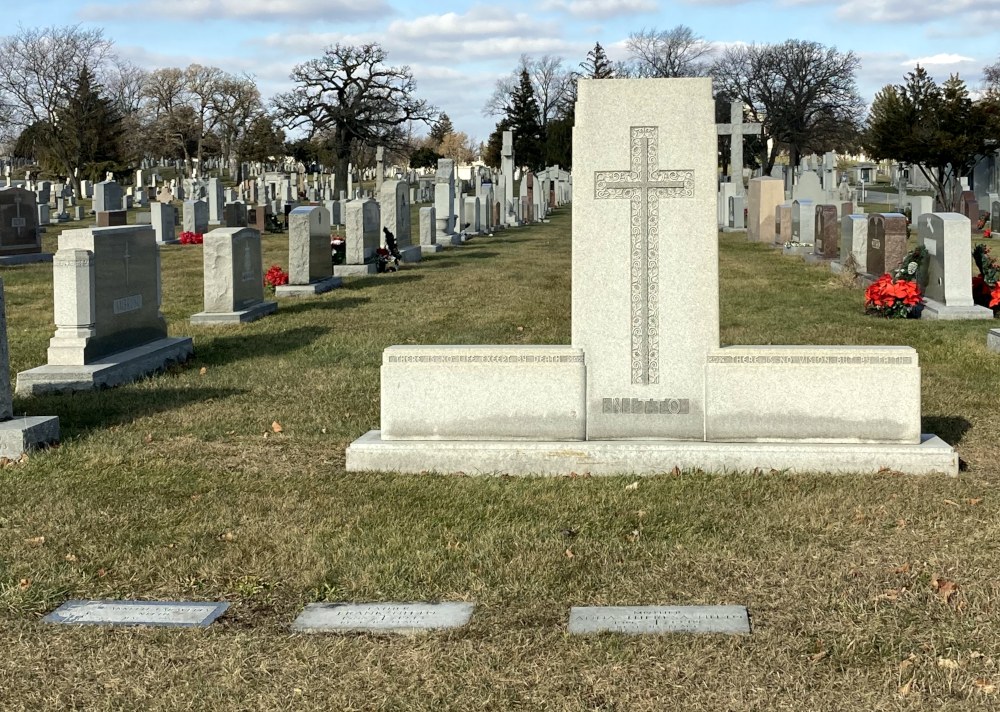
Nitti was buried at Mount Carmel Cemetery in Hillside, Illinois, the same cemetery that holds Capone, O’Banion and Weiss. The men he had run the Outfit with went on trial without him and were convicted. His death ended the career of the most businesslike of the Chicago bosses — a man who had turned organised crime into a corporate enterprise, and who, when the corporation turned on him, chose to walk out to a railway line rather than go back inside a cell.
What Is Documented — and What Is Not
Documented: Frank Nitti was born Francesco Raffaele Nitto on 27 January 1886 in Angri, Campania, Italy, and emigrated to the United States as a boy. He became Al Capone’s money man and enforcer, known as “the Enforcer,” and after Capone’s imprisonment in 1931 he became the public head of the Chicago Outfit. In 1931 he was convicted of tax evasion and served eighteen months in prison. In 1932 he survived being shot by Chicago police during a raid. Under his leadership the Outfit extorted the Hollywood film studios through control of the stagehands’ union, the IATSE, using Willie Bioff and George Browne; Bioff and Browne were convicted of extortion in 1941 and became informants. In March 1943 a federal grand jury in New York indicted Nitti, Paul Ricca and other senior Outfit men. On 19 March 1943, the day after the indictments, Nitti shot himself beside the Illinois Central railway tracks in North Riverside, Illinois. A coroner’s jury ruled he had taken his own life while temporarily insane and despondent. He was 57 and is buried at Mount Carmel Cemetery, Hillside, Illinois.
Not documented / unverified: Sources disagree on Nitti’s birth year — 1886 on his draft registration card, 1888 on his gravestone, with some sources giving other years in between. The claim that he suffered from terminal cancer at the time of his death is a rumour, never confirmed. The details of the meeting at his house on 18 March 1943, including Ricca’s demand that he take the fall, are reported in several accounts but come from second-hand sources. The number of shots fired on 19 March varies between accounts; this article does not state a number.
Sources
https://nationalcrimesyndicate.com/frank-nitti-the-enforcer-who-ran-the-chicago-outfit-2/
https://allthatsinteresting.com/frank-nitti
https://en.wikipedia.org/wiki/Frank_Nitti
http://www.bellaonline.com/articles/art43523.asp