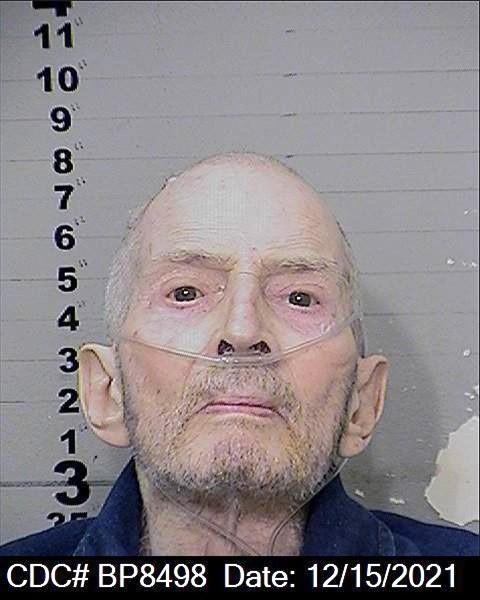
Robert Durst was born into one of the great property fortunes of New York City. His father, Seymour Durst, built a real estate empire that owned some of the most valuable buildings in Manhattan. Robert was the eldest son and, for a time, the heir apparent. But he was also, by many accounts, a deeply troubled man, and over the course of four decades his name became linked to three deaths: the disappearance of his first wife, Kathie, in 1982; the murder of his friend Susan Berman in 2000; and the killing and dismemberment of his neighbour Morris Black in 2001. For most of his life, Durst was never convicted of any of them.
His downfall came, in the end, not from a detective’s work but from a television documentary — and from his own words, spoken when he thought no one was listening.
Three deaths, no convictions
Kathie Durst, a 30-year-old medical student, disappeared from the couple’s cottage in South Salem, New York, on the night of 31 January 1982. She had been seen arguing with her husband, and friends said she had told them she was afraid of him and was planning to leave him. Robert Durst said he had put her on a train to New York City that evening and had spoken to her by phone later that night. Her body was never found, and she was declared legally dead in 2017. The case was investigated for years, but no charges were ever filed in her disappearance during Durst’s lifetime.
Susan Berman was a writer and a close friend of Durst’s from their university days. In December 2000, she was found shot dead in her home in Los Angeles, killed by a single gunshot to the back of the head. The police believed she was about to speak to investigators about Kathie Durst’s disappearance. Berman had been one of the few people who knew what had happened on the night Kathie vanished, and she had acted, at times, as Durst’s spokeswoman. A note sent to the police after the killing, misspelling “Beverly Hills” as “Beverley Hills”, became a key piece of evidence years later.
Morris Black was Durst’s neighbour in Galveston, Texas, where Durst had gone to live in disguise in 2000, pretending to be a mute woman. In September 2001, Black’s dismembered body was found floating in Galveston Bay. Durst was arrested and charged with murder. At his trial in 2003, he admitted that he had cut up Black’s body, but said he had done so in a panic after Black had been accidentally shot during a struggle over a gun. The jury acquitted him of murder, accepting the claim of self-defence, though he was convicted of jumping bail and of evidence tampering.
For years, Durst seemed untouchable: a wealthy man who had been linked to three deaths and had walked free from the one trial he faced.
The Jinx
In 2015, the cable channel HBO broadcast “The Jinx: The Life and Deaths of Robert Durst”, a six-part documentary by the filmmaker Andrew Jarecki. Durst had agreed to take part, sitting for more than twenty hours of interviews. The series re-examined all three deaths, and it produced two pieces of evidence that changed the case.
The first was a handwriting comparison. The note sent to the police after Susan Berman’s murder, with its misspelling of “Beverley Hills”, was compared with a letter Durst had written to Berman years earlier, in which he had made the same misspelling. The documentary presented the match as strong evidence that Durst had written the note.
The second was an accident of television. At the end of the final episode, after the formal interview had ended, Durst went into a bathroom, apparently forgetting that his microphone was still switched on. He could be heard muttering to himself: “What the hell did I do? Killed them all, of course.” The line, broadcast to millions of viewers, became one of the most famous moments in the history of true crime television.
Durst was arrested in New Orleans on 14 March 2015, the day before the final episode of “The Jinx” aired, on a warrant from Los Angeles charging him with the murder of Susan Berman. He was found in a hotel room with a gun, a large amount of cash, and a fake identity document.
The trial
Durst’s trial for the murder of Susan Berman began in Los Angeles in March 2020, before Judge Mark Windham, and was then delayed for more than a year by the COVID-19 pandemic. It resumed in May 2021. Durst, by then 78 years old and in poor health, attended in a wheelchair and often appeared frail and confused. He testified in his own defence for three days, an unusual decision for a defendant in a murder trial, and his testimony was, at times, rambling and contradictory.
The prosecution’s case was built on the handwriting evidence, on the testimony of witnesses who said Berman had told them she had information about Kathie Durst’s disappearance, and on Durst’s own statements — including the bathroom recording from “The Jinx”, which the prosecution played for the jury. The defence argued that Durst had not killed Berman, that the handwriting evidence was unreliable, and that the bathroom recording was the muttering of a man with mental health problems, not a confession.
The jury deliberated for about seven hours. On 17 September 2021, it found Robert Durst guilty of first-degree murder in the death of Susan Berman. The jury also found true the special circumstance that Durst had lain in wait and that he had killed a witness, which made him eligible for a sentence of life in prison without the possibility of parole. On 14 October 2021, Judge Windham imposed that sentence.
The end
Durst’s legal troubles did not end with the verdict. In November 2021, prosecutors in Westchester County, New York, charged him with the murder of Kathie Durst, nearly forty years after her disappearance. He was never tried on that charge. On 10 January 2022, Robert Durst died in a hospital in Stockton, California, at the age of 78, while in the custody of the California Department of Corrections and Rehabilitation. The cause of death was cardiac arrest, following a series of health problems that had included COVID-19 and bladder cancer.
His death closed the book on one of the strangest criminal sagas in American history. He had been convicted of one murder, acquitted of another, and never tried for a third. The documentary that had brought him down had also made him famous, and the line he spoke into a live microphone — “Killed them all, of course” — became the epitaph for a case that had taken nearly forty years to resolve.
What the trial meant
The trial of Robert Durst raised questions that go beyond the facts of the case. The first was about wealth and justice. Durst was, for most of his life, a rich man, and his wealth allowed him to hire the best lawyers, to live in hiding, and to evade the consequences of his actions for decades. His acquittal in the Morris Black case, in which he admitted to dismembering a body but was found not guilty of murder, was seen by many as an example of what money can buy in an American courtroom.
The second was about television. “The Jinx” was a work of journalism and entertainment, and it produced evidence that the police had not found on their own. But it also raised questions about the role of a documentary in a criminal case: whether the filmmakers had shared evidence with the police at the right time, whether Durst’s participation had been obtained fairly, and whether the bathroom recording — captured without his knowledge — should have been admissible at all. The judge ruled that it was admissible, and the jury heard it.
The third was about the passage of time. The murder of Susan Berman took place in 2000. The trial took place in 2021. Witnesses had died, memories had faded, and the defendant himself was an old man in a wheelchair. The case was, in the end, a reminder that justice delayed is not always justice denied — but that the delay itself has a cost, measured in the years that the families of the victims spent waiting for an answer.
What is documented — and what is not
Documented: Kathie Durst disappeared on 31 January 1982 and was never found. Susan Berman was shot dead in her Los Angeles home in December 2000. Morris Black was killed and dismembered in Galveston, Texas, in 2001; Robert Durst admitted dismembering the body but was acquitted of murder in 2003. The HBO documentary “The Jinx” aired in 2015 and included a recording of Durst saying, “What the hell did I do? Killed them all, of course”, while his microphone was still on. Durst was arrested in New Orleans on 14 March 2015. At his trial in Los Angeles in 2021 he was convicted of first-degree murder in the death of Susan Berman on 17 September 2021, and sentenced to life in prison without parole on 14 October 2021. He died on 10 January 2022, aged 78, while in custody.
Unverified or unproven: That Durst killed Kathie Durst — he was charged with her murder in November 2021, but he died before he could be tried, and the charge was never tested in court. That Durst wrote the note sent to the police after Berman’s murder — the handwriting comparison was presented by the prosecution as strong evidence, but handwriting analysis is a matter of expert opinion, not certainty. That the bathroom recording was a confession — Durst’s lawyers argued that it was the confused muttering of a man with mental health problems, and the jury’s verdict did not turn on that single line alone.