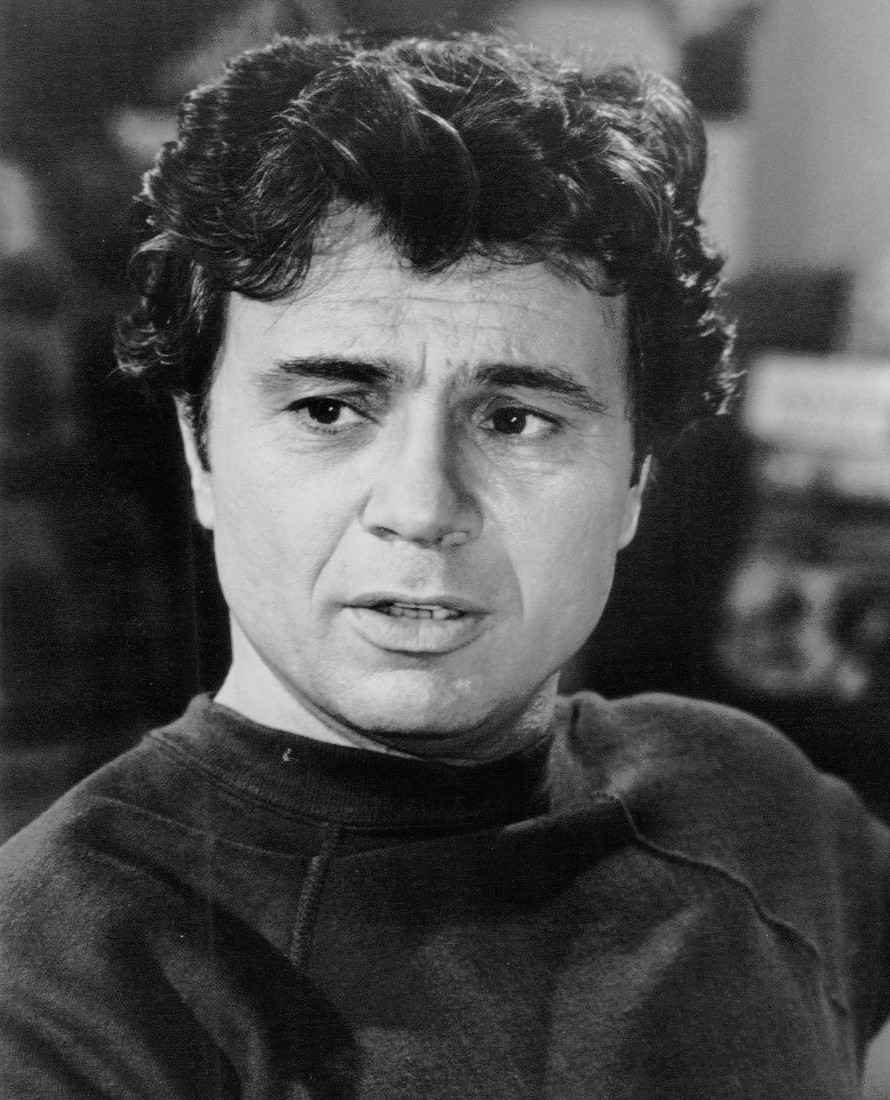
The child star
Robert Blake had been famous for most of his life. Born Michael James Vincenzo Gubitosi in 1933, he was a child actor in the Our Gang comedies of the 1930s and 1940s, then a leading man in films such as In Cold Blood (1967), and then, in the 1970s, the star of Baretta, the television detective series that made him a household name and won him an Emmy. By the 1990s, his career had faded. He was 67, living in Los Angeles, and married — unhappily, by most accounts — to Bonny Lee Bakley, a 44-year-old woman with a long history of conning wealthy men.
On the evening of 4 May 2001, Blake and Bakley had dinner at Vitello’s, a restaurant in Studio City. Afterwards, Bakley was found shot dead in the passenger seat of Blake’s car, outside the restaurant. Blake said he had gone back inside the restaurant to retrieve a handgun he had left behind, and had returned to find his wife dying. The police were not convinced. They noted that the gun that killed Bakley was never found, that Blake’s story changed in its details, and that he had, according to two former stuntmen, tried to hire them to kill her.
The criminal trial
Blake was arrested in April 2002 and charged with one count of murder, two counts of solicitation of murder, and one count of conspiracy. He spent almost a year in jail before being freed on $1.5 million bail, under house arrest and wearing an electronic monitor. He changed lawyers four times, and two of them quit after he insisted on giving television interviews while awaiting trial.
The trial opened in December 2004 in Los Angeles Superior Court. The prosecution’s case rested heavily on the two stuntmen, Gary McLarty and Ronald Hambleton, who testified that Blake had offered each of them money to kill Bakley. The defence attacked their credibility, noting that both men had criminal records and that their stories had changed. The prosecution also pointed to gunshot residue found on Blake’s hands — but a defence expert testified that Blake would have had nearly a hundred particles on his hands if he had fired the gun, not the four or five that were found.
Blake did not take the stand. Instead, his lawyers played the jury his interview with Barbara Walters. On 16 March 2005, after a three-month trial, the jury acquitted Blake of murder and of one count of solicitation. A second solicitation count was dropped after the jury deadlocked. The vote on the murder charge was eleven to one in favour of acquittal. The jury, in effect, had decided that the prosecution had failed to place the murder weapon in Blake’s hands. Blake wept in court as the verdict was read.
The civil trial
The acquittal did not end the case. Bakley’s four children filed a wrongful death suit in civil court, where the standard of proof is lower — a preponderance of the evidence, rather than proof beyond reasonable doubt. This time, Blake took the stand and denied the accusations. On 18 November 2005, the civil jury found him liable for Bakley’s death and ordered him to pay $30 million to her children. Blake filed for bankruptcy in February 2006. In 2008, a California appeals court upheld the verdict but reduced the judgment to $15 million.
The two verdicts — not guilty in criminal court, liable in civil court — made the Blake case one of the most discussed trials of its era, alongside the O.J. Simpson case a decade earlier. In both cases, a jury had acquitted a famous man of murder, and a civil jury had then found him responsible for the same death. The difference was not the evidence. It was the standard of proof, and the fact that the civil jury had heard Blake testify.
The end of the story
Blake never recovered, professionally or financially. He hoped for a comeback, but the trial had consumed his money and his reputation. He died on 9 March 2023, at the age of 89, of heart disease. The murder of Bonny Lee Bakley remains officially unsolved: no one else has ever been charged, and the gun that killed her has never been found.
The case is still argued over. Blake’s defenders say the prosecution’s case was built on unreliable witnesses and that the jury was right to acquit. His critics say the civil verdict — and the bankruptcy that followed — was the justice the criminal trial had failed to deliver. Both sides agree on one thing: the trial showed, once again, that in America a famous defendant can win in criminal court and still lose everything in civil court.
A life in front of the camera
Blake’s fame had begun when he was five years old. He was born Michael James Vincenzo Gubitosi in Nutley, New Jersey, in 1933, to Italian immigrant parents who performed in vaudeville. As a child, he appeared in the Our Gang short comedies — the series later known as The Little Rascals — playing Mickey, a boy with a distinctive cowlick. He worked steadily through the 1940s and 1950s, in westerns and war films, and in 1967 he gave the performance of his life as Perry Smith, the murderer, in Richard Brooks’s film of Truman Capote’s In Cold Blood. The role made him a serious actor. In 1975, he won an Emmy for Baretta, in which he played Tony Baretta, a plainclothes detective who lived with a cockatoo named Fred and drove a battered Chevrolet Impala.
By the late 1990s, the work had dried up. Blake was living in a small house in Studio City, and his marriage to Bakley — his third — was, by all accounts, unhappy. Bakley herself had a long and documented history of fraud: she had corresponded with lonely men through personal advertisements, persuading them to send her money, and she had been arrested several times. She had been married at least nine times before Blake, and she had several children by different fathers. Blake had met her through a lonely-hearts advertisement. Their daughter, Rose Lenore, was born in June 2000, and the question of the child’s paternity — Bakley had also been involved with the singer Christian Brando, the son of Marlon Brando — was settled by a DNA test in Blake’s favour.
The marriage was, in the words of one of Blake’s friends, a disaster from the start. Bakley wanted money and fame; Blake wanted a family. The tension between them was the background to the prosecution’s case, which argued that Blake had wanted Bakley dead and had tried to arrange it. The defence argued the opposite: that Blake, whatever his faults, had no reason to kill the mother of his infant daughter, and that the real killer had never been found.
Blake’s final years were quiet and, by his own account, lonely. After the bankruptcy, he lived in a small apartment in Los Angeles, largely out of the public eye, and his health declined. He gave occasional interviews in which he insisted on his innocence and spoke bitterly about the civil verdict, which he said had taken everything he had. He never returned to acting in any significant way, and the roles that had once come to him — the tough detective, the troubled outsider — stopped coming altogether. The $15 million judgment against him was never paid in full, and the bankruptcy had discharged much of it. When he died in 2023, the obituaries remembered him first as a child star and as Baretta, and second as a man who had been tried for murder and acquitted — and then, in a civil courtroom, found responsible for the same death. The two verdicts remain, side by side, in the record.
What is documented — and what is not
Documented: Bonny Lee Bakley, 44, was shot dead on 4 May 2001 outside Vitello’s restaurant in Studio City, Los Angeles, after dining with her husband, Robert Blake. Blake was charged with murder, solicitation of murder and conspiracy. On 16 March 2005, a jury acquitted him of murder and one count of solicitation; a second solicitation count was dropped after a deadlock. On 18 November 2005, a civil jury found Blake liable for Bakley’s wrongful death and ordered him to pay $30 million, later reduced to $15 million on appeal. Blake filed for bankruptcy in February 2006 and died on 9 March 2023, aged 89, of heart disease. Bakley’s murder remains officially unsolved.
Unverified or unproven: Whether Blake killed his wife — a criminal jury acquitted him, a civil jury found him liable, and no court has resolved the contradiction. Whether Blake tried to hire the two stuntmen to kill Bakley — both testified that he did, and the defence argued they were unreliable. The identity of the killer, if it was not Blake, has never been established, and the murder weapon has never been found.
Sources
https://www.history.com/this-day-in-history/march-16/robert-blake-acquitted-of-wifes-murder
https://www.oxygen.com/crime-news/who-was-robert-blake-one-time-murder-suspect-dead
https://www.wutc.org/2023-03-09/robert-blake-the-actor-acquitted-in-wifes-killing-dies-at-89?_amp=true
https://allthatsinteresting.com/bonny-lee-bakley-daughter-rose-lenore