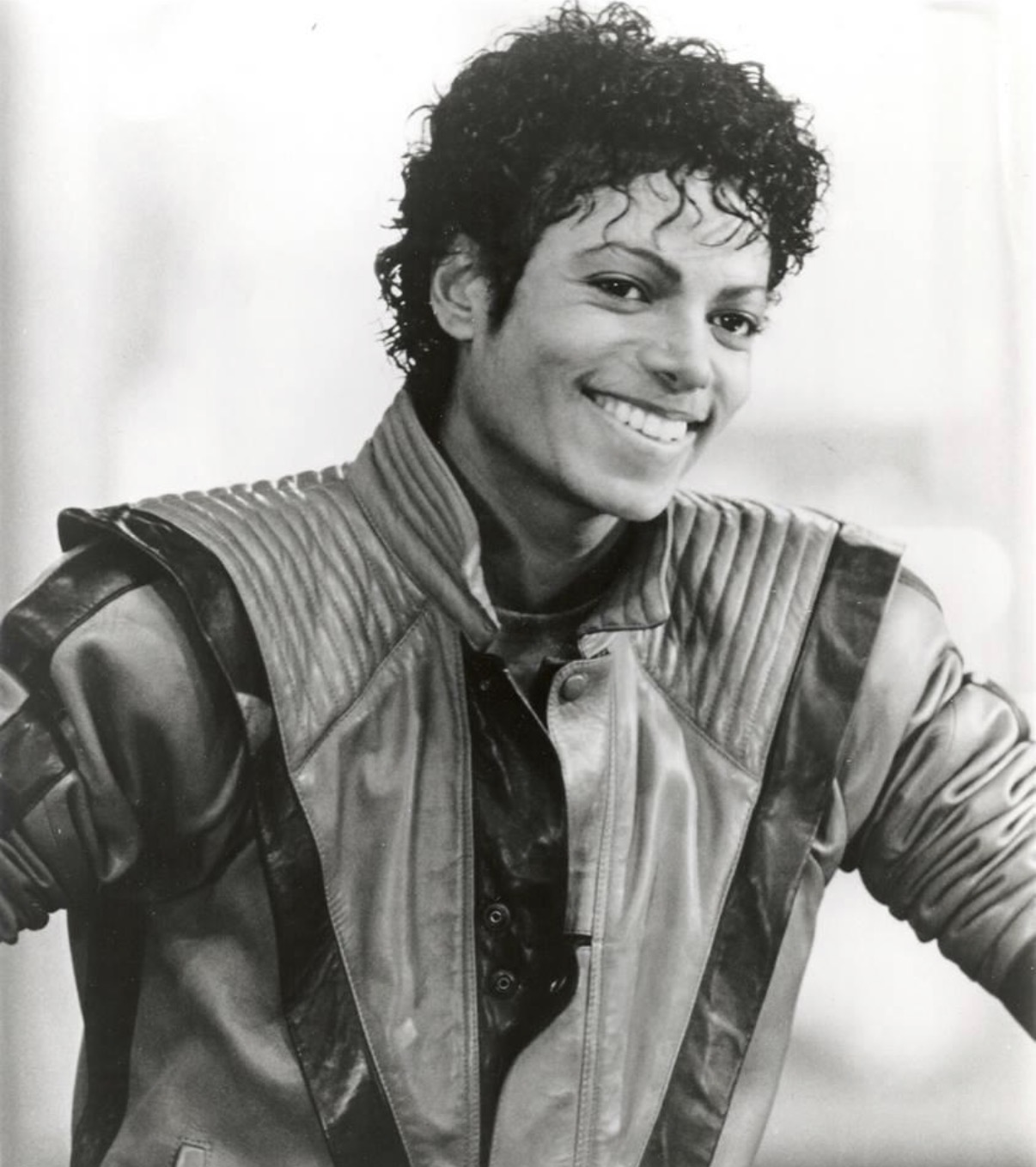
The most famous defendant in the world
By 2005, Michael Jackson was the most famous entertainer alive — and the most controversial. The singer of “Thriller”, the best-selling album of all time, had spent the previous decade under a cloud of allegations about his relationships with children. In 1993, the family of Jordan Chandler had accused him of abuse; the case was settled out of court in 1994, with the settlement reported at about $23 million, and no criminal charges were filed. In 2003, the British journalist Martin Bashir broadcast the documentary Living with Michael Jackson, in which Jackson defended sharing his bedroom with children, saying it was not sexual. The documentary triggered a new investigation — and, in November 2003, a raid on his Neverland Ranch and his arrest.
The case that went to trial was People of the State of California v. Michael Joe Jackson, in Santa Barbara County Superior Court in Santa Maria, before Judge Rodney S. Melville. The accuser was Gavin Arvizo, then fifteen, a cancer survivor who had visited Neverland with his family. The charges were ten felony counts: four counts of lewd acts with a child under fourteen, four counts of administering an intoxicating agent — alcohol, which Jackson was said to have called “Jesus juice” — to facilitate a crime, one count of attempted lewd act, and one count of conspiracy to commit child abduction, false imprisonment or extortion, arising from allegations that Jackson’s associates had held the Arvizo family at Neverland to make them record a video rebutting the Bashir documentary. Jackson pleaded not guilty to all charges. He faced nearly twenty years in prison.
The trial
The trial opened on 31 January 2005 and lasted fourteen weeks. District Attorney Tom Sneddon, who had pursued Jackson since the 1993 investigation, led the prosecution. Thomas Mesereau Jr. led the defence. Eighty-six witnesses testified — 41 for the prosecution, 45 for the defence.
The prosecution’s case rested on Gavin Arvizo and his family. Gavin testified that Jackson had molested him at Neverland in early 2003. His mother, Janet Arvizo, testified about the family’s time at the ranch. The prosecution also called witnesses about Jackson’s past, including a former employee who said he had seen Jackson with a child in a shower in the early 1990s — testimony the judge allowed under California’s rules on prior conduct.
The defence attacked the Arvizos’ credibility. Mesereau presented evidence that Janet Arvizo had previously sued a department store, claiming security guards had assaulted her family, and had received a settlement; that she had sought money from celebrities; and that the family’s account of being held captive at Neverland was contradicted by records showing they had come and gone freely, shopped, and used the ranch’s facilities. Celebrities who had visited Neverland as children — including the actor Macaulay Culkin — testified that Jackson had never behaved inappropriately towards them. Jackson himself did not testify.
The verdict
On 4 June 2005, the jury — eight women and four men — began deliberating. After about thirty hours of deliberation over seven days, the clerk of the court read the verdicts on 13 June 2005, at 2:13 p.m., before a packed courtroom: not guilty on all counts. The jury had rejected all ten felony counts, and every lesser-included offence — fourteen verdicts in all. Jackson, who had been waiting outside the courthouse, was greeted by cheering fans as he returned to Neverland.
Jurors who spoke afterwards said the prosecution’s case had been weakened by the credibility of the Arvizo family, and by the timeline of the accusations. Some said they had not been convinced Jackson had never behaved inappropriately with a child — but that the prosecution had not proved the charges in this case beyond reasonable doubt. The distinction mattered: the verdict was an acquittal, not a declaration of innocence in any broader sense, and the jury’s job was to decide the charges before it, not Jackson’s life.
After the acquittal
The acquittal did not end the allegations against Jackson. He died on 25 June 2009, at the age of fifty, of acute propofol intoxication administered by his physician, Dr. Conrad Murray, who was later convicted of involuntary manslaughter. After Jackson’s death, two men — Wade Robson and James Safechuck — came forward with civil claims that Jackson had abused them as children. Their claims were the subject of the 2019 documentary Leaving Neverland, and of continuing litigation against Jackson’s companies. As of 2026, no court has ruled on the truth of those allegations, and a consolidated civil case was scheduled for a Los Angeles jury trial in November 2026.
The 2005 trial remains, in the record, what it was: a criminal case, tried before a jury, that ended in acquittal on every count. The later civil claims are a separate matter, with their own evidence, their own standard of proof, and their own outcome still to come.
What the case changed
The Jackson trial was one of the most watched trials in history, and it changed how the law and the media handle celebrity prosecutions. It showed that a jury could acquit the most famous person in the world — that fame, which had made Jackson a target, could not by itself convict him. It also showed the limits of a prosecution built on a single family’s testimony: when the jury did not believe the witnesses, the case collapsed, whatever the defendant’s history.
For the law, the trial is also a case study in the rules on prior conduct. The judge allowed the prosecution to present evidence about Jackson’s past, and the jury heard it — and still acquitted. The verdict is a reminder that in a criminal trial, the question is not whether a defendant is a good person, or whether he has behaved badly in the past. It is whether the prosecution has proved, beyond reasonable doubt, the specific charges in the indictment. In June 2005, twelve jurors said it had not.
The road to Santa Maria
The case that reached Santa Maria in 2005 had been building for more than a decade. In 1993, the father of Jordan Chandler, a thirteen-year-old boy who had spent time at Neverland, accused Jackson of sexually abusing his son. The Los Angeles police investigated, and Jackson was strip-searched by police in December 1993. No criminal charges were filed, and in January 1994 the case was settled: the Chandler family received a reported $23 million, and Jackson admitted no wrongdoing. The settlement, and the fact that no charges were ever brought, became a central fact in everything that followed — cited by Jackson’s defenders as proof that the claims could not be substantiated, and by his critics as proof that money had bought silence.
In February 2003, the British journalist Martin Bashir broadcast Living with Michael Jackson, a documentary in which Jackson, filmed over eight months, defended his practice of sharing his bedroom with children, saying: “I have slept in a bed with many children.” The programme was watched by tens of millions of people, and it provoked a new investigation. In November 2003, more than sixty officers from the Santa Barbara County Sheriff’s Department raided Neverland Ranch. On 20 November 2003, Jackson was arrested at Santa Barbara airport after flying in from Las Vegas, booked, photographed, and released on $3 million bail. The district attorney, Tom Sneddon — who had led the 1993 investigation and had pursued Jackson ever since — announced the charges in December 2003.
The trial that followed was, by any measure, a media event. More than 2,200 journalists were accredited. The courthouse in Santa Maria, a small city in the Santa Ynez Valley, became the centre of the world’s attention for fourteen weeks. Jackson arrived each day in a black SUV, greeted by fans who camped outside the courthouse, and left each day the same way. The trial was not televised, but every detail of it was reported, hour by hour, around the world.
What is documented — and what is not
Documented: Michael Jackson was tried in Santa Barbara County Superior Court in Santa Maria in 2005 on ten felony counts arising from accusations by Gavin Arvizo. After a fourteen-week trial, a jury acquitted him on all counts on 13 June 2005. The verdict covered all ten felony counts and four lesser-included offences. Jackson died on 25 June 2009 of acute propofol intoxication; his physician, Dr. Conrad Murray, was convicted of involuntary manslaughter. Civil claims by Wade Robson and James Safechuck, made after Jackson’s death, remained in litigation as of 2026, with a trial scheduled for November 2026.
Unverified or unproven: Whether Jackson abused any child — the 2005 jury acquitted him of the charges arising from Gavin Arvizo’s accusations, and no court has ruled on the truth of the later civil claims by Robson and Safechuck. The 1993 Chandler matter was settled out of court and never tested in a criminal trial. Claims about Jackson’s conduct towards children, made in documentaries and civil filings, are allegations, not findings of any court.
Sources
https://en.wikipedia.org/wiki/People_v._Jackson
http://www.chinadaily.com.cn/english/doc/2005-06/14/content_451173.htm
https://mg.co.za/news/international/2005-06-14-cheering-fans-greet-acquitted-jackson-at-neverland/
https://thekingofpop.life/allegations.html