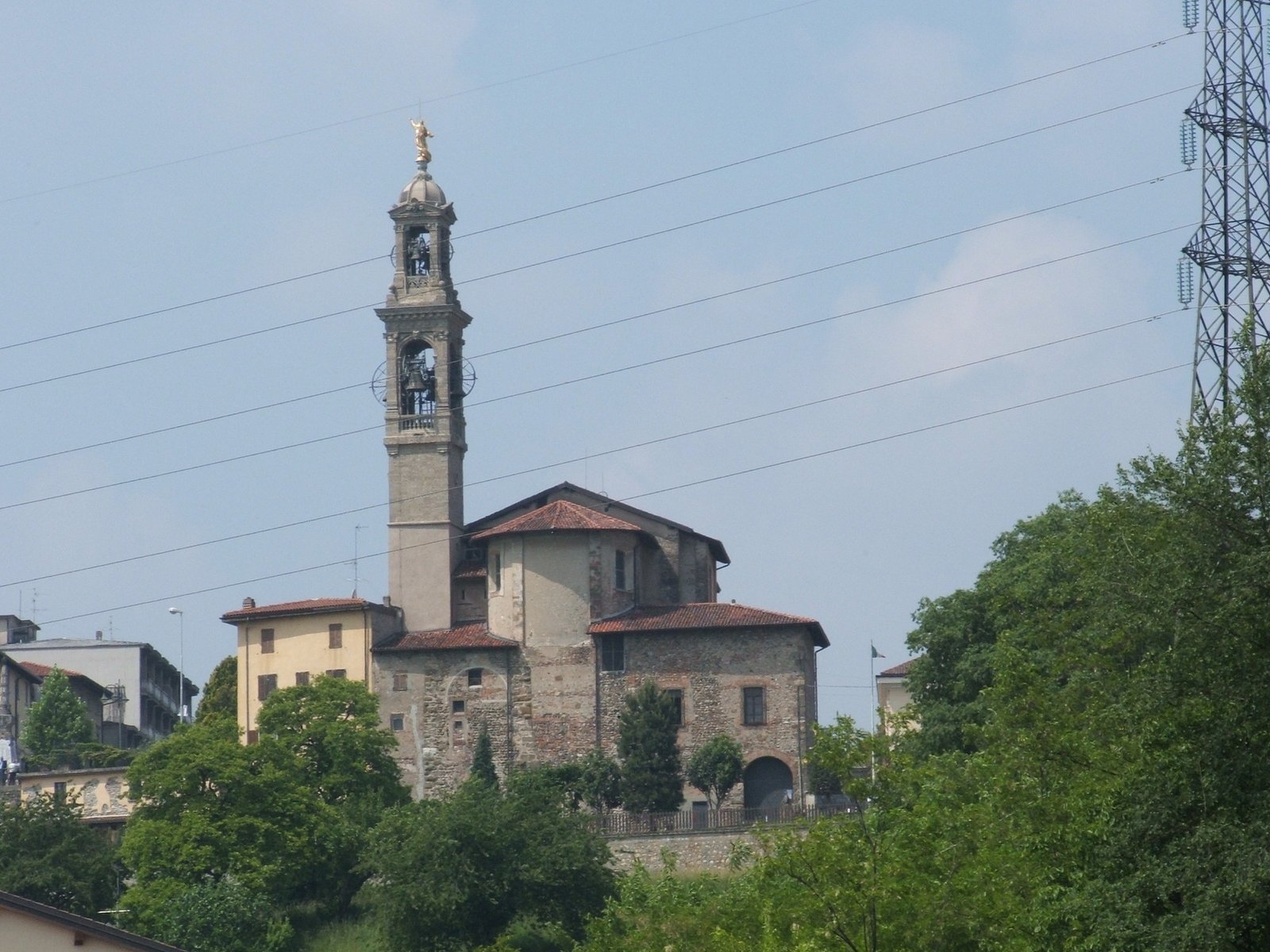
On the evening of 26 November 2010, 13-year-old Yara Gambirasio left the gym in Brembate di Sopra, a small town in the province of Bergamo in northern Italy, and set out on the short walk home — about 700 metres. She never arrived. Her disappearance turned a quiet Lombard community into the centre of one of the most closely followed criminal cases in modern Italian history, and the investigation that followed became one of the largest in the country’s history.
It would take more than three years, a trace of DNA no bigger than a speck, and the largest mass DNA screening ever carried out in Italy to find her killer. And even after the verdict, the case has never quite stopped being argued over.
The disappearance
Yara was a schoolgirl who loved gymnastics and dance. On the evening of 26 November, she had been at the local sports centre for practice. She left at about 6:30 p.m., and was seen on her way home. When she did not arrive, her family raised the alarm. The search began that night and grew over the following days into a huge operation, with police, volunteers and sniffer dogs combing the area around Brembate di Sopra.
For three months, there was no trace of her. Then, on 26 February 2011, a man flying a remote-controlled aeroplane over an open field in Chignolo d’Isola, less than ten kilometres from where Yara was last seen, spotted a body. It was Yara. The autopsy found she had died from a combination of a blow to the head, cuts, and exposure to the cold. Prosecutors treated the killing as aggravated murder.
The trace called “Ignoto 1”
The investigation’s key clue was a trace of genetic material found on Yara’s clothing. It contained Yara’s DNA mixed with that of an unknown man, whom investigators began calling “Ignoto 1” — Unknown 1. The profile matched no one in any police database.
Faced with a DNA profile and no name, the investigators took an extraordinary step: they began collecting samples on a huge scale. They tested people who knew Yara, patrons of a nearby nightclub, workers at a building site in the neighbouring town of Mapello, and thousands of other local residents. In the end, forensic scientists analysed around 22,000 profiles — the largest mass DNA screening in Italian history. They also found traces of lime in Yara’s airways and fibres on her clothes, which suggested that whoever had taken her might work in the building trade.
The breakthrough came through family. A partial match pointed to a young man named Damiano Guerinoni, whose DNA was close enough to Ignoto 1’s to suggest they were related. Working through the family tree, investigators reached his father’s brother, Giuseppe Guerinoni, a bus driver who had died in 1999. Tests on his exhumed remains showed he was Ignoto 1’s biological father — which meant the killer was one of his children, most likely a son born outside his marriage.
That trail led to Massimo Giuseppe Bossetti, a bricklayer from Mapello, a married father of three. Investigators obtained his DNA covertly, during a staged roadside alcohol check, and it matched the trace found on Yara’s clothing. On 16 June 2014, Bossetti was arrested.
The trial
Bossetti’s trial before the Court of Assizes of Bergamo opened on 3 July 2015 and ran for 45 hearings, drawing intense national attention. He pleaded not guilty, said he had never met Yara, and argued that his DNA had been contaminated or planted. His defence made much of the fact that there was no proven motive and no witness who placed him with the girl — the case against him rested almost entirely on the forensic match.
The prosecution’s case was that the DNA left on Yara’s clothing was of excellent quality and that the match was conclusive. On 1 July 2016, the court sentenced Bossetti to life imprisonment for murder. The verdict was upheld on appeal in July 2017, and on 12 October 2018 the Court of Cassation, Italy’s highest court, declared his final appeal inadmissible, making the life sentence definitive.
Bossetti has consistently maintained his innocence. His defence has argued, among other points, that the quantity of DNA was too small to be reliable and that the mitochondrial portion of the trace does not match him. The courts rejected these arguments, with forensic experts explaining that mitochondrial DNA is inherited through the maternal line and is not used for individual identification. In November 2019, Bossetti’s lawyers asked for a review of the DNA evidence; the request was denied in March 2021, because there was no longer enough DNA remaining to test. In June 2025, a Bergamo court ordered that the defence receive the victim’s genetic profile, the data from the mass screening and high-resolution photographs of her clothing, though not the physical items themselves. In June 2026, the defence asked for permission to carry out new tests, focusing on a disputed trace known as 31G20.
There was also a strange coda. In December 2022, an investigation was opened into Letizia Ruggeri, the chief investigator on the case, over accusations of misdirection and trial fraud. The case was dismissed in 2024, the judge finding that she had not intentionally destroyed evidence.
The largest screening in Italian history
The scale of the DNA screening in the Gambirasio case was extraordinary. Investigators collected samples from more than 22,000 people — men from the towns around Brembate di Sopra, patrons of a nightclub near the gym, workers at a building site in Mapello, and thousands of others with only the loosest connection to the case. It was the largest mass DNA screening ever carried out in Italy, and one of the largest anywhere in the world.
The family-tree work that followed was painstaking. The partial match to Damiano Guerinoni led investigators to his father’s brother, Giuseppe, a bus driver who had died in 1999. His remains were exhumed and tested, and they showed that he was Ignoto 1’s father. The search then moved to Giuseppe’s children — including children born outside his marriage, whose existence had to be traced through birth records and family testimony. One of them was a woman named Ester Arzuffi, who had given birth to twins in 1970: a boy and a girl. The boy was Massimo Giuseppe Bossetti, a bricklayer from Mapello, married with three children, who had lived his whole life a few kilometres from where Yara disappeared.
The case has since been told and retold, most recently in the Netflix docuseries The Yara Gambirasio Case: Beyond Reasonable Doubt, which examined the investigation and the arguments over the DNA evidence. In Italy, the case remains a touchstone for debates about forensic science, privacy, and the power of a single trace of DNA to decide a man’s fate.
What the case changed
The Gambirasio case is now the landmark example of forensic genealogy in Italy — the technique of using DNA not to match a suspect, but to find a suspect’s family, and then to work through the family tree until the name appears. It was the same approach that, a few years later, would solve the Golden State Killer case in California and a string of cold cases around the world. In Italy, it had never been used on anything like this scale.
It also left a difficult legacy. The mass screening of more than 22,000 people — many of them with no connection to the case — raised questions about privacy and consent that Italian courts and lawmakers are still debating. And the fact that the conviction rests almost entirely on a single DNA trace, with no motive and no witness, means the case is still argued over in Italy, in the press and in the courts, more than a decade after the verdict.
For Yara’s family, though, the outcome was simpler. A girl who walked out of a gym one November evening and never came home was given a name for the man the courts found responsible, and a grave to visit. The town of Brembate di Sopra still remembers her. And the DNA trace that solved her murder — Ignoto 1 — remains the most famous unknown name in Italian criminal history.
What is documented — and what is not
Documented: Yara Gambirasio, 13, disappeared on the evening of 26 November 2010 after leaving her gym in Brembate di Sopra, Italy. Her body was found on 26 February 2011 in a field in Chignolo d’Isola; the cause of death was a combination of a head blow, cuts and hypothermia. A trace of unknown male DNA found on her clothing, called “Ignoto 1,” led investigators through a mass screening of about 22,000 profiles to Giuseppe Guerinoni, who had died in 1999, and then to his son Massimo Giuseppe Bossetti. Bossetti was arrested on 16 June 2014, and on 1 July 2016 the Court of Assizes of Bergamo sentenced him to life imprisonment. The verdict was upheld on appeal and confirmed by the Court of Cassation on 12 October 2018. Bossetti maintains his innocence.
Unverified or unproven: The defence’s claims that the DNA evidence was contaminated or mishandled — the courts have rejected these arguments, but the defence continues to seek new tests, most recently in June 2026. There is no proven motive and no witness to the abduction. Claims about how Yara was taken and what happened between her disappearance and her death rest on forensic inference, not on direct evidence.