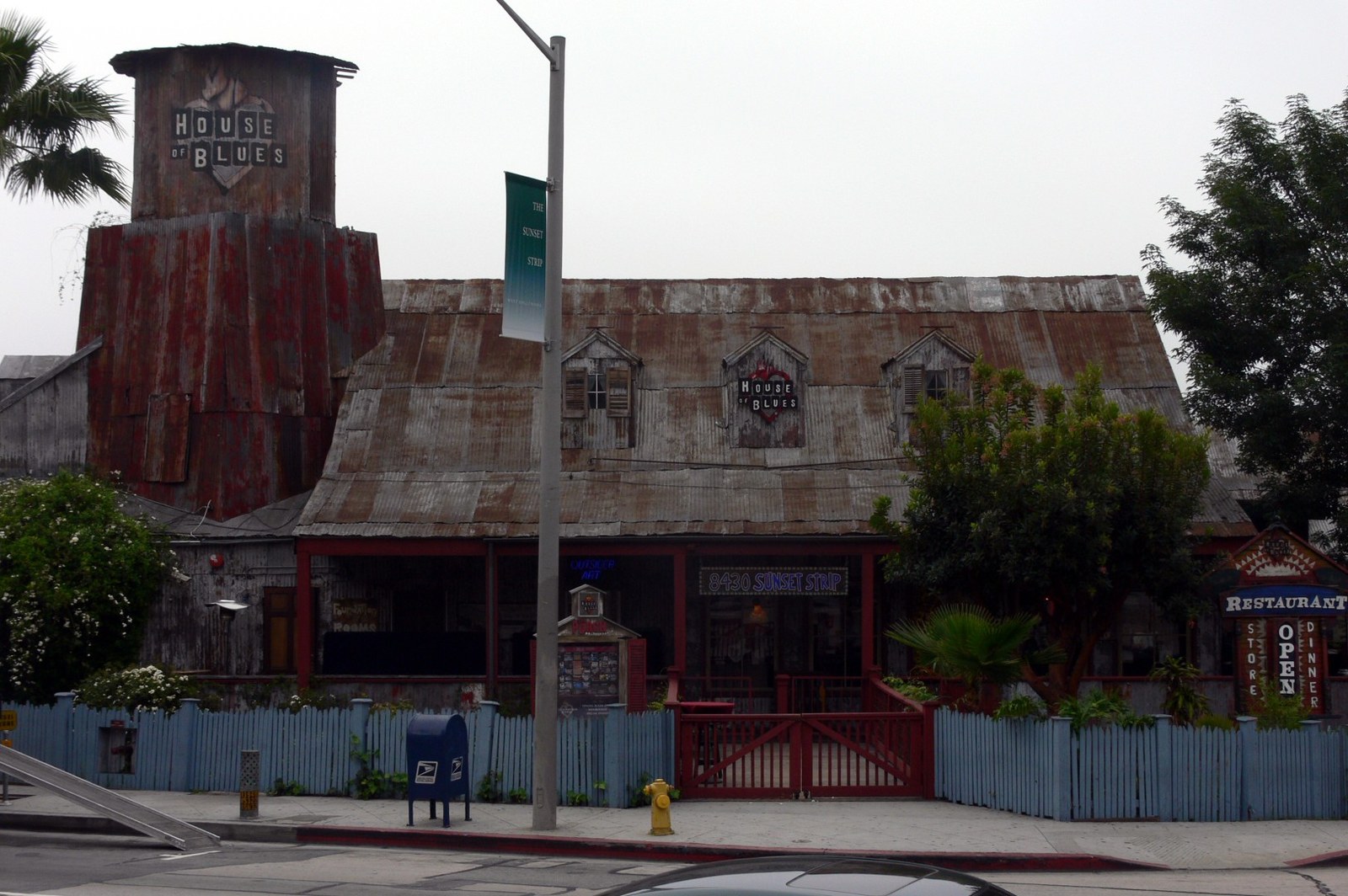
Lana Clarkson was 40 years old, an actress whose best-known work was in 1980s fantasy films — Deathstalker, Barbarian Queen — and who was working as a hostess at the House of Blues on the Sunset Strip in Los Angeles. In the early hours of 3 February 2003, she met the record producer Phil Spector there. Spector, 63, was one of the most famous men in popular music, the creator of the “Wall of Sound” and the producer of records by the Ronettes, the Righteous Brothers, and John Lennon. The two left together in Spector’s limousine for his mansion, the Pyrenees Castle, in Alhambra, California. A few hours later, Clarkson was dead.
Spector said she had killed herself. The prosecution said he had shot her. It took two trials, a hung jury, and six years to reach a verdict. On 13 April 2009, a jury found Spector guilty of second-degree murder.
The night
Clarkson met Spector while working her shift at the House of Blues. They were driven to his mansion while his driver waited in the car. Later that morning, Clarkson was found dead inside the house, slumped in a chair, with a single gunshot wound to the mouth. The weapon was a .38-calibre Colt Cobra revolver.
Spector was charged with murder in November 2003. From the start, the case turned on a single question: did Spector shoot Clarkson, or did Clarkson shoot herself? The defence pointed to the gun’s position and to evidence that Spector’s fingerprints were not on the weapon. The prosecution pointed to Spector’s history: four women testified that, on separate occasions, he had pulled a gun on them after drinking, when they tried to leave him — in each case, they said, he had pointed the weapon to prevent them walking out. The judge allowed that testimony, ruling it could be used to show a lack of accident or mistake.
The first trial
Spector’s first trial began in March 2007 in Los Angeles Superior Court, before Judge Larry Paul Fidler. It was televised, and it was chaotic: Spector went through at least three sets of attorneys, and during the trial the defence forensic expert Henry Lee was accused of hiding evidence the district attorney’s office said could prove Spector’s guilt.
After roughly 44 hours of deliberation over twelve days, the jury deadlocked, ten to two in favour of conviction. On 26 September 2007, Judge Fidler declared a mistrial.
The retrial
The retrial began on 20 October 2008, again before Judge Fidler; this time it was not televised. The defence, now led by attorney Doron Weinberg, again argued suicide — that Clarkson, a 40-year-old actress whose career had stalled, had killed herself in a stranger’s home in a moment of despair. The prosecution again presented the four women and argued that the pattern was the evidence: a man who had repeatedly used a gun to stop women leaving him had done so once more, and this time the gun had gone off.
The case went to the jury on 26 March 2009. Nineteen days later, on 13 April, the jury returned a guilty verdict: second-degree murder, with a further finding that Spector had used a firearm in the commission of the crime. Spector was taken into custody immediately. On 29 May 2009, he was sentenced to 19 years to life in the California state prison system — fifteen years to life for the murder, plus four years for the firearm.
Clarkson’s family, who had waited six years for a verdict, also pursued a civil case against Spector, and the court ordered him to pay Clarkson’s mother for funeral expenses.
The appeals and the end
Spector appealed. In May 2011, the California Second District Court of Appeal affirmed the conviction and denied a rehearing. In August 2011, the California Supreme Court declined to review the case. In February 2012, the U.S. Supreme Court denied his petition for review.
Spector entered the prison system in June 2009. He died on 16 January 2021, of COVID-19 complications, in a prison hospital in Stockton, California. He was 81. He would have been eligible for parole in 2024.
What the case left behind
The Clarkson case is often told as a story about Phil Spector — the genius producer, the recluse, the man with the guns. That telling does Clarkson a disservice. She was the victim, and the facts about her are the ones that matter: she was 40, she was working a service job in a music club to support an acting career that had never quite broken through, and she went home with a famous man she had just met and never came back.
The conviction resolved the legal question. What exactly happened in the foyer of the Pyrenees Castle in the early hours of 3 February 2003 — what was said, what was done, and in what order — was never established beyond the jury’s verdict. Spector maintained his innocence until his death. The jury that heard all the evidence found otherwise, and the appellate courts agreed.
What is documented — and what is not
Documented: Lana Clarkson, aged 40, was found dead in the early hours of 3 February 2003 inside Phil Spector’s mansion, the Pyrenees Castle, in Alhambra, California, with a single gunshot wound to the mouth; the weapon was a .38-calibre Colt Cobra revolver. She had met Spector that night while working at the House of Blues in Los Angeles. Spector was charged with murder in November 2003. His first trial ended in a mistrial on 26 September 2007, with the jury deadlocked ten to two in favour of conviction. At his retrial, which began on 20 October 2008, the jury found him guilty of second-degree murder on 13 April 2009, with a firearm enhancement. He was sentenced on 29 May 2009 to 19 years to life. The California Court of Appeal affirmed the conviction in May 2011; the California Supreme Court declined review in August 2011, and the U.S. Supreme Court denied his petition in February 2012. Spector died in prison on 16 January 2021.
Unverified or unproven: The precise sequence of events inside the mansion — the prosecution’s case and Spector’s suicide claim were the two competing accounts, and only the jury’s verdict resolved them legally. That Spector intended to kill Clarkson — the conviction was for second-degree murder, which does not require premeditation, and the prosecution’s theory was that he fired during a confrontation, not that he planned a killing. Any claim about what Clarkson said or did in her final minutes rests on Spector’s account and on the physical evidence, not on any independent witness.