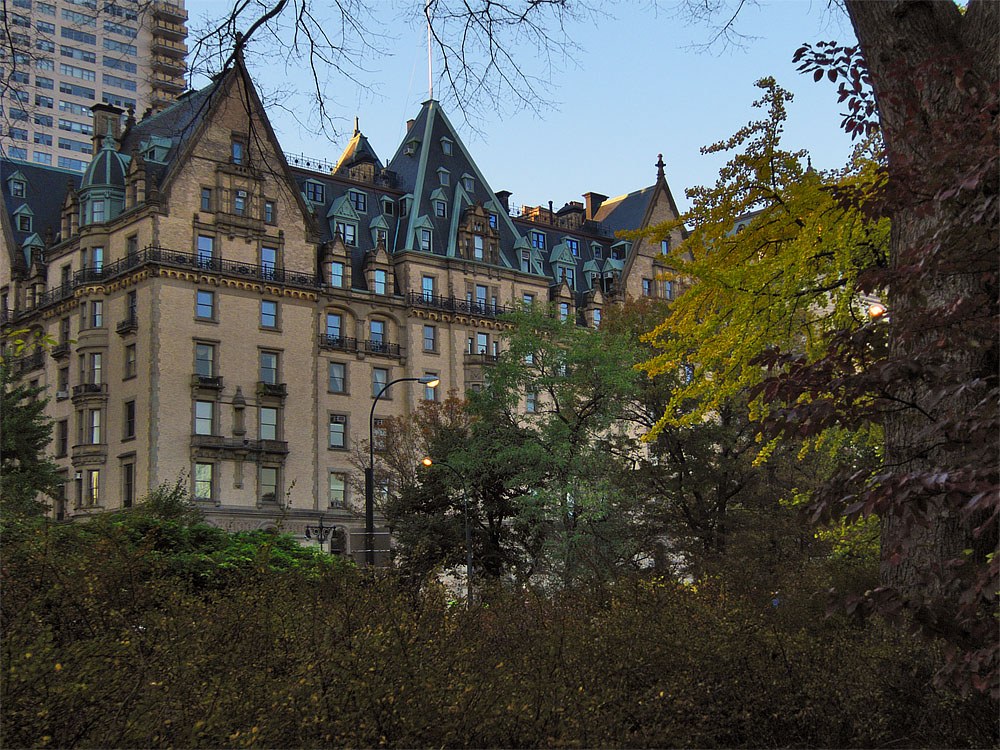
On the evening of 8 December 1980, John Lennon was returning home to the Dakota, the apartment building on West 72nd Street in Manhattan where he lived with his wife, Yoko Ono, and their five-year-old son, Sean. Lennon was 40 years old. He had been out of the public eye for five years, raising Sean, and had just returned to music with a new album, Double Fantasy, recorded with Ono. Earlier that day, outside the Dakota, a young man had asked him to sign a copy of the album. Lennon had obliged. The young man was Mark David Chapman, a 25-year-old former security guard from Honolulu, Hawaii. He was still waiting outside when Lennon came home.
At about 10:50 p.m., as Lennon walked through the archway of the Dakota with Ono, Chapman called out to him. Lennon turned, and Chapman fired five shots from a revolver. Four of them struck Lennon. He was taken to Roosevelt Hospital, where he was pronounced dead at 11:15 p.m. Chapman stayed at the scene, reading a paperback copy of J. D. Salinger’s novel The Catcher in the Rye, and was arrested by the Dakota’s doorman and the police.
The Killer
Chapman had planned the killing for months. He had flown to New York from Hawaii, bought the revolver legally, and waited outside the Dakota for days. He later said he had been angered by Lennon’s wealth and by a remark Lennon had made in 1966 that the Beatles were “more popular than Jesus,” and that he saw himself as Holden Caulfield, the hero of The Catcher in the Rye, acting against what he called phoniness. Psychiatrists who examined him diagnosed narcissistic personality disorder and psychosis, but the question of whether he was legally insane was never decided in court — because Chapman chose not to let it be decided.
He was charged with second-degree murder and initially pleaded not guilty by reason of insanity. Then, on 22 June 1981, against the advice of his lawyers, he changed his plea to guilty, saying that it was the will of God. The court ordered psychiatric evaluations before accepting the plea, and then accepted it. On 24 August 1981, he was sentenced to 20 years to life in prison. At the sentencing, he read a passage from The Catcher in the Rye.
Parole, Denied Again and Again
Chapman became eligible for parole in 2000, and he has applied at every opportunity since. Every application has been denied, most recently in 2024. The parole board has cited the premeditated nature of the killing, the public attention it would attract, and the objections of Lennon’s family. Yoko Ono has opposed his release at every hearing, saying that she and her sons would be at risk if he were freed. Chapman himself has said at hearings that he understands why he should remain in prison. He is held at the Wende Correctional Facility in western New York, having been moved there from Attica in 2012.
The killing changed how fame was policed in New York and beyond. The Dakota, already famous as the home of Lauren Bacall and Leonard Bernstein, became a place of pilgrimage, and the entrance where Lennon was shot is now marked by fans who leave flowers and messages. Across the street in Central Park, a memorial called Strawberry Fields, named after the Beatles song, was opened in 1985, with a mosaic bearing the word “Imagine.” Every year on 8 December, fans gather there to remember Lennon.
Lennon’s Legacy
Lennon was one of the most influential musicians of the twentieth century — a founder of the Beatles, the writer of songs including “Imagine,” “Give Peace a Chance,” and “Working Class Hero,” and an activist whose opposition to the Vietnam War had made him a target of the Nixon administration, which tried to deport him in the 1970s. His death at 40, at the moment of his return to music, gave the killing a particular cruelty that has kept it in the public memory for more than four decades.
The case also raised questions that have never been fully answered. Chapman has given different accounts of his motives over the years, and psychiatrists have disagreed about his mental state. What the record establishes is simpler: a planned killing, a guilty plea, a sentence of 20 years to life, and a prisoner who has never been released.
What Is Documented — and What Is Not
Documented: John Lennon was shot outside the Dakota apartment building in New York at about 10:50 p.m. on 8 December 1980 and pronounced dead at Roosevelt Hospital at 11:15 p.m., aged 40. Mark David Chapman, 25, of Honolulu, fired five shots, four of which struck Lennon, and was arrested at the scene. On 22 June 1981, against his lawyers’ advice, Chapman pleaded guilty to second-degree murder, and on 24 August 1981 he was sentenced to 20 years to life. He became eligible for parole in 2000 and has been denied at every hearing, most recently in 2024. He is held at the Wende Correctional Facility in New York. Yoko Ono has opposed his release at each hearing.
Not documented / unverified: Chapman’s motives have been described in different ways — anger at Lennon’s wealth, religious conviction, identification with Holden Caulfield — and his own accounts have changed over time; no single motive is established as fact. Psychiatric diagnoses of Chapman differ between the experts who examined him. The claim that Chapman was carrying a copy of The Catcher in the Rye at the scene is well documented, but the meaning he attached to the book comes from his own statements.