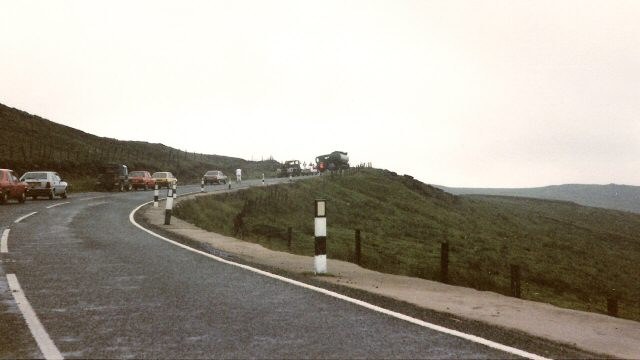
The Moors Murders are among the most notorious crimes in modern British history, not only because of the youth of the victims, but because of the ordinariness of the people who committed them. Between July 1963 and October 1965, Ian Brady and Myra Hindley killed five children and teenagers in and around Manchester, in north-west England, and buried most of them in shallow graves on Saddleworth Moor. The victims were Pauline Reade, John Kilbride, Keith Bennett, Lesley Ann Downey and Edward Evans. They were aged between 10 and 17. At least four of them were sexually assaulted. The case changed how Britain thought about trust, about strangers, and about the safety of children walking home.
Brady was born Ian Duncan Stewart in Glasgow, Scotland, in 1938. Hindley was born in the Gorton district of Manchester in 1942. They met in the early 1960s, when Hindley worked as a typist at a chemical firm where Brady was employed. By the summer of 1963, they were in a relationship. Hindley, young and devoted to him, became his accomplice. She was the one who approached the children, offering lifts, asking for help, or promising something small — a lost glove, a puppy, a ride home. Brady waited nearby.
The five victims
Pauline Reade, aged 16, was the first victim. On 12 July 1963, she left her home in Gorton to go to a dance and never came home. Hindley, who lived nearby, asked her to help search for a lost glove on the moor. Brady was waiting there. Pauline’s body was buried in a shallow grave on Saddleworth Moor, and for more than twenty years her family did not know where she was.
John Kilbride, aged 12, disappeared in November 1963, after leaving a market in Ashton-under-Lyne. Hindley offered him a lift in her van and drove him to the moor, where Brady killed him. Keith Bennett, also 12, was taken on 16 June 1964 while walking to his grandmother’s house. His body has never been found, despite repeated searches over six decades.
Lesley Ann Downey, aged 10, was taken from a fairground in Manchester on Boxing Day, 26 December 1964. She was brought to the couple’s home, where the killers made photographs and a recording of her — material that later became evidence at their trial. Edward Evans, aged 17, was the final victim. On 6 October 1965, Brady invited him to the flat at 16 Wardle Brook Avenue in Hattersley, where Brady killed him with an axe in front of Hindley and her brother-in-law, David Smith.
It was Smith who ended the killings. After witnessing Evans’s murder, he went to the police in the early hours of 7 October 1965. Officers arrived at the flat and found Evans’s body. Brady was arrested that day; Hindley was arrested on 11 October. When police searched the couple’s home, they found photographs, notebooks and other material that pointed to the moor. Within days, officers recovered the bodies of Lesley Ann Downey and John Kilbride from graves on Saddleworth Moor.
The trial
The trial opened at Chester Assizes on 19 April 1966, before Mr Justice Fenton Atkinson, and it gripped the country. Brady and Hindley pleaded not guilty. The prosecution presented the photographs and the recording, the testimony of David Smith, and the evidence from the graves. On 6 May 1966, both were convicted: Brady of three murders, and Hindley of two murders and of being an accessory to the murder of John Kilbride. Both were sentenced to life imprisonment.
At the time of the trial, police knew of only three killings. The murders of Pauline Reade and Keith Bennett were not yet proven, and neither Brady nor Hindley was charged with them. That changed in the 1980s. In 1985, Brady was reported in the press as having confessed to the murders of Reade and Bennett. The investigation was reopened, and both were taken separately to Saddleworth Moor to help police search for the graves. They did not formally confess to the additional murders until 1987. That year, Pauline Reade’s body was found on the moor, more than twenty years after her death. Keith Bennett’s grave was never located.
The long aftermath
Neither Brady nor Hindley was ever released. Hindley made several appeals against her life sentence, saying she was a reformed woman and no longer a danger, but she was never freed. She died in prison on 15 November 2002, aged 60, after serving 36 years. Brady was diagnosed as a psychopath in 1985 and was confined in the high-security Ashworth Hospital in Merseyside. He said he never wished to be released and repeatedly asked to be allowed to die. He died at Ashworth on 15 May 2017, aged 79, having served 51 years.
For the families, the case never truly ended. Keith Bennett’s mother, Winnie Johnson, spent the rest of her life campaigning for her son’s body to be found so that he could be given a proper burial. She died in 2012 without that closure. Searches of Saddleworth Moor have continued into recent years, but no remains have been found. The moor itself has become a place of grief — a bleak, beautiful landscape that still holds one child.
The Moors Murders also left a lasting mark on British law and policing. The case showed how a killer could hide behind an ordinary life, and how the absence of a body could leave a family in limbo for decades. It is remembered today less for the notoriety of Brady and Hindley than for the five young people whose lives were taken — Pauline, John, Keith, Lesley Ann and Edward — and for Keith Bennett, whose family is still waiting.
What Is Documented — and What Is Not
Documented: Ian Brady and Myra Hindley killed five children and teenagers — Pauline Reade, 16; John Kilbride, 12; Keith Bennett, 12; Lesley Ann Downey, 10; and Edward Evans, 17 — between 12 July 1963 and 6 October 1965 in and around Manchester. The bodies of Downey and Kilbride were found on Saddleworth Moor in October 1965; Reade’s body was found there in 1987 after the couple’s confessions; Bennett’s body has never been found despite repeated searches. David Smith witnessed Evans’s murder and reported it to police, leading to Brady’s arrest on 7 October 1965 and Hindley’s on 11 October. At Chester Assizes, from 19 April to 6 May 1966, Brady was convicted of three murders and Hindley of two murders and accessory to a third; both received life sentences. Hindley died in prison on 15 November 2002, aged 60; Brady died at Ashworth Hospital on 15 May 2017, aged 79.
Disputed or unverified: The exact date of John Kilbride’s disappearance is given differently in different sources — some say 7 November 1963, others 23 November 1963 — so this article gives only the month. Claims about Brady’s precise motives, and about how much Hindley understood or directed, rest largely on the couple’s own later statements and on interpretations by writers, and remain contested. Reports of possible locations for Keith Bennett’s grave, including maps Brady left behind, have prompted searches but have never been confirmed, and no remains have been found.