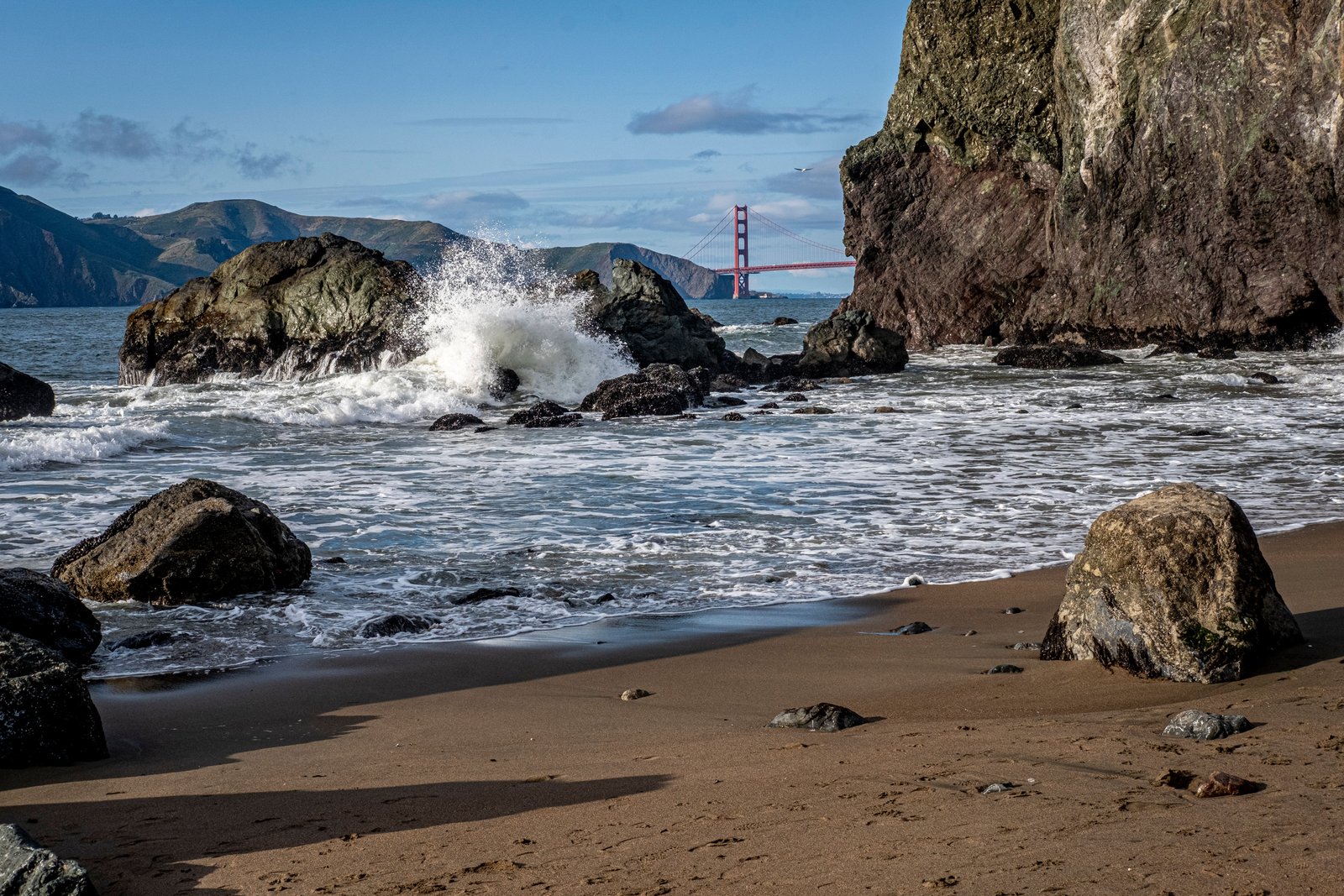
At 1:57 a.m. on 27 January 1974, an anonymous caller told San Francisco police of a body lying near the water at Ocean Beach, close to the foot of Ulloa Street. Officers found Gerald Earl Cavanagh, 49, a Canadian-American immigrant, lying face-up at the water’s edge, stabbed repeatedly, with cuts on his hands showing he had fought for his life. He was the first recognised victim of a killer who would come to be known as the Doodler — named not for anything found at the scene, but for what survivors said he did before he attacked: he drew pictures of the men he met.
Between January 1974 and September 1975, at least five men were killed in a series of attacks that San Francisco police linked to a single offender. In January 2022, police added a probable sixth victim, Warren Andrews, who had been attacked in April 1975 and died seven weeks later. Some investigators have suggested the killer may have been responsible for as many as 14 or 16 deaths, but that larger figure has never been established. All of the victims were white men, and all were part of, or connected to, the city’s gay community. More than fifty years on, the case remains open, and the killer has never been publicly named or charged.
The victims
Gerald Cavanagh was found on Ocean Beach on 27 January 1974, initially unidentified and known to the medical examiner only as “John Doe #7.”
The second victim, Joseph “Jae” Stevens, 27, was found on 25 June 1974 beside Spreckels Lake in Golden Gate Park. Stevens was an entertainer — a singer, dancer, comedian and female impersonator — well known in San Francisco’s nightclub scene. He had been seen at a club the night before, and investigators believed he had died only shortly before his body was found.
Less than two weeks later, on 7 July 1974, Klaus Achim “Claus” Christmann, 31, a German-American immigrant, was found at Ocean Beach by a woman walking her dog. Christmann was married, with children still in Germany, and had been seen at Bojangles, a gay nightclub in the Tenderloin, before his death. His wounds were more numerous than Stevens’, and the similarities to Cavanagh’s murder made it increasingly difficult for police to treat the killings as unrelated. Then the killings stopped for almost a year.
Warren Andrews, 52, a lawyer for the United States Postal Service, was found unconscious at Lands End on 27 April 1975, beaten with a rock and a tree branch. He never regained consciousness and died on 22 June 1975. Because he had been beaten rather than stabbed, his case was not originally counted among the Doodler murders; only in January 2022 did San Francisco police announce Andrews was believed to be a probable sixth victim.
Frederick Elmer Capin, 32, a nurse and a United States Navy veteran who had served in Vietnam, was found at Ocean Beach on 12 May 1975 and identified through fingerprints. Harald Gullberg, 66, a Swedish immigrant and the oldest of the victims, was found on 4 June 1975 in Lincoln Park, already about two weeks dead, and is regarded as the last confirmed victim of the series.
The sketch that gave him a name
The Doodler’s nickname came from the men who survived him. Three men survived attacks that police connected to the killings, and their descriptions gave investigators something the murder scenes could not: an account of the man himself. According to San Francisco police, at least one survivor said the attacker told him he was a cartoonist and doodled while the two talked in a late-night diner.
Two further attacks took place in July 1975 at the Fox Plaza Apartments on Market Street, where two men on the same floor were each attacked by a man matching the same description. The survivors’ accounts formed the basis of the 1975 composite sketch of a young Black man, described as between 19 and 25 years old, about six feet tall and slender.
The suspect police could not charge
By 1976, police believed they had identified a strong person of interest: a young man who matched aspects of the composite sketch and was detained and questioned. Officers later said they strongly believed he was responsible. He cooperated with police during his interview but never admitted guilt, and he was never charged. The reason was painful and specific to the era. The three surviving victims were unwilling to testify in court, because doing so would have publicly identified them as gay men at a time when that could cost them their jobs, their families and their standing. Without their testimony, prosecutors could not build a case.
The gay rights activist and city supervisor Harvey Milk publicly expressed sympathy for the survivors, saying he understood the pressure society had put on them; he estimated that 20 to 25 percent of the roughly 85,000 gay men in San Francisco were closeted. The case became a collision between a murder investigation and the social conditions of 1970s America: police believed they knew who the killer was, and the witnesses who could have proved it could not afford to speak. The suspect was never publicly named, and no charges were ever filed.
The case today
The Doodler case never formally closed. In February 2019, the department announced a renewed push: a $100,000 reward, an age-progression sketch showing what the suspect might look like in his sixties, and the release of audio from the anonymous 27 January 1974 call reporting Cavanagh’s body. The reward has since been raised to $250,000. In 2026, a cold-case investigator told reporters that police continue to monitor a prime suspect and that an arrest is not out of the question. If the man questioned in 1976 is still alive, he would now be in his seventies or eighties.
What the record shows
What is documented is this: between January 1974 and September 1975, five men — Gerald Earl Cavanagh, Joseph “Jae” Stevens, Klaus Achim Christmann, Frederick Elmer Capin and Harald Gullberg — were found dead in San Francisco’s western shoreline parks and beaches, each killed in a knife attack; three men survived similar attacks and described an attacker who said he was a cartoonist and drew while talking with them; police detained and questioned a young man in 1976 but never charged him, because the surviving victims would not testify; and in January 2022, Warren Andrews, attacked at Lands End in April 1975 and dead seven weeks later, was named a probable sixth victim.
The larger victim totals sometimes attached to the case — as many as 14 or 16 deaths — have never been conclusively established and should be treated as speculation, not fact. The identity of the Doodler, and whether the man questioned in 1976 was responsible, remain unproven. Five men — and probably a sixth — were killed, and their killer was almost certainly questioned by police, yet walked free because the witnesses who could have convicted him could not afford to be seen in a courtroom.
Sources
- https://en.wikipedia.org/wiki/Doodler
- https://crimesolverscentral.com/serialkillers/396
- https://sanfranciscopolice.org/fil/print/pdf/node/30331
- https://www.police1.com/investigations/articles/calif-police-release-sketch-of-doodler-killer-announce-100000-reward-5G50kWsKVf6EMNwN/
- https://www.mensjournal.com/news/doodler-serial-killer-case-close-to-being-solved-claims-investigator