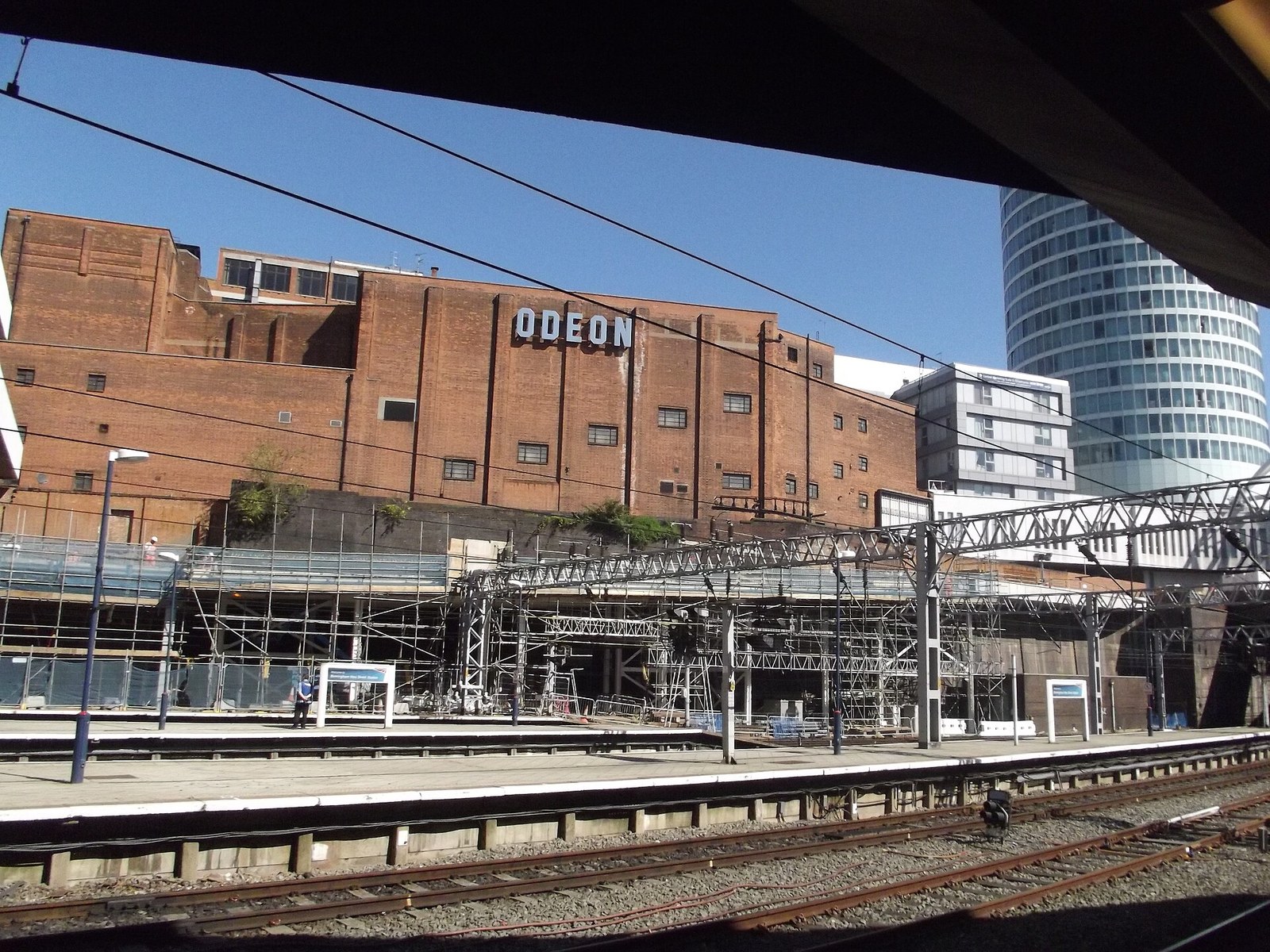
On the evening of 21 November 1974, bombs exploded in two pubs in central Birmingham, killing 21 people and injuring 182 others — at the time, the deadliest terrorist attack on the British mainland since the Second World War. Within hours, six men had been arrested. Within nine months, they had been convicted of murder and sentenced to life imprisonment. Sixteen years later, the Court of Appeal quashed those convictions and the six men walked free. No one has been convicted of the bombings. The case is now recognised as one of the worst miscarriages of justice in British legal history, and it changed the criminal justice system that produced it.
The bombings
The two pubs were the Mulberry Bush, at the foot of the Rotunda on New Street, and the Tavern in the Town, a basement pub on New Street. The first bomb exploded at 8.17 p.m. in the Mulberry Bush; the second followed at 8.27 p.m. in the Tavern in the Town. A third device was later found in the doorway of a Barclays Bank in Hagley Road, Edgbaston. The attacks were attributed to the Provisional Irish Republican Army, although the organisation never officially admitted responsibility.
The human cost was devastating. Twenty-one people were killed and 182 injured, many of them young people who had been out for an evening in the city centre. The bombings came at a moment of intense fear in Britain: the conflict in Northern Ireland, known as the Troubles, had brought violence to the British mainland, and the public and political pressure for arrests and convictions was enormous. Eight days after the bombings, Parliament passed the Prevention of Terrorism Act, which gave the police sweeping new powers.
The victims and their families are at the centre of this story, and their loss was not undone by anything that followed. The wrong convictions that followed the bombings compounded the original harm: they left the real perpetrators unpursued for years, and they meant that the families of the dead were told, for sixteen years, that justice had been done when it had not.
The arrests and the trial
The six men arrested were Hugh Callaghan, Patrick Joseph Hill, Gerard Hunter, Richard McIlkenny, William Power and John Walker. All were from Northern Ireland and living in Birmingham. They were arrested within hours of the bombings, as they travelled by train from New Street station. They maintained from the start that they were innocent, and that the confessions attributed to them had been obtained by force.
The prosecution case at their trial rested on two pillars: the confessions, and forensic evidence. The forensic evidence came from Dr Frank Skuse, a Home Office scientist, who used a test known as the Griess test to claim that traces of nitroglycerine had been found on the hands of two of the men. The defence argued that both pillars were unreliable, but the jury at Lancaster Crown Court was not persuaded. On 15 August 1975 the six men were each sentenced to 21 life sentences for murder.
The language of the law matters here. The six men were not later declared innocent by a court. Their convictions were quashed because they were unsafe and unsatisfactory — the Court of Appeal’s conclusion that the evidence could no longer support them. Quashing a conviction does not identify who planted the bombs, and it does not close the case.
The long campaign
The six men appealed, and in 1988, after what was then the longest criminal appeal hearing ever held, their convictions were upheld. The campaign for their release continued, driven by their families, by the journalist Chris Mullin — whose 1986 book Error of Judgment: The Truth About the Birmingham Pub Bombings set out a detailed case for their innocence — and by their solicitor Gareth Peirce, among others.
The breakthrough came from fresh scientific evidence. New analysis threw grave doubt on Dr Skuse’s forensic evidence, and the Court of Appeal later said that his conclusion had been wrong, and demonstrably wrong, judged even by the state of forensic science in 1974. Evidence also emerged of police fabrication and the suppression of material that should have been disclosed to the defence, and the confessions were discredited. Faced with that material, the Crown withdrew most of its case against the men.
The quashing of the convictions
On 14 March 1991, the Court of Appeal, constituted by Lord Justices Lloyd, Mustill and Farquharson, allowed the men’s second full appeal. The court stated that, in the light of the fresh scientific evidence, which at least threw grave doubt on Skuse’s evidence, if it did not destroy it altogether, the convictions were both unsafe and unsatisfactory. The six men walked free that day, after more than sixteen years in prison.
The consequences were far-reaching. In 1991 the Home Secretary set up the Royal Commission on Criminal Justice, whose recommendations led to the Criminal Appeal Act 1995 and the establishment of the Criminal Cases Review Commission in 1997, a body that investigates claimed miscarriages of justice and refers cases back to the courts. In 2001, a decade after their release, the six men were awarded compensation ranging from £840,000 to £1.2 million each.
Why the case still matters
The Birmingham Six case is a study in how a justice system can fail under pressure. The failures were not the work of a single person. They included flawed forensic science presented with unwarranted confidence, confessions obtained in circumstances that were later discredited, evidence that was not disclosed, and an appeal system that took thirteen years to correct itself after the first appeal failed. Each failure, on its own, might have been survivable. Together, they kept six innocent men in prison for sixteen years. The reforms that followed made such a failure harder, though they did not guarantee that it could never happen again.
What the record shows
Documented: On 21 November 1974 bombs exploded in the Mulberry Bush (8.17 p.m.) and the Tavern in the Town (8.27 p.m.) in Birmingham, killing 21 people and injuring 182; the six men — Hugh Callaghan, Patrick Joseph Hill, Gerard Hunter, Richard McIlkenny, William Power and John Walker — were convicted of murder and sentenced to 21 life sentences each on 15 August 1975; their convictions were quashed by the Court of Appeal on 14 March 1991 as unsafe and unsatisfactory; compensation of £840,000 to £1.2 million was awarded in 2001; the case led to the Royal Commission on Criminal Justice and, through the Criminal Appeal Act 1995, to the Criminal Cases Review Commission in 1997.
Disputed or unverified: The identity of the bombers has never been established by a conviction. Claims about who was responsible, including in Chris Mullin’s book, are reports, not findings of a court. The Court of Appeal’s finding was that the convictions were unsafe, not a ruling on every disputed detail of the interrogations. One secondary source gives March 1975 as the conviction date; the sentencing date of 15 August 1975 is used here.
Sources
- https://en.wikipedia.org/wiki/Birmingham_pub_bombings
- https://wiki.poast.org/wiki/Birmingham_Six
- https://www.wired-gov.net/wg/news.nsf/articles/Anniversary+of+the+quashed+convictions+that+led+to+the+CCRCs+creation+15032023142500?open
- https://www.citystgeorges.ac.uk/news-and-events/news/2024/november/error-judgement-truth-about-Birmingham-pub-bombings-50th-anniversary-of-attack
- https://commons.wikimedia.org/wiki/File:Birmingham_New_Street_Station_-_new_footbridge_-_Odeon_and_Rotunda_(7949642394).jpg