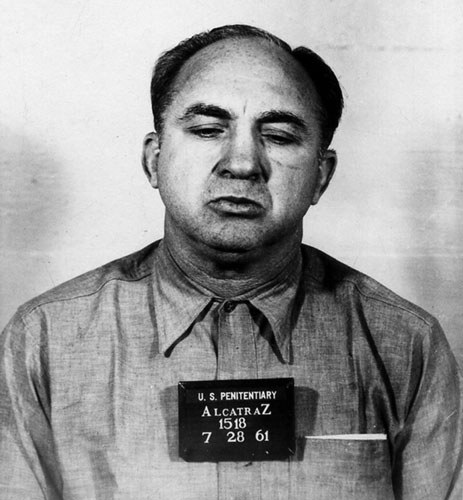
Mickey Cohen was the most famous gangster in Los Angeles in the late 1940s and 1950s — famous not only for the rackets he controlled, but for surviving. After he took over the city’s underworld following the murder of his friend and boss Bugsy Siegel, rival mobsters tried to kill him again and again. He survived shootings, a bombing and years of police pressure, and became a celebrity in the process: a small, swaggering figure in expensive suits who held court in nightclubs and talked freely to reporters. The law, in the end, did what the gunmen could not.
Cohen was born Meyer Harris Cohen in 1913, in Brooklyn, New York, to Jewish immigrant parents from Russia. He grew up poor, and by his own account he was in trouble from childhood. He became a professional boxer as a young man — a 5-foot-5-inch featherweight — and the toughness and love of the spotlight he learned in the ring stayed with him for life. He also worked as an enforcer for the Chicago mob, and it was through those connections that he was sent west.
Bugsy Siegel’s Man
Cohen arrived in Los Angeles in the late 1930s — sources give 1937 or 1939 — and became the bodyguard and right-hand man of Benjamin “Bugsy” Siegel, the flamboyant mobster who was building a gambling empire on the West Coast and in Las Vegas. Cohen ran his own bookmaking operation in Hollywood and enforced Siegel’s interests on the Sunset Strip, the glittering stretch of nightclubs and restaurants where the city’s rich and famous drank alongside its criminals.
On 20 June 1947 Siegel was assassinated in Beverly Hills, shot through the window of his girlfriend’s home. The murder has never been solved, though it is widely believed to have been ordered by his own mob partners over the failing Flamingo casino in Las Vegas. Cohen’s reaction, by several accounts, was characteristic: he stormed into a hotel where he believed Siegel’s killers were staying, fired shots into the ceiling, and demanded they come out and face him. Whether or not the story is exactly true, the point stands — Siegel’s death left Cohen as the leading figure in Los Angeles organised crime, controlling gambling across Southern California.
That position made him a target. His chief rival was Jack Dragna, head of the Los Angeles Mafia family, who wanted Cohen dead and, according to the mob turncoat Jimmy Fratianno, was obsessed with the idea of killing him. The attempts began almost at once.
The Attempts on His Life
In August 1948 gunmen opened fire on Cohen’s haberdashery on Sunset Boulevard. Cohen dived for cover in a washroom and escaped, but his bodyguard Hooky Rothman was killed and two others were wounded. In May 1949 his car was found with bullet holes in it and blood inside, evidence of another attempt. The most famous attack came in the early hours of 20 July 1949, when Cohen stepped out of Sherry’s Restaurant on the Sunset Strip. Gunmen opened fire from across the street. Cohen crouched at the instant the shooting began and was hit in the shoulder; his aide Edward “Neddie” Herbert was struck several times and died of his wounds within days, and his bodyguard Harry Cooper, a state agent assigned to protect him, was seriously wounded. A young actress dining with them was also hit. The case was never solved, though Fratianno later said Dragna had ordered the ambush.
Then, on 6 February 1950, a bomb exploded at Cohen’s home in Brentwood, the wealthy neighbourhood where he lived with his wife. Both survived. Cohen turned his house into a fortress of floodlights, alarms and weapons, and dared his enemies to try again.
How many times, in total, was Cohen’s life attempted? That is where the record blurs. This article’s brief gives seven attempts; other accounts say eleven. The difference comes from how attempts are counted — some include threats, shootings at his property and attacks on his associates, while others count only direct attacks on Cohen himself. What is certain is that he survived several serious, documented attempts between 1948 and 1950, and that the attempts made him more famous, not less. Newspapers called him the West Coast’s “exhibitionist hoodlum,” and he seemed to enjoy the attention.
Tax Evasion and Decline
Cohen was never convicted of a violent crime, despite many arrests and court appearances. The federal government brought him down the way it had brought down Al Capone: through his taxes. In 1951 he was convicted of income tax evasion and sentenced to four years in federal prison. After his release he rebuilt his life in Los Angeles, but in 1961 he was convicted of tax evasion a second time and sent back to federal prison. During that second sentence he was attacked in prison and badly injured, an assault that left him in poor health for the rest of his life.
He was released in 1972, a diminished figure. The Los Angeles underworld had moved on, and Cohen lived quietly in his final years. He died of stomach cancer in Los Angeles in July 1976, at the age of 62. He had outlived Siegel, Dragna and most of his generation of gangsters, and he had done it, as he liked to boast, by being luckier and harder to kill than anyone expected.
What Is Documented — and What Is Not
Documented: Meyer Harris Cohen was born in Brooklyn in 1913 to Jewish immigrant parents, and became a professional boxer before moving into organised crime. He arrived in Los Angeles in the late 1930s and became the bodyguard and associate of Bugsy Siegel. After Siegel was murdered in Beverly Hills on 20 June 1947, Cohen became the leading figure in Los Angeles organised crime, controlling gambling in Southern California, and a rival of Mafia boss Jack Dragna. Documented attempts on his life include the August 1948 shooting at his Sunset Boulevard haberdashery, in which his bodyguard Hooky Rothman was killed; the shooting outside Sherry’s Restaurant on 20 July 1949, in which Cohen was wounded in the shoulder and his aide Edward Herbert was fatally wounded; and the bombing of his Brentwood home on 6 February 1950, which he survived. He was convicted of income tax evasion in 1951 and sentenced to four years, convicted again in 1961, and attacked in prison during his second sentence. He died of stomach cancer in Los Angeles in July 1976.
Not documented / unverified: The exact number of assassination attempts on Cohen is disputed — the figure of seven is commonly given, but at least one account says eleven; the count depends on what is included, and no authoritative list exists. Cohen’s own stories about his youth, including the claim that he was arrested for bootlegging at the age of nine, come from his own accounts and have not been independently verified. The claim that the mob assassin Frank Bompensiero carried out the 1948 haberdashery attack, and the claim that Dragna ordered the 1949 Sherry’s shooting, rest on the later testimony of the mob turncoat Jimmy Fratianno; no one was ever charged with either attack. The details of Cohen’s prison assault, and the extent of his injuries, are reported inconsistently. The often-quoted line attributed to Cohen — “I killed nobody that didn’t deserve killing” — is widely repeated but its original source is unclear.