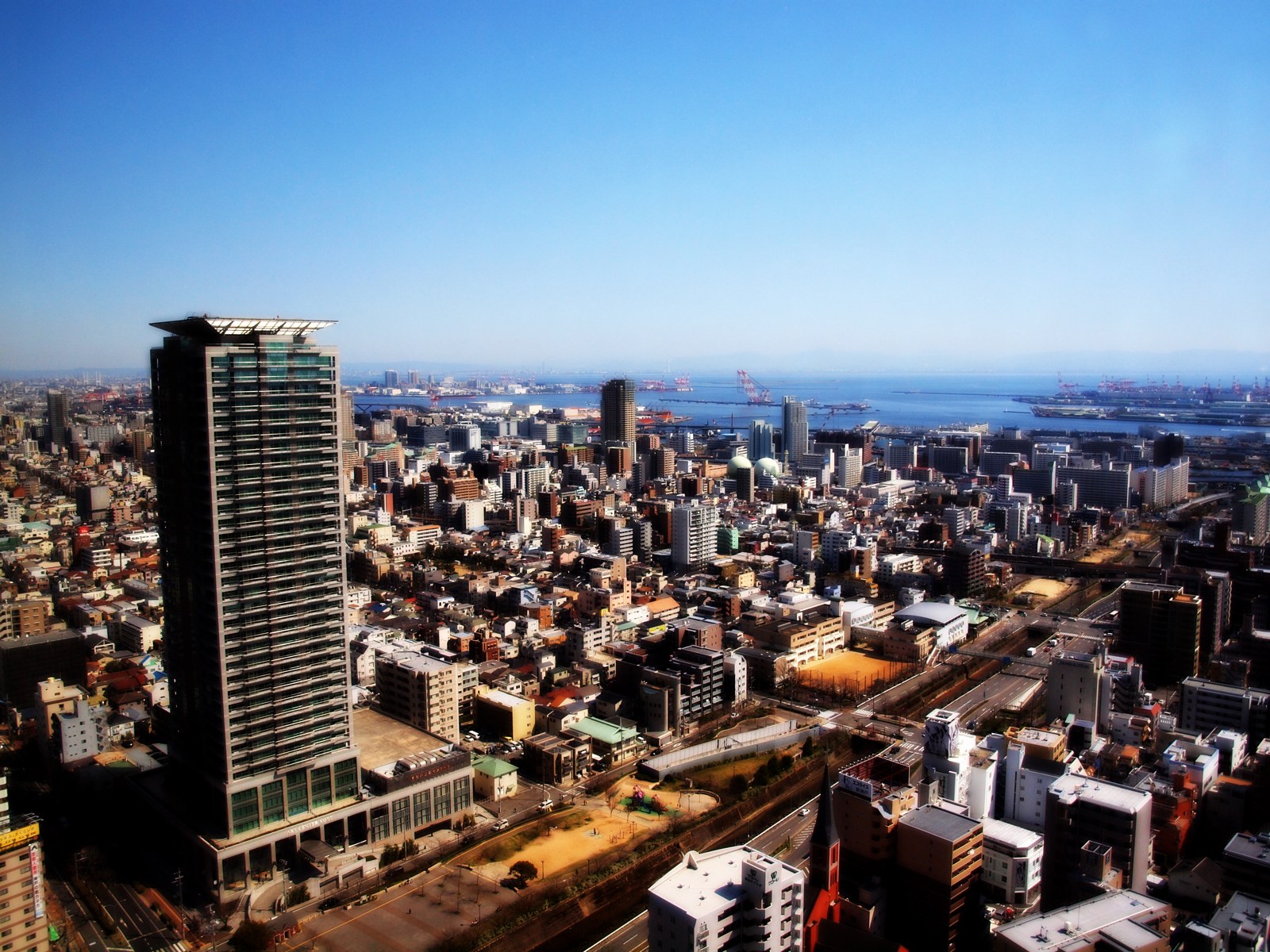
In October 1946, in a ruined port city, a 33-year-old former street fighter took charge of a criminal gang that barely counted a few dozen members. Kobe had been devastated by bombing, its black markets were run by rival gangs, and the Yamaguchi-gumi was leaderless after the death of its second boss. The man chosen to lead it was Kazuo Taoka. Over the next 35 years, until his death in 1981, he would transform that local gang into the largest organised-crime syndicate in Japan, an organisation with thousands of members, interests in legitimate business across the country, and a reach that extended far beyond the Kobe docks. He did it with violence, for which he was feared, and with a strategist’s understanding of structure, money, and public tolerance. This is the story of how a criminal enterprise became an institution — and of the harm that institution caused.
An Orphan of Kobe
Kazuo Taoka was born on 28 March 1913 in Higashimiyoshi, Tokushima, on the island of Shikoku. He was orphaned young and grew up as a street fighter in Kobe, the port city that would define his life. He came under the guidance of Noboru Yamaguchi, the second boss of the Yamaguchi-gumi, and earned his lifelong nickname, “Kuma” — “the Bear” — from his ferocity in street confrontations; the name reportedly came from his habit of clawing at an opponent’s eyes.
Taoka was imprisoned for murder from 1937 to 1943, spending six years behind bars. He was still a young man when he emerged, and Japan was losing the war. The Kobe he returned to was a city of ruins, shortages, and black markets — and of opportunity for anyone ruthless and organised enough to seize it.
A Dockside Gang With a Long History
The organisation Taoka inherited was not new, but it was small. The Yamaguchi-gumi had been founded in 1915 in Kobe by Harukichi Yamaguchi, a day labourer who organised dockworkers and fishermen into a loose mutual-aid and protection group. The name simply honoured the founder’s surname. Harukichi led the group until 1925, when his son Noboru succeeded him. Noboru led it until his death in 1942, and the war years left it leaderless and diminished.
The yakuza traced their roots much further back, to the Edo-period tekiya, street pedlars and market traders, and bakuto, itinerant gamblers. Those groups had developed the hierarchies and codes of loyalty — including the oyabun-kobun, or parent-child, bond between a boss and his subordinate — that Taoka inherited and rebuilt as a modern corporate structure.
Rebuilding in the Ruins
Taoka became the third kumicho — supreme boss — of the Yamaguchi-gumi in October 1946, at the age of 33. Post-war Kobe was awash with black markets, and rival gangs, including Korean and Chinese groups, fought for control of the port’s illicit trade. He led the group against those rivals, and its elders elected him boss.
He quickly showed that he understood something his predecessors had not: a gang living only on street crime and extortion would always be vulnerable to police crackdowns. As Japan’s post-war occupation wound down and the authorities turned their attention to organised crime, Taoka recognised that back-alley rackets alone were a dead end. On a friend’s suggestion, he started a full-fledged port cargo-handling business. It was the first step in a strategy he would pursue for the rest of his life: building legitimate businesses alongside criminal ones, so that the organisation had income, cover, and respectability at the same time.
Under Taoka, the Yamaguchi-gumi expanded aggressively. He urged his underlings to run legitimate businesses of their own and allowed them to form their own subsidiary families, which became quasi-subsidiary families of the Yamaguchi-gumi. This franchise model allowed the syndicate to grow far faster than a single gang could. At its peak under Taoka, the organisation counted more than 10,000 members, and later accounts credited it with controlling some 2,500 businesses and around 500 affiliated groups. Across Japan, the yakuza peaked in the early 1960s at an estimated 184,100 members and quasi-members.
The Structure: Family as Corporation
Taoka’s most lasting achievement was organisational. He formalised the oyabun-kobun structure as a binding, almost contractual relationship, with tribute payments flowing upward through the hierarchy. At the top sat the kumicho. Directly beneath him were senior advisers, the saiko komon, and the headquarters chief, the so-honbucho. Second in the chain of command was the wakagashira, the underboss, who governed several gangs in a region, assisted by a deputy, the wakagashira-hosa. Regional gangs were governed by their local boss, the shateigashira. Each member’s rank was marked by the sakazuki, the ritual sharing of sake, which sealed the bond between boss and subordinate.
The structure gave the syndicate discipline and a clear chain of command, allowed the centre to collect money from hundreds of subordinate groups, and gave members — including many recruited from Japan’s margins, among them ethnic Koreans and burakumin, members of a historically discriminated-against community who faced exclusion from the legitimate economy — a sense of belonging and loyalty that ordinary employment did not offer. That loyalty was the syndicate’s greatest asset, and it was also what made it so hard to dismantle: members were bound by ritual, obligation, and identity, not just by pay.
Alongside port work, the Yamaguchi-gumi moved into entertainment promotion, construction, real estate, and finance, while its criminal income came from gambling, loan-sharking, extortion, drug trafficking, prostitution, and the infiltration of legitimate companies. The line between the legal and illegal sides was deliberately blurred. A construction firm could win contracts honestly and still serve as a front; a talent agency could promote singers and still launder money. That ambiguity was the point.
Refusing the Confederation, Forging Alliances
Taoka was famously suspicious of rival clans, and he guarded the Yamaguchi-gumi’s independence jealously. In 1963, he notably refused to join the Kanto-kai, an inter-yakuza confederation — a decision that marked the Yamaguchi-gumi as a power in its own right rather than one member of a larger alliance. He weathered the severe police crackdowns of the 1960s by keeping the organisation’s public profile low while its business interests grew.
He was not above alliance when it suited him. In 1972, after a period of tension between the two groups, Taoka forged an alliance between the Yamaguchi-gumi and the Inagawa-kai, another major syndicate, at a sakazuki ceremony held at his own home. The sake-sharing ritual sealed the pact. Together with the Sumiyoshi-kai, the Yamaguchi-gumi and the Inagawa-kai would become known as the Big Three of Japanese organised crime, dominating the landscape for decades.
The 1978 Assassination Attempt
Taoka’s power made him a target. In 1978, he survived an assassination attempt when he was shot in the back of the neck by a member of the Matsuda-gumi, a rival gang, during a limbo dance exhibition at a nightclub in Kyoto. His attacker was found dead several weeks later in the woods near Kobe. The episode showed the violent world he inhabited, in which even the most powerful boss in Japan could be shot in a crowded nightclub.
Taoka led the Yamaguchi-gumi for three more years after the attempt. He died of a heart attack on 23 July 1981 in Amagasaki, aged 68. His wife, Fumiko, briefly filled the leadership role after his death, an extraordinary step in a fiercely male organisation. A succession crisis followed, with his heir apparent, underboss Kenichi Yamamoto, dying before he could take over. It was not until 1984 that a new kumicho, Masahisa Takenaka, was chosen.
What Taoka Left Behind
The Yamaguchi-gumi that Taoka built did not die with him, but it never again reached the heights of his era. Japan’s 1992 Anti-Organised Crime Law and successive waves of legislation forced the yakuza underground, stripped away their business relationships, and drove membership down sharply. The Yamaguchi-gumi split in 2015, with the formation of the Kobe Yamaguchi-gumi, and according to the National Police Agency it had about 3,100 active members at the end of 2025 — a fraction of its peak.
Taoka’s legacy is a cautionary one. He is often described in popular accounts as the “Godfather of Godfathers” or “the Japanese Godfather”, titles that risk making him sound like a figure from a film. The reality was more mundane and more damaging: a disciplined, intelligent organiser who built a criminal corporation on extortion, gambling, loan-sharking, and the exploitation of vulnerable people, and who wrapped it in the language of family, loyalty, and tradition. The rituals, the sake ceremonies, and the talk of honour were real to the men inside the organisation. But for the shopkeepers who paid protection money, the gamblers and debtors trapped by loan sharks, and the women exploited in the syndicate’s prostitution rackets, the Yamaguchi-gumi was not a family. It was a machine for extracting money through fear. Taoka built that machine better than anyone before him, and Japan has spent the decades since his death trying to take it apart.
What is documented — and what is not
Documented: Taoka’s birth on 28 March 1913, his orphaned childhood in Kobe, his nickname “Kuma”, his imprisonment for murder from 1937 to 1943, his election as third kumicho in October 1946 at 33, the founding of the Yamaguchi-gumi in 1915 by Harukichi Yamaguchi and Noboru Yamaguchi’s tenure from 1925 to 1942, the syndicate’s expansion to more than 10,000 members at its peak, his formal hierarchy with wakagashira and wakagashira-hosa, his policy of encouraging legitimate businesses and subsidiary families, his refusal to join the Kanto-kai in 1963, the 1972 sakazuki alliance with the Inagawa-kai, the 1978 assassination attempt by a Matsuda-gumi member at a Kyoto nightclub, his death from a heart attack on 23 July 1981 in Amagasaki, Fumiko Taoka’s brief interim leadership, and the choice of Masahisa Takenaka as fourth kumicho in 1984 are all recorded in the historical sources listed below.
Unverified or unproven: The precise membership figures for the Yamaguchi-gumi at its peak vary between sources — the figure of more than 10,000 members is the most commonly cited, but estimates differ, and the claim that the group controlled some 2,500 businesses and 500 affiliated groups comes from secondary summaries rather than a single audited count. The story that Taoka earned his nickname by gouging out a rival’s eyes rests on anecdotal accounts, not on a documented incident. The exact circumstances of the death of Taoka’s would-be assassin in 1978 — found dead in woods near Kobe weeks after the shooting — were never the subject of a public prosecution, and no responsibility was established. Claims about the syndicate’s total revenues under Taoka are estimates drawn from police data and academic research, not verified accounts.
Sources
- https://en.wikipedia.org/wiki/Kazuo_Taoka
- https://en.wikipedia.org/wiki/Yamaguchi-Gumi
- https://greydynamics.com/yamaguchi-gumi-japan-yakuza-crime/
- https://greydynamics.com/yakuza-past-and-future-of-japanese-organised-crime/
- https://medium.com/@TheCapitalReview/the-gokud%C5%8D-economy-blood-business-and-billions-665c5430a64c
- https://www.calendarz.com/on-this-day/march/28/kazuo-taoka