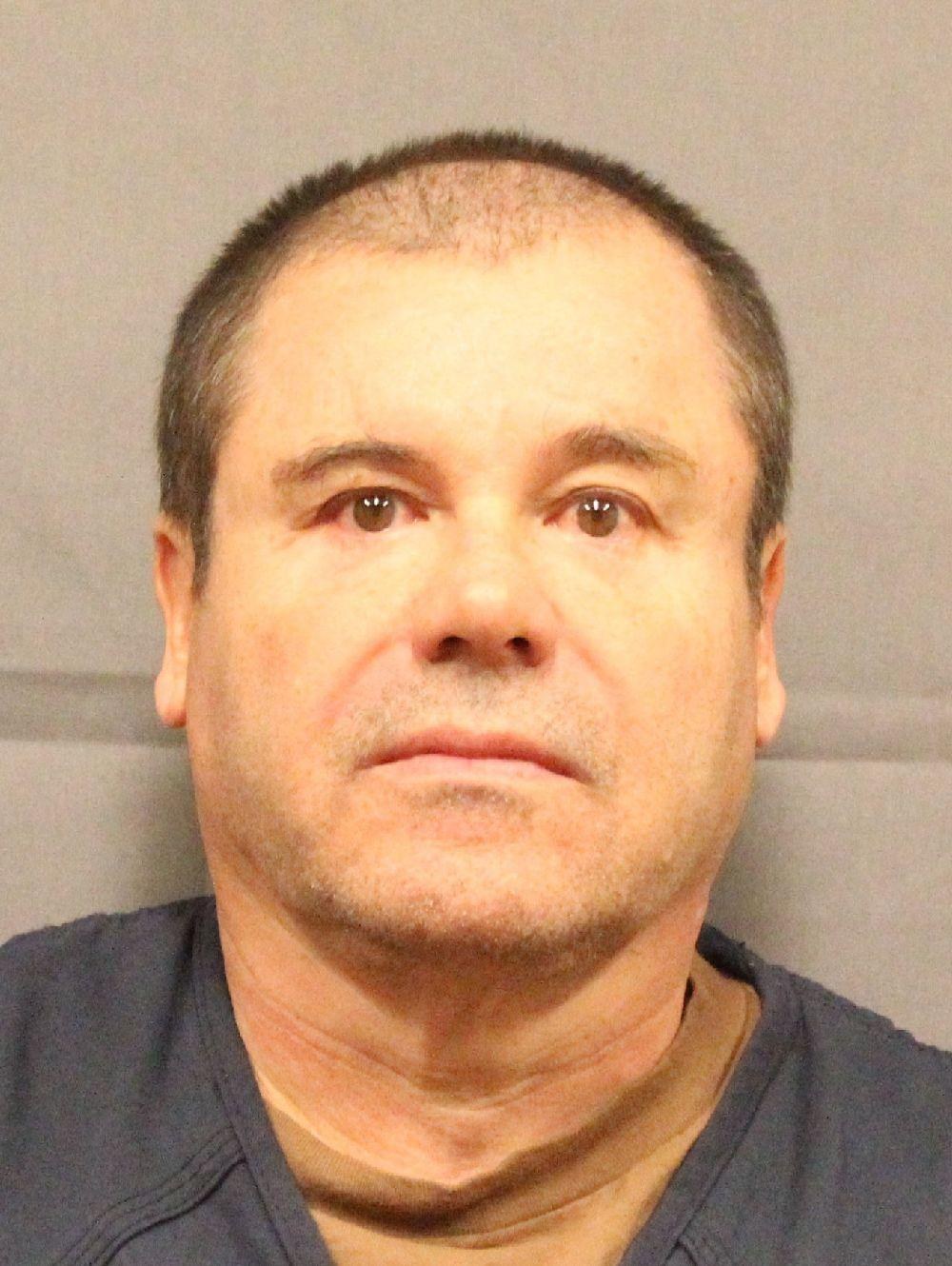
Joaquín Archivaldo Guzmán Loera — known as “El Chapo,” “Shorty,” for his height — was, for a time, the most powerful drug trafficker in the world. He led the Sinaloa Cartel, an organisation that moved cocaine, heroin, methamphetamine, and marijuana into the United States, Europe, and beyond on an industrial scale. He escaped from maximum-security prisons in Mexico twice, in 2001 and 2015, and was recaptured both times. In 2019, a federal jury in Brooklyn convicted him on all ten counts he faced. He is now serving life in prison plus 30 years at ADX Florence, the federal supermax prison in Colorado.
This is not a story of a folk hero. The cartel Guzmán led caused immense harm: addiction, corruption, and violence across Mexico and the United States. The escapes that made him famous were possible because of bribery and corruption inside the institutions meant to hold him. The trial that ended his career was a reckoning not only with one man, but with the systems that had allowed him to operate for so long.
A poor childhood in Sinaloa
Guzmán was born on 4 April 1957 in La Tuna, a remote farming community in Badiraguato, in the Mexican state of Sinaloa — a region known as the “Golden Triangle” for opium poppy and marijuana cultivation. He grew up in a poor farming family and, by his own later accounts and those of biographers, entered the drug trade through his father, helping grow marijuana for local dealers.
In his twenties, he left La Tuna and went to work for established traffickers: first his uncle Pedro Avilés Pérez, a pioneer of large-scale marijuana smuggling, then Héctor Luis “El Güero” Palma, and then Miguel Ángel Félix Gallardo, the head of the Guadalajara Cartel. Guzmán worked in logistics — mapping routes, coordinating shipments from Colombia through Mexico and into the United States. He was, by all accounts, a meticulous organiser, and he learned the trade from the inside.
When Félix Gallardo was arrested in 1989, the Guadalajara Cartel fractured. At a meeting in Acapulco, the major traffickers divided the territory. Guzmán, with Palma and later Ismael “El Mayo” Zambada, took control of the Sinaloa corridors. He founded his own organisation in 1988, after Félix Gallardo’s arrest, and built it into the Sinaloa Cartel. He pioneered the use of distribution cells and long-range tunnels near the border, and at the cartel’s height, United States officials described it as the most powerful drug-trafficking organisation in the Western Hemisphere.
First capture, first escape
Guzmán was first captured on 9 June 1993 in Guatemala, after a shootout at Guadalajara airport in which Cardinal Juan Jesús Posadas Ocampo was killed — a killing the Mexican government attributed to cartel crossfire. He was extradited to Mexico and sentenced to 20 years in prison for murder and drug trafficking.
On 19 January 2001, he escaped from Puente Grande, a maximum-security prison in Jalisco. The most widely reported account is that he hid in a laundry cart; other accounts differ on the precise method, but the fact of the escape — and the bribery of prison guards that made it possible — is not disputed. He remained at large for 13 years, during which the Sinaloa Cartel grew into a global enterprise, with distribution networks across the United States, Europe, Asia, and Australia.
He was recaptured on 22 February 2014 in Mazatlán, Sinaloa, in a joint operation by Mexican marines and United States law-enforcement agencies, and transferred to Altiplano, the maximum-security prison outside Mexico City.
The tunnel
On 11 July 2015, Guzmán escaped again — this time through a tunnel. The shower area of his cell, the one part of the cell not covered by camera, concealed a hole in the floor. Below it was a tunnel about 1.5 kilometres long, fitted with electric lights, ventilation, and a modified motorcycle on rails to haul out dirt. It had taken months to build, and it exited inside a house under construction outside the prison walls.
The escape was a national humiliation for Mexico. The president at the time had declared a repeat escape unforgivable — and then it happened anyway. The scale of the tunnel, and the precision with which it met Guzmán’s cell, made clear that it could not have been built without extensive help, including from people inside the prison system.
Guzmán remained free for six months. On 8 January 2016, Mexican marines recaptured him after a shootout in Los Mochis, Sinaloa. Exactly a year after his first escape date — on 19 January 2017 — Mexico extradited him to the United States.
The Brooklyn trial
Guzmán’s trial began on 13 November 2018 in the United States District Court for the Eastern District of New York, in Brooklyn, before Judge Brian M. Cogan. He faced 17 counts in the indictment, tried as ten counts before the jury. Prosecutors presented evidence of a continuing criminal enterprise, international drug trafficking, the use of firearms in furtherance of drug crimes, and money-laundering conspiracy. Witnesses — many of them former cartel associates who had agreed to cooperate — testified about the cartel’s violence, its corruption of officials, and the scale of its operations.
The trial lasted nearly three months. On 12 February 2019, the jury found Guzmán guilty on all ten counts. On 17 July 2019, Judge Cogan sentenced him to life in prison plus 30 years, and ordered the forfeiture of $12.6 billion. He was transferred to ADX Florence in Colorado, the federal “supermax” prison designed for inmates considered the highest security risk, where prisoners spend most of the day alone in their cells.
On 25 January 2022, the United States Court of Appeals for the Second Circuit upheld the conviction, ruling that Judge Cogan had conducted the trial “with diligence and fairness” and pointing to the “overwhelming evidence” of guilt. Guzmán has since written repeatedly to the court from prison, seeking a new trial, release, or transfer back to Mexico. Those requests have been denied.
The cost, and the lesson
Guzmán’s story is often told as a tale of daring escapes and a criminal genius. That telling leaves out the people who paid for it. The Sinaloa Cartel’s violence — murders, kidnappings, and intimidation — devastated communities in Mexico. The drugs it moved fuelled addiction and overdose deaths in the United States. The corruption it bought hollowed out police forces, prisons, and courts. Guzmán was, by the estimates of United States officials, responsible for a vast number of deaths — but the precise figures cited in the press are estimates and attributions, not counts established in court, and they should be treated as such.
The Brooklyn trial did not end drug trafficking, and the Sinaloa Cartel continued to operate after Guzmán’s conviction. But it did end the career of the man who had become its most famous face, and it did so in a courtroom, with evidence, witnesses, and a jury — the ordinary machinery of justice, applied to an extraordinary defendant.
What Is Documented, and What Is Not
Documented: Joaquín Archivaldo Guzmán Loera, known as El Chapo, was born on 4 April 1957 in La Tuna, Badiraguato, Sinaloa. He was first captured on 9 June 1993, sentenced to 20 years in Mexico, and escaped from Puente Grande prison on 19 January 2001. He was recaptured on 22 February 2014, escaped from Altiplano prison on 11 July 2015 through a tunnel about 1.5 kilometres long, and was recaptured on 8 January 2016. He was extradited to the United States on 19 January 2017. His trial in Brooklyn began in November 2018 before Judge Brian M. Cogan; on 12 February 2019 a jury convicted him on all ten counts, including engaging in a continuing criminal enterprise. On 17 July 2019 he was sentenced to life plus 30 years, with $12.6 billion in forfeiture, and transferred to ADX Florence. The Second Circuit upheld the conviction on 25 January 2022.
Unverified or disputed: Flag — birth date: most sources give 4 April 1957, but some report 25 December 1954; the 1957 date is used here as the most widely cited. Flag — death toll: the figure of more than 34,000 deaths attributed to Guzmán, repeated in some sources, is an attributed estimate, not a figure established by a court or an official count; it is not stated as fact here. Flag — first escape method: the laundry-cart account is the most widely reported, but other accounts differ; the escape itself is undisputed, the precise method is not fully settled. Flag — wealth: Forbes’ 2009 estimate of a $1 billion net worth and official estimates of cartel revenue are estimates, not verified accounts.
Sources
- https://en.wikipedia.org/wiki/Joaqu%C3%ADn_Guzm%C3%A1n
- https://nationalcrimesyndicate.com/el-chapo-joaquin-guzman/
- https://www.aetv.com/articles/el-chapo-joaquin-guzman-prison-escapes
- https://www.violentminds.com/notorious-criminals/joaquin-guzman/