When Jeffrey Epstein died in a New York jail cell in August 2019, the criminal case against him died with him. Epstein, a financier who had built a fortune and a network of powerful friends, had been charged with sex trafficking of minors, and his death — ruled a suicide — meant that he would never face a jury. The question that remained was whether anyone else would be held to account for what he had done.
The answer, in the end, was one person: Ghislaine Maxwell. For decades, Maxwell had been Epstein’s closest associate — his girlfriend, his social companion, and, according to prosecutors, the woman who found and groomed the girls he abused. Her trial, held in New York in late 2021, was the only full trial the Epstein case ever produced. It ended with her conviction on five of six counts, and a sentence of twenty years in prison.
The woman beside Epstein
Ghislaine Maxwell was born in France in 1961, the youngest child of the British media magnate Robert Maxwell. She grew up in wealth and privilege, was educated at Oxford, and moved in the highest circles of British and American society. She met Jeffrey Epstein in the early 1990s, not long after her father’s death, and the two became inseparable. For the next two decades, she was his constant companion: she managed his households, organised his social life, and introduced him to the politicians, royalty, and celebrities who made up his circle.
Epstein’s wealth and connections were extraordinary, and so was the scale of his abuse. In 2008, he pleaded guilty in Florida to state charges of soliciting prostitution from a minor, and served thirteen months in a county jail under a controversial plea agreement that shielded him from federal charges. The agreement, negotiated by federal prosecutors in Florida, was widely criticised as lenient, and it became a scandal in its own right when it was revealed that the victims had not been told about it.
In July 2019, Epstein was arrested again, this time on federal charges of sex trafficking of minors in New York. Prosecutors alleged that he had abused dozens of girls, some as young as fourteen, at his homes in New York, Florida, and elsewhere. He was denied bail. On 10 August 2019, he was found dead in his cell at the Metropolitan Correctional Center in Manhattan. The medical examiner ruled the death a suicide by hanging. The circumstances of his death — the failure of the guards to check on him, the malfunctioning cameras, the removal of his cellmate — have been the subject of intense scrutiny and conspiracy theories ever since, but no evidence has established that he was killed.
The arrest and the charges
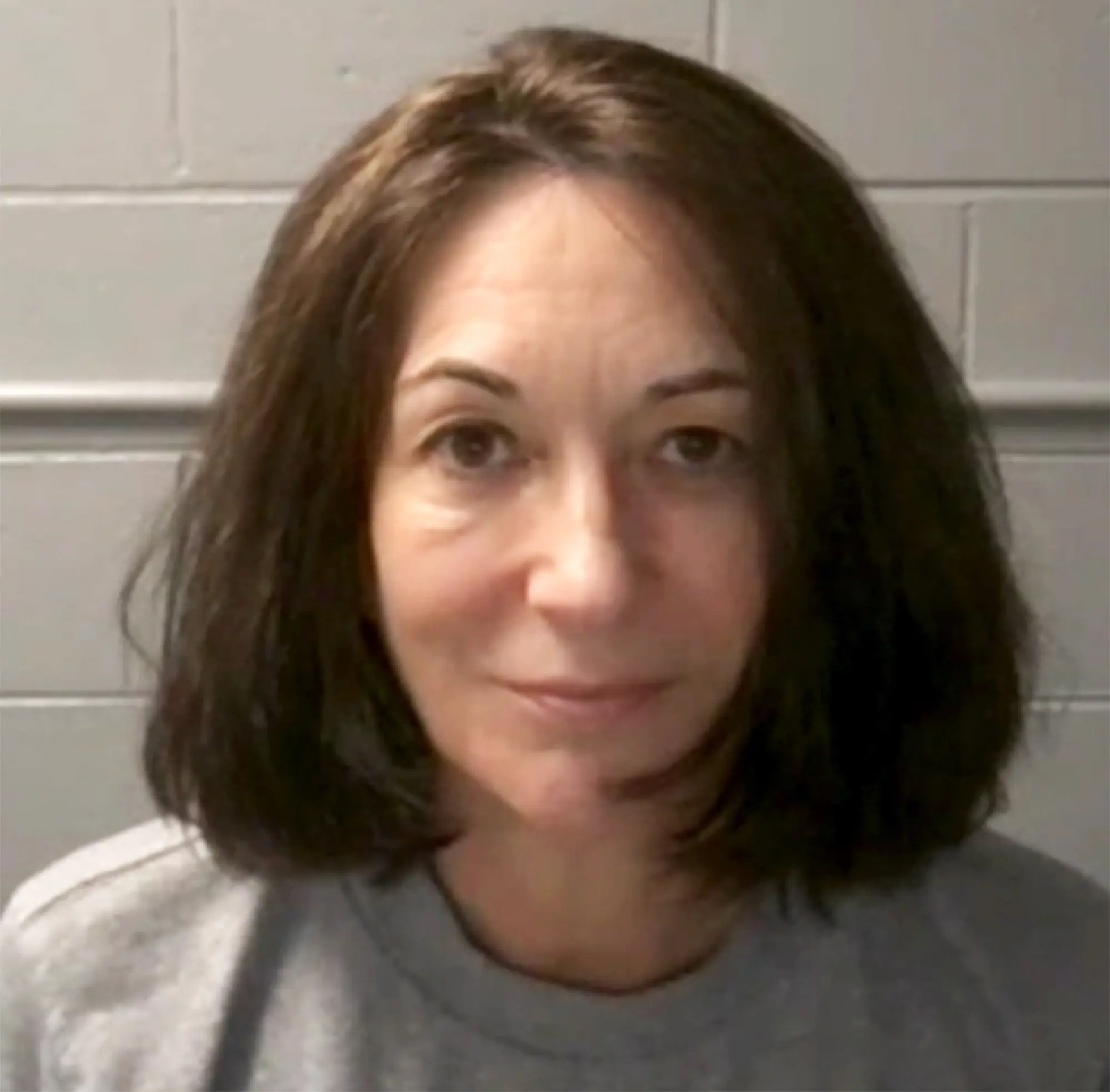
Maxwell was arrested on 2 July 2020 at a house in Bradford, New Hampshire, where she had been living in hiding under a false name. She had been out of public view for almost a year, since Epstein’s death, and the FBI had been searching for her. She was charged with six counts: enticement of a minor to travel to engage in illegal sex acts, transportation of a minor with intent to engage in criminal sexual activity, sex trafficking of a minor, and three counts of conspiracy.
The charges concerned four women, identified in court only by their first names or by pseudonyms — “Jane”, “Kate”, “Carolyn”, and “Annie” — who said they had been abused by Epstein when they were teenagers, and that Maxwell had recruited them, groomed them, and, in some cases, taken part in the abuse herself. The earliest of the alleged offences dated back to 1994, when one of the women was fourteen years old.
Maxwell was denied bail. The judge ruled that she posed an “extreme risk of flight”, citing her wealth, her international connections, and the fact that she had hidden from the authorities for a year. She was held at the Metropolitan Detention Center in Brooklyn, where her lawyers repeatedly complained about her conditions, saying she was kept in isolation, woken every fifteen minutes by guards, and denied proper access to her legal team.
The trial
The trial began on 29 November 2021 in the federal courthouse in Manhattan, before Judge Alison Nathan. It lasted about three weeks. The prosecution called 24 witnesses, including the four women at the centre of the charges. Their testimony was the core of the case. “Jane” described how Maxwell had befriended her at a summer camp when she was fourteen, had taken her shopping and to the cinema, and had then introduced her to Epstein, who began to abuse her. “Carolyn” described how Maxwell had recruited her at the age of fourteen, offering her money to give Epstein massages, and how the encounters had become sexual. “Annie” described being taken to Epstein’s ranch in New Mexico at sixteen, where she was given a massage by Maxwell and then abused by Epstein.
The prosecution also called a former employee of Epstein’s, who testified that Maxwell had been the one who managed the household and who had told staff to keep the girls’ presence a secret. They presented flight records, phone records, and photographs showing Maxwell with Epstein and with the girls.
Maxwell’s defence team, led by Bobbi Sternheim, argued that the case against her was a substitute for the case against Epstein — that the government, unable to try the man himself, was trying his companion instead. They argued that the women’s memories were unreliable, that they had been influenced by the civil lawsuits they had filed, and that Maxwell had been a victim of Epstein’s manipulation herself. They called a psychologist who testified about false memory, and a former employee who said Maxwell had been kind to the girls. Maxwell herself did not testify. In a statement to the court at her sentencing, she said she empathised with the victims but maintained that she had not committed the crimes.
On 29 December 2021, after five days of deliberation, the jury found Maxwell guilty on five of the six counts, including sex trafficking of a minor. She was acquitted on one count of enticing a minor to travel. On 28 June 2022, Judge Nathan sentenced her to twenty years in prison, and ordered her to pay 750,000 dollars in fines.
The aftermath
Maxwell’s appeals have been unsuccessful. The Second Circuit Court of Appeals upheld her conviction in September 2024, and in October 2025 the Supreme Court of the United States declined to hear her case, leaving presidential clemency as her remaining hope of release before her projected release date of 2037.
Her imprisonment has itself become a source of controversy. After her conviction she was held at the Federal Correctional Institution in Tallahassee, Florida. In August 2025, following two days of meetings with Deputy Attorney General Todd Blanche, she was transferred to the Federal Prison Camp in Bryan, Texas — a minimum-security facility for women convicted of non-violent and white-collar offences, which also houses Elizabeth Holmes. The transfer drew criticism from former prison officials and from the families of Epstein’s victims, who noted that Bureau of Prisons policy normally bars convicted sex offenders from minimum-security camps. The Bureau of Prisons said the transfer was made for reasons concerning her safety. In November 2025, a member of Congress wrote to the President alleging that Maxwell was receiving special treatment at the camp, including custom-made meals and access to a puppy; her lawyers denied that she was seeking clemency and said she planned to file a habeas petition challenging her conviction.
What the trial meant
The trial of Ghislaine Maxwell was, in many ways, a trial about a trial that never happened. Epstein’s death meant that the fullest account of his crimes was never tested in court, and Maxwell’s trial became the only forum in which the victims could tell their stories to a jury. For the four women who testified, the trial was a chance to be heard, and their testimony — detailed, painful, and consistent — was the foundation of the conviction.
The trial also raised a difficult question about responsibility. Maxwell was not the person who committed the sexual abuse at the centre of the case — that was Epstein. She was convicted of recruiting, grooming, and trafficking the girls, and of conspiring with him. The distinction matters, and it is the reason her case has been debated: whether a person who enables abuse, and who benefits from it, should be held to the same account as the person who commits it. The jury’s answer was yes.
For the victims, the verdict was a measure of justice, but an incomplete one. Many of them have said that the person who harmed them most was Epstein himself, and that his death denied them the reckoning they deserved. Maxwell’s conviction gave them something, but not everything. The civil cases against Epstein’s estate, and against others who were associated with him, continue.
What is documented — and what is not
Documented: Jeffrey Epstein was arrested in July 2019 on federal charges of sex trafficking of minors and died in his cell on 10 August 2019; the medical examiner ruled the death a suicide. Ghislaine Maxwell was arrested on 2 July 2020 and charged with six counts relating to the recruitment and trafficking of four girls between 1994 and 2004. At her trial in Manhattan in December 2021, four women testified that Maxwell had recruited and groomed them for Epstein. On 29 December 2021 the jury convicted her on five of six counts. On 28 June 2022 she was sentenced to twenty years in prison. Her conviction was upheld by the Second Circuit in September 2024, and the Supreme Court declined to hear her appeal in October 2025. In August 2025 she was transferred from FCI Tallahassee to the Federal Prison Camp in Bryan, Texas.
Unverified or unproven: That Maxwell took part in the sexual abuse herself — the prosecution’s case was that she recruited, groomed, and trafficked the girls, and that she was present on some occasions; the extent of her direct participation was a matter of the witnesses’ testimony and was disputed by the defence. That Epstein was murdered — no evidence has established this, and the medical examiner’s finding of suicide stands. That Maxwell’s transfer to Bryan was arranged in exchange for her cooperation or her statements to the Deputy Attorney General — the transfer followed meetings with him, but no evidence has established a quid pro quo. Claims about special treatment at the camp, including custom meals and a puppy, were made in a congressional letter and have not been confirmed by the Bureau of Prisons.
Sources
- https://en.wikipedia.org/wiki/Ghislaine_Maxwell
- https://en.wikipedia.org/wiki/Federal_Prison_Camp,_Bryan
- https://news.bdtype.com/ghislaine-maxwell-s-prison-emails-show-she-is-happier-at-minimum-security-texas-facility-213017.html
- https://oversightdemocrats.house.gov/imo/media/doc/2025-10-30.garcia-to-fpc-bryan-warden-re-maxwell.pdf