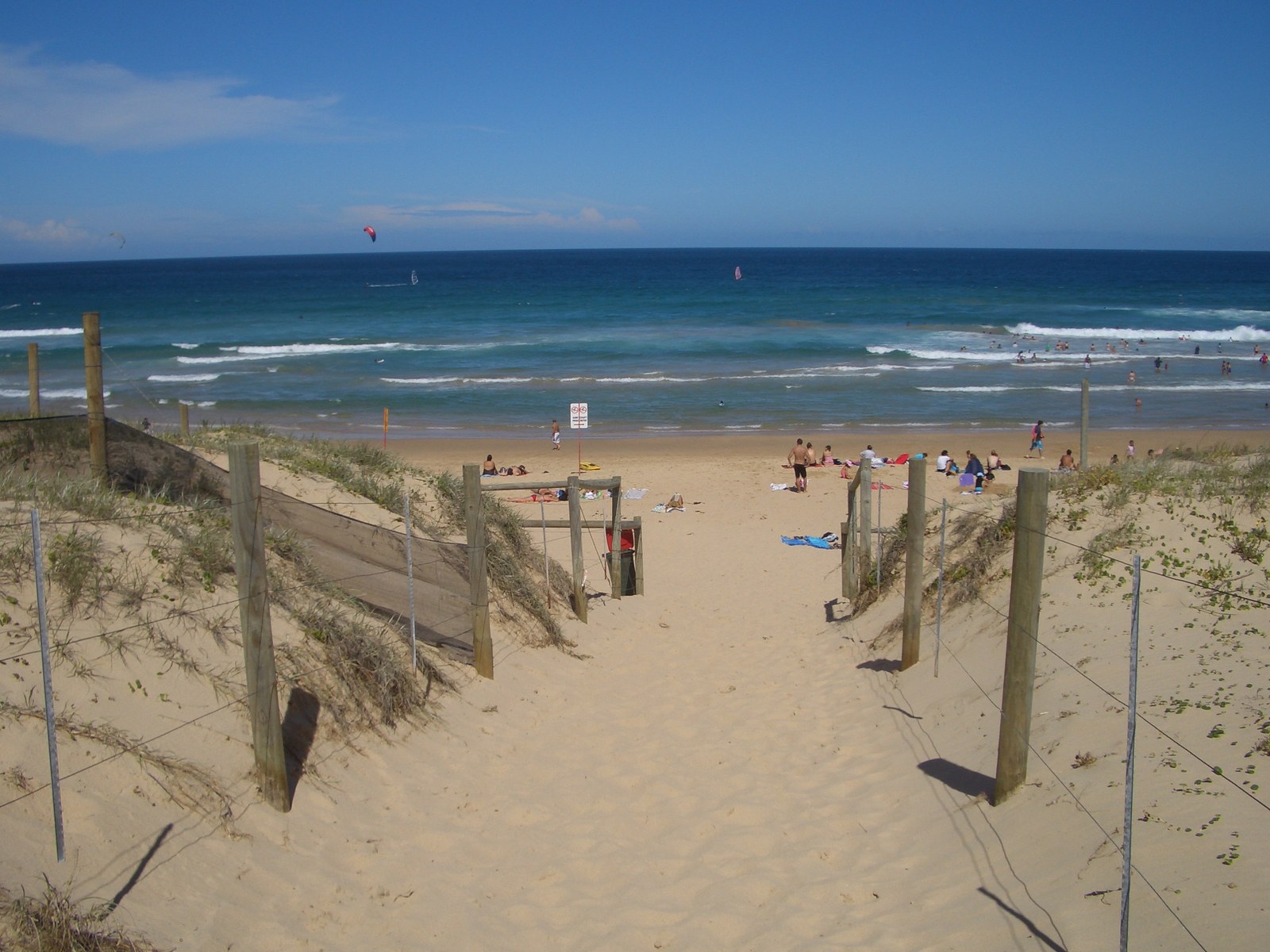
On the morning of Monday 11 January 1965, two 15-year-old girls set out from Sydney’s southern suburbs for a day at the beach. Marianne Schmidt and Christine Sharrock were best friends and neighbours from West Ryde, and Wanda Beach, near Cronulla, was one of their favourite places. They carried a blue beach bag, and Marianne’s youngest brother Kelvin, a toddler, came along in his pram. It was a hot summer day, and the beach was busy.
By the next morning, both girls were dead, their bodies partly buried in the sand dunes behind the beach. The toddler was found safe. No weapon was ever recovered. No one was ever charged. Sixty years later, the Wanda Beach murders remain the oldest unsolved homicide case in New South Wales, and one of the most infamous unsolved crimes in Australian history.
Two friends
Christine Anne Sharrock was born in Sydney on 12 February 1949. Marianne Schmidt was born in Germany on 4 March 1948 and had come to Australia with her family in 1957. The two girls had become close friends at school and in the neighbourhood, and they spent much of the summer of 1964–65 together, walking to the beach, swimming, and looking after Marianne’s younger siblings.
On Sunday 10 January, the girls had taken Kelvin to Wanda Beach, a long stretch of sand at the northern end of the Cronulla peninsula, backed by high dunes and scrub. The next morning they went again, leaving the Schmidt home on Central Road in Maroubra at about 9:30 a.m. They travelled by bus to Cronulla and walked north along the beach to Wanda, pushing the pram through the sand.
The last confirmed sighting of the girls alive was by a local fireman, Dennis Dostine, who was walking in the area with his son and saw them about 800 yards north of the surf club. They were reported missing that evening, at about 8:30 p.m., when they failed to come home.
The discovery
On the morning of Tuesday 12 January, people walking through the dunes found the girls’ bodies. Young men riding motorbikes through the sandhills noticed a shoe sticking out of the sand, and began to dig. Christine lay face down, her head and shoulders covered by about twenty centimetres of sand. A few metres away lay Marianne, on her side, her lower body partly buried. The pram, with Kelvin inside, had been left some distance away. The toddler was unharmed.
The autopsies established that both girls had died between 2 p.m. and 4 p.m. on 11 January. Christine had suffered a blow to the back of the head that fractured her skull, and had been stabbed fourteen times. Marianne had been strangled, and her throat had been cut. There were no signs of sexual assault. No weapon was found at the scene.
The funerals were held on 20 January, and a reward of 10,000 Australian pounds was posted the following month. The case dominated the Sydney newspapers for weeks. Two girls, fifteen years old, killed in broad daylight on a crowded beach, and no one had seen anything.
The largest investigation in Australian history
New South Wales Police launched an inquiry on a scale the state had never seen. By April 1966, officers had interviewed some 7,000 people, making it the largest investigation in Australian history to that point. Over the years that followed, the numbers kept growing: by 1981, some 16,000 people had been interviewed, including around 5,000 suspects, and 30,000 houses had been visited. More than a hundred suspects were given polygraph tests.
The investigation had little to work with. Forensic science in 1965 could do little more than blood typing, which suggested the attacker was probably blood group O — a result shared by about 45 per cent of the population, and therefore of almost no help. Witnesses described a young surfer seen near the girls, but he was never identified. The coroner handed down his report in April 1966, and the case quickly went cold.
Over the decades, three main suspects emerged. Alan Bassett had been jailed for the brutal rape and murder of Carolyn Orphin in Wollongong in June 1966, and a former detective was given a painting by Bassett in 1975 that some believed contained a clue. Christopher Wilder, who later became a serial killer in the United States, was in Sydney at the time, but was ruled out by his age and location. Derek Percy, imprisoned since 1969 for the murder of a child, was investigated as a third suspect. None of the three was ever charged with the Wanda Beach murders, and none of them matched the description of the surfer seen near the girls.
New science, old evidence
The case was formally reopened in 2000. In February 2012, the New South Wales Police Cold Case Unit announced that a weak male DNA sample had been extracted from a pair of white shorts worn by Christine Sharrock. It was the first forensic lead in the case in nearly fifty years, but the sample was too weak to identify anyone, and it has not led to a charge.
Two years later, in July 2014, police admitted that a semen sample taken from Marianne Schmidt’s body had been lost and could not be located despite an extensive search. The loss was a bitter blow to the families, and to the investigators who had hoped modern DNA testing might finally name the killer.
In 2016, police revisited the case again with updated DNA techniques. In 2020, Detective Chief Inspector Peter Sampson, who led the review, said the team would never give up, and that technology might finally catch the killer. In 2025, when a jawbone was discovered on the beach, police responded immediately, still hoping for a breakthrough. It was not connected to the case.
What remains
The Wanda Beach murders have outlived almost everyone who investigated them. The girls’ families have waited sixty years for an answer. The case is still open under the New South Wales Police Homicide Squad, and the DNA sample from Christine’s shorts is still on file, waiting for a match that has never come.
The case endures for a simple reason: it should have been solvable. The beach was crowded. The girls were seen alive in the early afternoon. The attack happened in daylight, in dunes that were not remote. And yet no witness ever came forward with a name, no weapon was found, and the man seen near the girls has never been identified. The investigation interviewed thousands of people and tested hundreds of suspects, and it produced nothing that a court could use.
For the families, the arithmetic of the case is the hardest part. Two girls went to the beach on a summer morning. One toddler came home. Everything else — the killer, the weapon, the reason — is still out there, sixty years on, in a file that has never been closed.
The investigation was the largest in Australian history at the time, and it changed how the New South Wales police approached stranger murders. The sheer scale of it — thousands of interviews, house-to-house enquiries, and polygraph tests — reflected how little the police had to go on: a beach, a pram, a toddler, and a description of a young man that no one could name. The case also exposed the limits of forensic science in the 1960s. The semen sample taken from Marianne’s body, which might have identified the killer decades later, was lost by police, and the weak male DNA sample recovered from Christine’s shorts in 2012 was too degraded to produce a profile.
For the families, the case has never closed. Marianne’s and Christine’s parents and siblings have lived with the knowledge that the man who killed two fifteen-year-old girls on a summer afternoon has never been named, and that every new forensic technique has so far failed to produce him. The beach itself has changed — the dunes are fenced, the access tracks are marked, and the surf club is a different building — but the case file remains open, and the New South Wales Police still list the Wanda Beach murders as their oldest unsolved homicide.
What is documented — and what is not
Documented: Marianne Schmidt, 15, and Christine Sharrock, 15, best friends and neighbours from West Ryde, Sydney, were murdered at Wanda Beach near Cronulla on 11 January 1965. Their partially buried bodies were found in the sand dunes the next morning; Marianne’s toddler brother Kelvin, who had been with them, was found unharmed. Autopsies found both girls died between 2 p.m. and 4 p.m. on 11 January; Christine had a fractured skull and fourteen stab wounds, and Marianne had been strangled with her throat cut. By April 1966 police had interviewed about 7,000 people, the largest investigation in Australian history at the time; by 1981 the figure was about 16,000 people interviewed. The case was reopened in 2000. In February 2012 police announced a weak male DNA sample had been extracted from shorts worn by Christine Sharrock. In July 2014 police said a semen sample taken from Marianne Schmidt had been lost. No one has ever been charged, and the case remains open.
Unverified or unproven: The identity of the killer is unknown. Three men — Alan Bassett, Christopher Wilder and Derek Percy — have been investigated as suspects, but none was ever charged, and none matched the description of the young surfer seen near the girls. Links suggested between the Wanda Beach murders and other killings, including the 1966 murder of Alan Redston, have never been established. The weak DNA sample from 2012 has not identified anyone, and no weapon has ever been recovered.