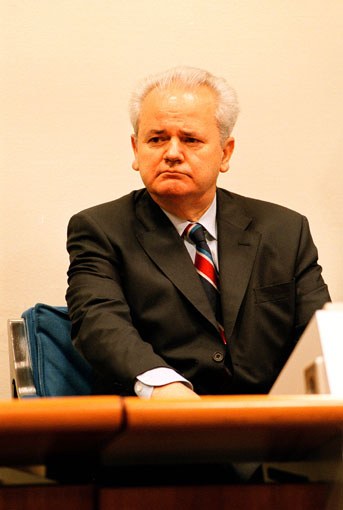
On 12 February 2002, the former president of Yugoslavia walked into a courtroom in The Hague to face the most serious charges international law can bring. Slobodan Milošević was accused of genocide, crimes against humanity and war crimes across three wars — in Croatia, in Bosnia and in Kosovo. He was the first former head of state ever tried by an international war crimes tribunal, and he refused to recognise the court at all. For four years he conducted his own defence, cross-examining survivors of the wars he was accused of directing. Then, on the morning of 11 March 2006, guards found him dead in his cell. The trial ended without a verdict, and the families of his victims never got the judgment they had waited for.
The road to The Hague
Milošević was born on 20 August 1941 in Požarevac, Serbia. He rose through the Communist Party in the 1980s, became president of Serbia in 1989, and then president of the Federal Republic of Yugoslavia in 1997. As Yugoslavia broke apart, his government pursued a policy of keeping Serb-populated territories under Serb control, and the wars that followed — in Croatia in 1991, in Bosnia from 1992 to 1995, and in Kosovo in 1998 and 1999 — killed more than 140,000 people and displaced millions.
In May 1999, while NATO aircraft were bombing Yugoslavia over Kosovo, the International Criminal Tribunal for the former Yugoslavia (ICTY) indicted Milošević for crimes against humanity in Kosovo. It was the first time a sitting head of state had been charged by an international court. He was overthrown in October 2000, arrested by Yugoslav police on 31 March 2001 on corruption charges, and extradited to The Hague on 28 June 2001. By then the indictment had grown: 66 counts covering all three wars, including genocide.
Four years in court
The trial opened on 12 February 2002. Milošević refused to appoint a lawyer and insisted on defending himself, which meant the proceedings moved slowly. He used his cross-examinations to argue that the wars had been a Western conspiracy against Serbia, and he treated the courtroom as a political platform. The prosecution, led by Carla del Ponte and Geoffrey Nice, called hundreds of witnesses, including survivors of the Srebrenica massacre of July 1995, in which some 8,000 Bosniak men and boys were killed, and of the siege of Sarajevo, which claimed around 10,000 civilian lives.
Milošević’s health repeatedly interrupted the trial. He suffered from heart disease and high blood pressure, and hearings were often cancelled or cut short. In January 2006 he asked to be sent to Russia for specialist heart treatment, saying he feared for his life. The tribunal refused, judging that he could be treated in The Hague and that he had, at times, refused to take his prescribed medicines and treated himself instead.
On the night of 10 March 2006, Milošević worked late on his defence papers. At about 9 o’clock the next morning, guards found him unresponsive in his cell in the United Nations detention unit at Scheveningen. Attempts to revive him failed. An autopsy by Dutch forensic experts concluded that he had died of a heart attack brought on by coronary artery disease. Toxicology tests found no evidence of poison, and official investigations rejected claims of foul play. The proceedings against him were formally terminated three days later.
What the trial left behind
Because Milošević died before the defence case had even begun, the court never ruled on whether he was guilty. That remains the trial’s central frustration. The prosecution had presented its case in full, over more than 460 days of hearings, but no judge ever weighed it against a defence.
The record did not end with his death, however. In later judgments — above all the 2016 verdict against Radovan Karadžić — the tribunal found that Milošević had been part of a joint criminal enterprise that used violence and ethnic cleansing to remove Croats, Bosniaks and Albanians from parts of Croatia, Bosnia and Kosovo. Separately, in 2007, the International Court of Justice found that there was no evidence linking Milošević to genocide committed by Bosnian Serb forces, but that Serbia had violated the Genocide Convention by failing to prevent the genocide at Srebrenica and to punish those responsible.
The Milošević trial also changed international justice. It showed that a head of state could be arrested, extradited and tried — a precedent that later shaped the prosecutions of Charles Taylor of Liberia and others. It also showed the limits of that idea: a defendant who refuses to cooperate, and whose health fails, can outlast the court.
What is documented — and what is not
Documented: Slobodan Milošević was indicted by the ICTY in May 1999, arrested on 31 March 2001, and extradited to The Hague on 28 June 2001. His trial began on 12 February 2002; he defended himself and pleaded not guilty to all 66 counts. He was found dead in his cell on 11 March 2006; the autopsy established a heart attack as the cause of death, and toxicology found no poison. The proceedings were terminated without a verdict. Later ICTY judgments found he had been part of a joint criminal enterprise involving ethnic cleansing.
Unverified or unproven: Whether Milošević personally ordered the Srebrenica massacre — the tribunal never ruled on his individual responsibility, and the 2016 Karadžić judgment found insufficient evidence in that case that he had supported plans to expel non-Serbs from Bosnia. Claims that he was poisoned or murdered in detention — rejected by the Dutch autopsy and by official investigations. Whether he deliberately prolonged the trial to avoid a verdict — his poor health is documented, but his intentions are a matter of interpretation, not of record.