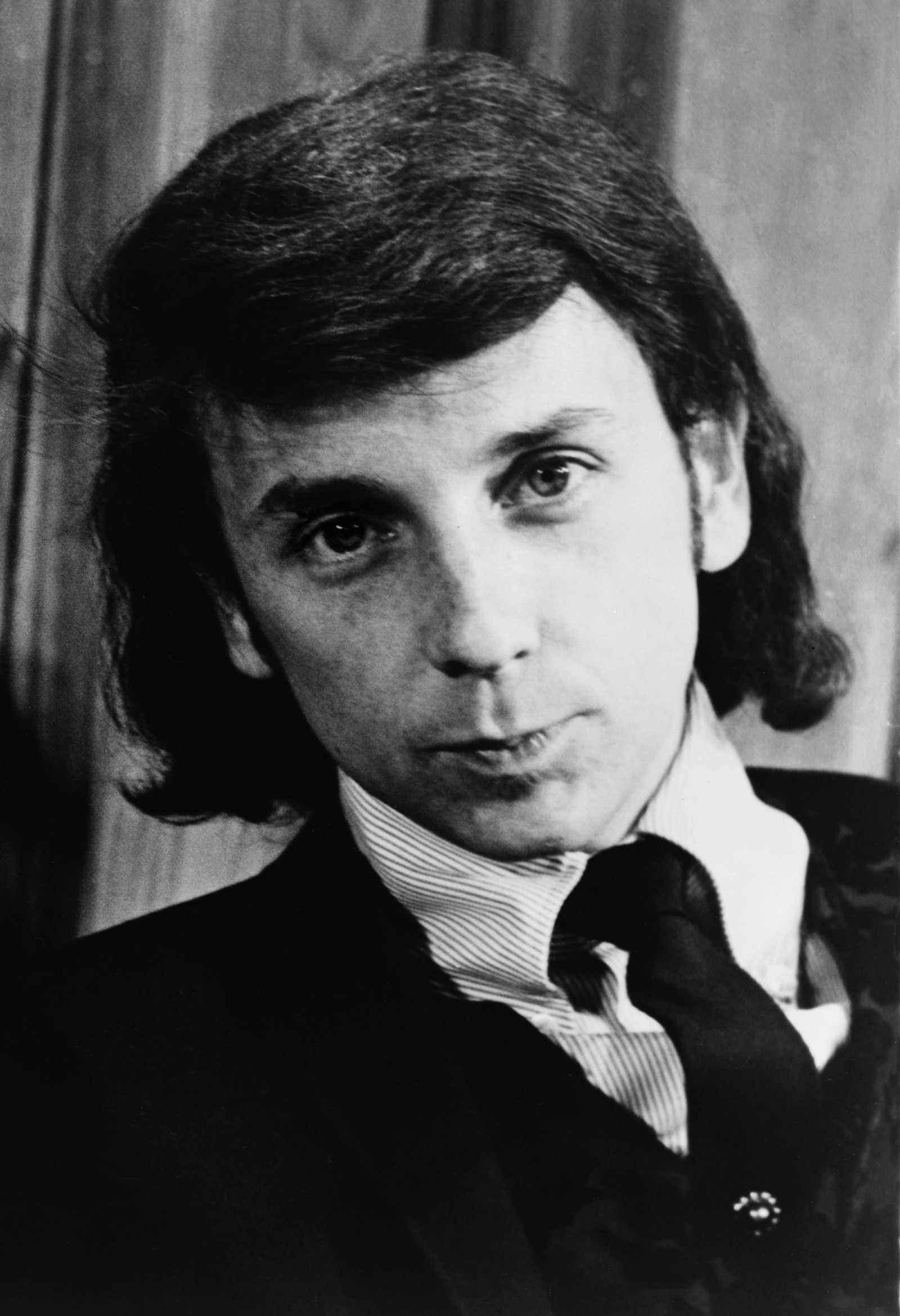
The genius in the mansion
Phil Spector was, by any measure, one of the most important record producers in the history of popular music. In the early 1960s, still in his early twenties, he invented the “Wall of Sound” — a dense, orchestral style of production that turned songs by the Ronettes, the Crystals and the Righteous Brothers into monuments. He later worked with the Beatles, John Lennon and George Harrison. The writer Tom Wolfe called him the “First Tycoon of Teen”.
But by the 2000s, Spector was a recluse, living in a mock-medieval mansion in Alhambra, California — the Pyrenees Castle — with a reputation for erratic behaviour and for threatening women with guns. On the morning of 3 February 2003, the actress Lana Clarkson, 40, was found dead in the foyer of that mansion, killed by a gunshot wound to the mouth. She had met Spector hours earlier at the House of Blues in West Hollywood, where she worked as a hostess, and had gone home with him. Spector’s driver, who was waiting outside, later testified that he had heard a gunshot and seen Spector emerge from the house holding a gun, saying: “I think I killed somebody.”
The first trial
Spector was charged with murder in September 2004. He pleaded not guilty, and his defence argued that Clarkson had killed herself — that she was depressed about her career, and that she had taken the gun from Spector’s collection and shot herself. The prosecution argued that Spector had a history of pointing guns at women, and that the physical evidence — the position of the body, the blood, the gunshot residue — pointed to murder, not suicide.
The first trial opened in Los Angeles in March 2007, before Judge Larry Paul Fidler. It was televised, and it became a spectacle: Spector arrived each day in a different outlandish outfit, his hair styled into ever more elaborate shapes. After five months of testimony, the jury deliberated for twelve days and could not agree. On 26 September 2007, Judge Fidler declared a mistrial. The vote had been ten to two in favour of conviction.
The retrial
Spector was tried again, beginning on 20 October 2008. This time, the judge allowed the jury to consider a lesser charge of involuntary manslaughter as well as second-degree murder, and allowed the prosecution to present evidence from five women who said Spector had threatened them with guns in the past. The defence again argued suicide, and again pointed to Clarkson’s state of mind. The prosecution again argued that the pattern — a man who had threatened women with guns for decades — was the story.
On 13 April 2009, after about thirty hours of deliberation, the second jury found Spector guilty of second-degree murder, and of using a firearm in the crime. On 29 May 2009, he was sentenced to 19 years to life in the California state prison system. He entered prison on 5 June 2009. His appeals failed.
Spector spent the rest of his life in prison. He died on 16 January 2021, at the age of 81, at an outside hospital after being transferred from the California Health Care Facility in Stockton. The California Department of Corrections said he had died of natural causes; media reports said he had been diagnosed with COVID-19 about four weeks earlier. He would have been eligible for parole in 2024.
What the case changed
The Spector case is remembered for two things. The first is the fall itself: a man who had shaped the sound of popular music, ending his life in a prison hospital, convicted of murdering a woman in his own home. The second is the legal lesson. The first trial failed because a jury could not agree on whether a woman had killed herself or been killed. The second trial succeeded because the prosecution was allowed to show the jury a pattern — five women, over many years, each describing the same behaviour with a gun. The pattern was not proof that Spector had killed Clarkson. But it was, the jury decided, enough to make the suicide story unbelievable.
The case also raised a question that still divides lawyers: how much of a defendant’s past should a jury be allowed to hear? In Spector’s second trial, the answer was a great deal — and it was the difference between a hung jury and a conviction. The same question would return, years later, in the trial of Harvey Weinstein, where the answer was the opposite, and a conviction was overturned.
The Wall of Sound
To understand why Spector’s fall mattered, it helps to remember what he had been. Born in the Bronx in 1939, he was a teenager when he formed the Teddy Bears, whose song “To Know Him Is to Love Him” reached number one in 1958. By 1961, at twenty-one, he had founded Philles Records with Lester Sill, and over the next four years he produced a run of records that defined the sound of the early 1960s: the Crystals’ “He’s a Rebel” and “Da Doo Ron Ron”, the Ronettes’ “Be My Baby”, and the Righteous Brothers’ “You’ve Lost That Lovin’ Feelin'” — a song that has been played on American radio more than any other.
Spector’s method was the Wall of Sound: layer upon layer of instruments — multiple guitars, pianos, horns, strings and percussion — recorded in a small studio and mixed into a single dense wash of sound, with the lead vocal floating on top. It was expensive, it was obsessive, and it worked. The records sounded enormous on a car radio, which was the point. Spector was, in the words of the music historian Mark Ribowsky, “the first producer to be a star”.
He faded from view in the late 1960s, then returned to work with the Beatles on their final album, Let It Be (1970), and with John Lennon and George Harrison on their solo records. He produced Lennon’s “Imagine” and Harrison’s All Things Must Pass. Then he withdrew again — to his mansion, to his guns, and to a reputation for violence that had followed him for decades. Women who worked with him told stories of being held at gunpoint in recording studios. The stories were treated, at the time, as eccentricity. In the courtroom in Los Angeles in 2008 and 2009, they were treated as evidence.
Lana Clarkson had been a working actress for more than two decades. Born in Long Beach, California, in 1962, she had appeared in Roger Corman’s low-budget films of the 1980s, including Barbarian Queen (1985) and Amazon Women on the Moon (1987), and had worked as a model and a television hostess. By 2003, her acting career had slowed, and she was working as a hostess at the House of Blues in West Hollywood, where she met Spector on the night she died. She was, by the accounts of her friends, a warm and funny woman who was hoping for a comeback.
The physical evidence at the scene was the centre of both trials. Clarkson was found slumped in a chair in the foyer of the mansion, with a gunshot wound to the mouth and a .38-calibre Colt Cobra revolver in her lap. The prosecution argued that the pattern of blood spatter, the position of the body, and the absence of gunshot residue on Clarkson’s hands showed that she could not have shot herself. The defence argued the opposite: that the blood on Spector’s jacket and the residue on his hands were consistent with his having tried to help her, and that Clarkson’s fingerprints were on the gun. The two sides presented duelling experts, and the jury had to choose between them. In the end, it was not the forensics that decided the case. It was the pattern — the five women who testified that Spector had threatened them with guns, and the story those five accounts told together.
What is documented — and what is not
Documented: Lana Clarkson, 40, was found dead from a gunshot wound at Phil Spector’s home in Alhambra, California, on 3 February 2003. Spector was charged with murder in September 2004. His first trial, in 2007, ended in a mistrial after the jury deadlocked ten to two for conviction. At his retrial, which began in October 2008, a jury found him guilty of second-degree murder on 13 April 2009. He was sentenced on 29 May 2009 to 19 years to life in prison. He died on 16 January 2021, aged 81, while serving his sentence.
Unverified or unproven: What exactly happened in the foyer of the Pyrenees Castle in the minutes before Clarkson’s death — the only two people present were Clarkson, who died, and Spector, who maintained she had killed herself. Whether Clarkson was depressed or suicidal rests on conflicting testimony from people who knew her, and was disputed at trial. Claims about Spector’s behaviour towards other women were presented as evidence at trial, but only the Clarkson case resulted in a conviction.
Sources
https://en.wikipedia.org/wiki/Murder_of_Lana_Clarkson
https://www.britannica.com/biography/Phil-Spector
https://legalclarity.org/phil-spector-died-his-murder-trial-prison-and-legacy/
https://www.classical-music.com/articles/phil-spector