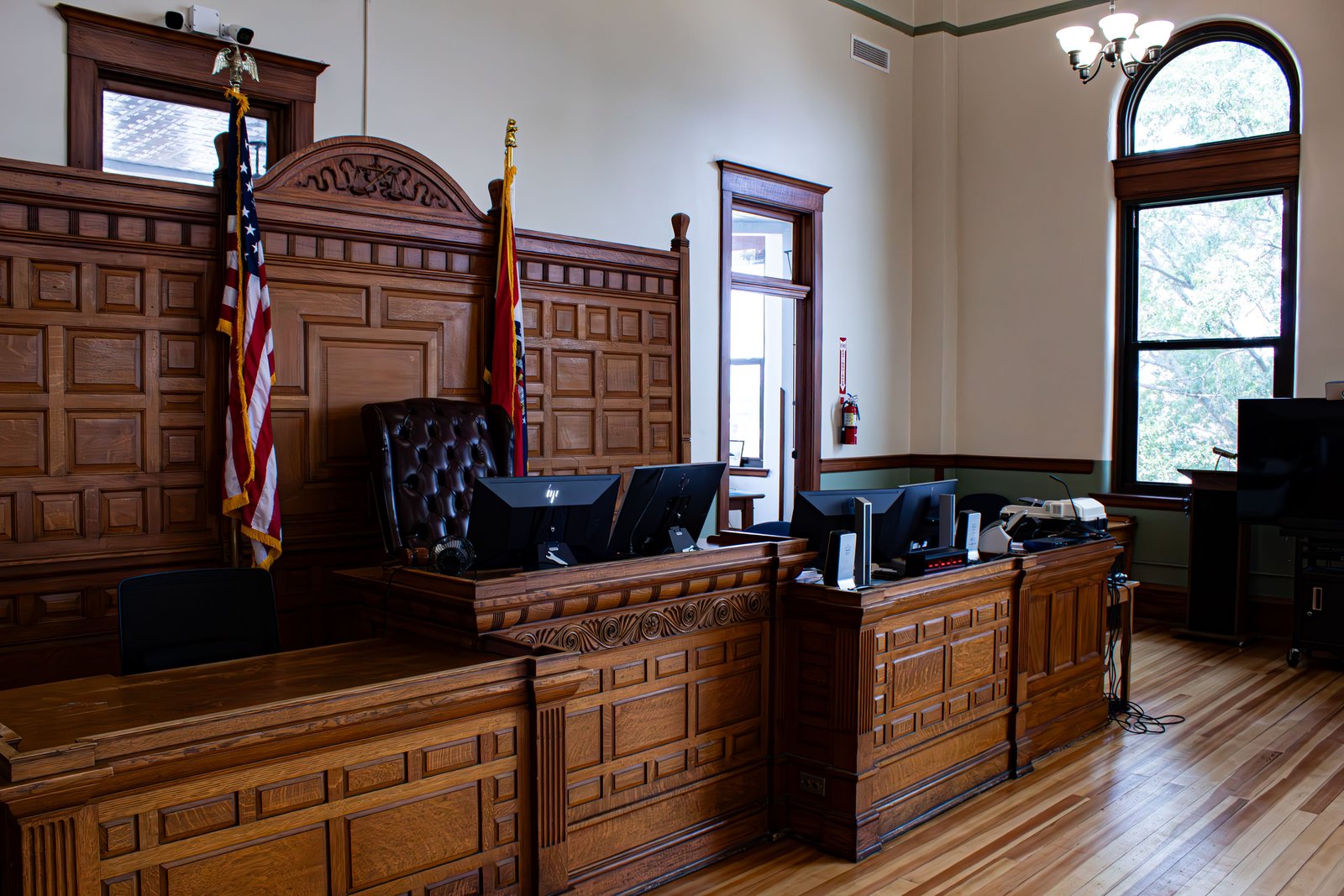
In the summer of 1925, the small town of Dayton, Tennessee, became the centre of American attention. A 24-year-old teacher stood in the dock of the Rhea County Courthouse, charged with teaching his pupils about human evolution.
The case was State of Tennessee v. John Thomas Scopes. It lasted from 10 to 21 July 1925, and it was the first trial in American history to be broadcast nationally on the radio. Two of the most famous lawyers in America faced each other across the courtroom, over a question still argued today: what may a teacher teach, and who decides?
The law
The charge arose from the Butler Act, passed by the Tennessee legislature in March 1925 and signed by Governor Austin Peay. The Act made it unlawful for a teacher in a state-funded school to teach any theory that denied the biblical account of the Divine Creation of man, and to teach instead that man had descended from a lower order of animals. A conviction carried a fine of between $100 and $500.
The law was part of a wider conflict within American Protestant Christianity in the 1920s, between those who insisted on a literal reading of the Bible and those who sought to reconcile faith with modern science. The American Civil Liberties Union (ACLU) offered to defend any teacher charged under the law, hoping to challenge its constitutionality.
A test case, deliberately made
Dayton’s civic leaders saw an opportunity: the town needed publicity, and a trial over evolution promised to bring it. At a meeting at Robinson’s Drug Store, local businessman George Rappleyea and others agreed to arrange a prosecution, and summoned John T. Scopes, a 24-year-old teacher and coach who had substituted for the regular biology teacher. Scopes agreed to stand as defendant, though he was not certain he had actually taught evolution — he had gone through the evolution chapter in the state-prescribed textbook, Civic Biology. Students testified against him, and a grand jury indicted him in May 1925.
The trial, in other words, was deliberately staged by both sides as a public contest over the Butler Act. That does not make it a sham — Scopes faced a real charge, a real jury and a real fine — but it explains why both sides were so ready for the attention it attracted.
The lawyers
The prosecution was led by William Jennings Bryan, three times the Democratic nominee for President and a former Secretary of State, who had campaigned for years against teaching evolution and joined the prosecution as a matter of conviction, though he had not tried a case in more than thirty years.
The defence was led by Clarence Darrow, the most famous trial lawyer in America, known for his scepticism towards organised religion. He was joined by Arthur Garfield Hays of the ACLU and Dudley Field Malone. Judge John T. Raulston presided.
When the trial opened, the courthouse was packed, the streets outside were crowded, and the proceedings were carried by radio to listeners across the country.
The trial
The defence had planned to call scientific experts to explain evolutionary theory to the jury, but Judge Raulston ruled that they could not testify in person; they could only submit written statements for the appeal record. That narrowed the trial considerably. The question for the jury was not whether evolution was true, nor whether the Butler Act was wise, but whether Scopes had taught human evolution in violation of the Act.
The trial’s most famous episode came on 20 July, when the courtroom was so hot that proceedings were moved outdoors, to a platform in front of the courthouse. Darrow called Bryan himself as a witness, to be questioned about the Bible. It was an extraordinary moment: a defence lawyer cross-examining the prosecution’s leading figure about his own beliefs, in front of a crowd of thousands.
Darrow asked Bryan about the creation account, the age of the Earth, and whether the Bible should be read literally in every passage. Bryan answered with a mixture of candour and defiance, at one point conceding that the “days” of creation might not be twenty-four-hour days. The exchange produced no legal ruling, but it produced the trial’s most enduring image. Five days after the trial ended, on 26 July 1925, Bryan died in Dayton, aged 65.
The verdict — and what happened next
On 21 July 1925, the jury found Scopes guilty after about nine minutes of deliberation, and Judge Raulston fined him $100. The brevity was no surprise: Darrow himself had asked the jury to find Scopes guilty, so the case could be appealed and the constitutionality of the Butler Act tested in a higher court.
That appeal reached the Tennessee Supreme Court in 1927. The court upheld the Butler Act, but overturned Scopes’s conviction on a technicality: under Tennessee law, the fine should have been set by the jury, not by the judge. The state chose not to retry him, and the case ended there — with the law intact and the defendant free.
The Butler Act remained on the books in Tennessee for decades. It was not until 1968, in Epperson v. Arkansas, that the United States Supreme Court held that state bans on teaching evolution were unconstitutional, because they advanced a particular religious view in public schools.
Why the trial still matters
The Scopes trial is often remembered as a simple contest between science and religion, with a clear winner. The record is more complicated: in the short term the prosecution won, and the Butler Act survived. In the longer term, the trial damaged the anti-evolution cause in the eyes of much of the national press — yet anti-evolution laws continued in many states for decades, and disputes over what schools teach about human origins have never gone away.
The trial also marked a turning point in how trials were covered. It was the first to be broadcast nationally by radio, and it showed how a courtroom could become a stage for a national argument — helped by reporters such as H. L. Mencken of the Baltimore Sun, whose dispatches gave the trial its mocking nickname, the “Monkey Trial.” Above all, the case is a reminder that a trial can settle a legal question without settling the argument behind it: the jury answered the question put to it in nine minutes, and the argument about who decides what children are taught has continued for a century.
What the record shows
John T. Scopes, a 24-year-old teacher in Dayton, Tennessee, was tried from 10 to 21 July 1925 for violating the Butler Act, which banned teaching human evolution in public schools. He was found guilty on 21 July 1925 after about nine minutes of deliberation and fined $100. The Tennessee Supreme Court upheld the Act in 1927 but overturned his conviction because the fine had been set by the judge rather than the jury. William Jennings Bryan, who led the prosecution, died in Dayton on 26 July 1925. In 1968 the United States Supreme Court held in Epperson v. Arkansas that bans on teaching evolution were unconstitutional.