On the evening of 9 March 1966, George Cornell walked into the Blind Beggar public house in Whitechapel to visit a friend in hospital nearby. He had spent the previous night in a brawl at a nightclub in Catford. Cornell ordered a drink. Shortly after half past eight, Ronnie Kray walked in with two associates and shot him dead at close range. One drinker present reported Cornell’s last words as “Well, look what the dog’s brought in.”
Cornell belonged to the Richardson Gang, the South London firm that had spent the early 1960s building a reputation as the capital’s most feared criminals. His murder was the most notorious act in a turf war between the Richardsons south of the Thames and the Kray twins to the north, and it set in motion the events that destroyed the Richardsons within eighteen months. The Krays would fall two years later, but the Richardsons — the “Torture Gang”, as the newspapers called them — were the first to face justice, in one of the most sensational trials in British history.
Scrap Metal and Protection
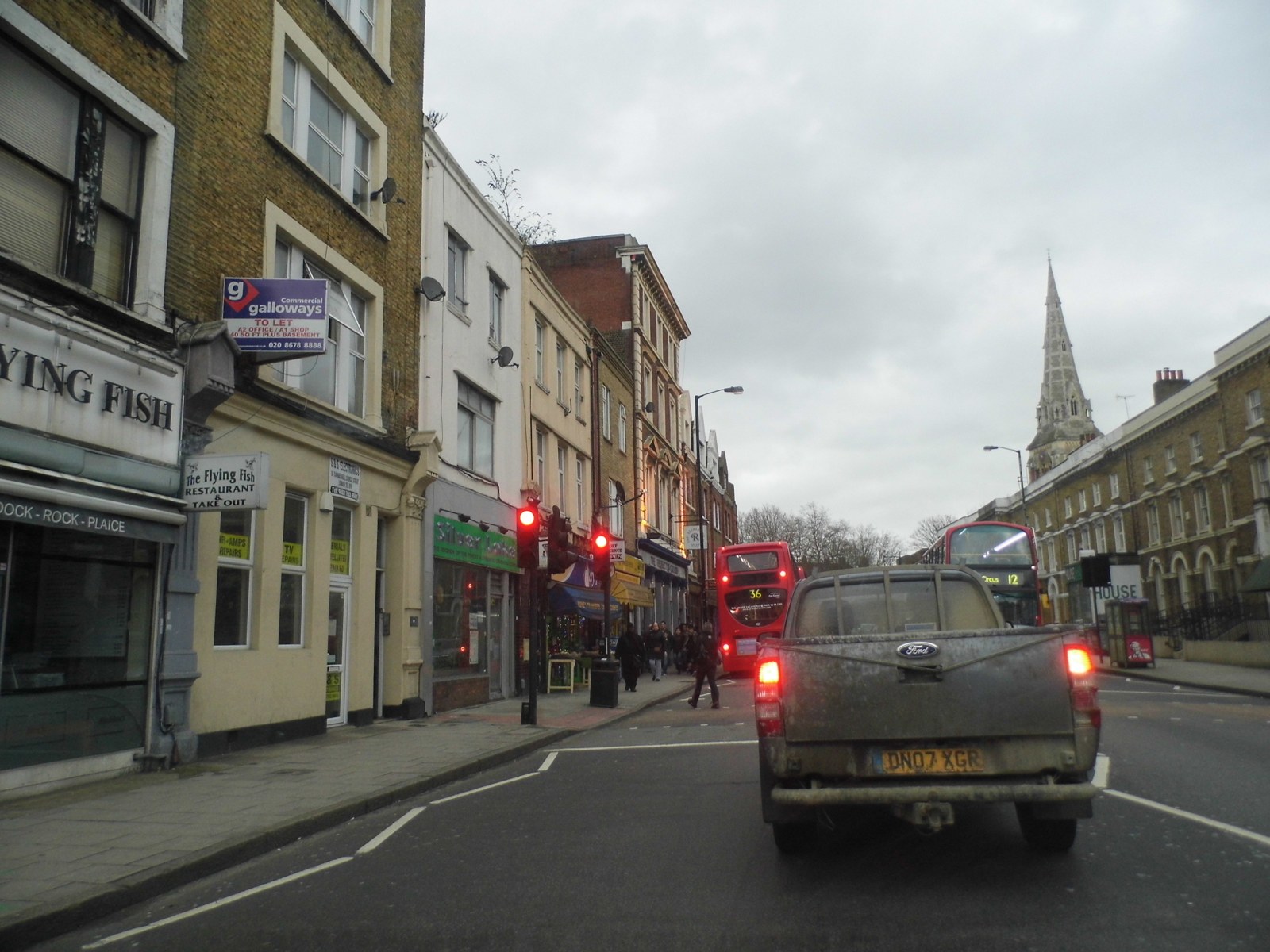
Charles William Richardson was born on 18 January 1934 in Brentford, Middlesex; his younger brother Edward, known as Eddie, was born on 21 January 1936, and a sister, Elaine, followed in 1940. Their father deserted the family, and the boys were raised in Camberwell, where their mother ran a sweetshop. Camberwell became the brothers’ territory for the rest of their lives.
Charlie invested in scrap metal, which became the public face of the family’s operations. Behind it, according to police and later court evidence, the brothers ran fraud, gaming machines, and the collection of protection money — “pensions”, as the gang called them — from publicans and other businesses.
The best known enforcer was Frankie Fraser, who joined the Richardsons in the early 1960s. His criminal career had begun at thirteen with theft and escalated through shopbreaking and desertion during the Second World War; he had been an associate of the gangster Billy Hill through the 1950s. He would spend some forty years in prison, and died in 2014. Other members included the hitman Jimmy Moody, Roy Hall, said to operate an electric generator used in punishments, and getaway drivers Bartholomew “Barry” Harris and Ron Lawrence.
The Methods
The gang’s reputation rested on how they treated people who betrayed them, kept money, or were suspected of informing. Witnesses at their later trial described mock trials — kangaroo courts held before Charlie Richardson, Fraser, and others — after which punishments were imposed: beatings, teeth pulled with pliers, toes cut with bolt cutters, victims nailed to floors, and electric shocks from an old army generator. Fraser was said to be particularly associated with the pliers.
The brothers always denied the torture claims, but the stories were consistent enough that the British press gave the gang its lasting name: the “Torture Gang”.
Rivals Across the River
By the early 1960s, organised crime in London had passed to a new generation, as the older figures who had dominated since the 1920s retired. In the East End, Ronnie and Reggie Kray were building their empire; in South London, the Richardsons were doing the same. The Thames divided their territories, but they competed for the same rackets — protection, gaming machines, and the West End clubs — and conflict was inevitable.
Charlie Richardson and George Cornell had first met the Krays in Shepton Mallet Prison. Cornell had originally belonged to an East End gang, the Watney Streeters, and had been associated with the Krays before changing sides around 1964 and joining the Richardsons. He was heavily involved in drug dealing, and unstable and unpredictable; his defection helped push the two gangs towards open war.
Tensions came to a head at a Christmas party at the Astor Club in December 1965, when Cornell insulted Ronnie Kray to his face. Three months later, the war turned lethal.
The Night at Mr Smith’s
On the night of 7 March 1966 — some accounts say 8 March — a brawl broke out at Mr Smith’s Club in Rushey Green, Catford. The club was owned by Manchester businessmen Dougie Flood and Bill Benny, who had asked Eddie Richardson and Frankie Fraser to “protect” it in exchange for gaming machines there. That night Richardson men were drinking there alongside members of another South London gang led by Billy Hayward. Soon after midnight, Eddie Richardson told Peter Hennessey and the others to drink up and leave. Hennessey refused with an insult, the two men began fighting, other fights broke out, and then shots were fired.
Richard Hart, an associate of the Krays, was shot dead, apparently as he tried to escape down the stairs. For many years Fraser was blamed for killing Hart, and he always denied it. Billy Gardner was said to have shot Fraser through the thigh, and Eddie Richardson, Fraser, and others ended up in Lewisham Hospital. Almost the entire Richardson gang was arrested in the aftermath.
The fallout came the next day. A gang member, Jimmy Andrews, had been injured in the affray and went for treatment at the Royal London Hospital in Whitechapel. That evening George Cornell went to visit him, stopping at the Blind Beggar, about three hundred metres from the hospital entrance — and Ronnie Kray killed him there. The murder of Cornell was the most famous killing of the London gang wars, and it was the Krays, not the Richardsons, who would eventually be convicted of it.
Eddie Richardson was sentenced to five years for affray over the Mr Smith’s incident.
The Witnesses Turn
The Richardsons’ downfall had begun before the Mr Smith’s fight. In July 1965, one of their victims had told police how he had been beaten after being found guilty of disloyalty by one of the gang’s mock trials. Then a member of the gang itself turned against them: Johnny Bradbury had been convicted of murdering a business associate named Waldeck in South Africa, allegedly on Charlie Richardson’s orders, and sentenced to hang; in exchange for a pardon and immunity, he offered to inform on the gang.
Other victims were granted immunity from prosecution for their own crimes if they turned Queen’s Evidence. The investigation was handled by the Hertfordshire force, because the Home Office did not trust the Metropolitan Police. With the Home Office’s help, several witnesses were given new identities and passports and fled the country after the trial. Many did not return to Britain for a considerable time.
On 30 July 1966 — the day England won the World Cup final — police raided across South London and arrested the remaining members of the gang, Charlie Richardson among them, for grievous bodily harm.
The Torture Trial
The trial began at the Old Bailey at the start of April 1967, before Mr Justice Frederick Lawton. The newspapers soon named it the “Torture Trial”. The charges included fraud, extortion, assault, and grievous bodily harm. Prosecution witnesses, among them the travel agent Lucian Harris, described being beaten and given electric shocks.
The jury found the Richardsons guilty. Charlie Richardson was sentenced to twenty-five years and ordered to pay £20,000 in court costs. Eddie Richardson, already serving five years for the Mr Smith’s affray, had ten more years added. Frankie Fraser received ten years. Charlie Richardson always denied the torture allegations, and maintained that denial for the rest of his life.
The trial marked the end of the Richardson Gang as a force in London; the Krays were arrested in May 1968 and convicted of murder the following year. Within three years, both of London’s great gang firms had been destroyed by the courts.
Aftermath
Charlie Richardson was not freed until July 1984. In 1980, after many attempts to obtain release, he escaped from an open prison and spent almost a year on the run: he dressed as Santa Claus and handed out presents to children to publicise his campaign for release, drank openly in pubs on the Old Kent Road, and fled to Paris, where he gave an interview to a journalist. He was eventually arrested in Earl’s Court on suspicion of possessing drugs, and was finally released in July 1984.
In 1990 Eddie Richardson was sentenced to thirty-five years after being convicted of involvement in a £70 million cocaine and cannabis importation, and was released after twelve years, bringing his total time served to twenty-three years. The brothers fell out badly after Eddie accused Charlie of fraudulent business deals during Eddie’s time in prison.
Charlie Richardson died of peritonitis in September 2012, aged seventy-eight; Eddie Richardson died in August 2026, aged ninety. The gang they had built from a Camberwell scrap yard was long gone, but the name the newspapers gave them has outlived them all.
The Richardson story is often told as a footnote to the Krays, and the twins did become the more famous of the two firms. But that misses the point. For several years in the early 1960s, the Richardsons were the dominant gang in South London, and the people who suffered most under them were not rival gangsters but small-time collectors, debtors, and associates with nowhere else to go. The men who finally brought them down were not rival gangsters: they were the victims willing to testify, the informer who traded his own life for theirs, and the outside police officers brought in because the local force could not be trusted. The “Torture Trial” was not a victory for one gang over another. It was the moment the people the Richardsons had hurt were finally heard.
What is documented — and what is not
Documented: The brothers’ Camberwell background, the Mr Smith’s brawl of 7–8 March 1966 and the death of Richard Hart, Cornell’s murder on 9 March 1966, Eddie Richardson’s five-year sentence for affray, the arrests of 30 July 1966, the Old Bailey trial of April 1967, and the sentences — Charlie twenty-five years, Eddie ten more, Fraser ten — are recorded in court reporting and in the brothers’ obituaries. Charlie Richardson’s escape in 1980, release in July 1984, and death in September 2012 are also documented, as is Eddie Richardson’s 1990 conviction.
Unverified or unproven: The torture methods attributed to the gang rest on witness testimony at the 1967 trial and later accounts, not on convictions for those acts; the brothers always denied them. The claim that Charlie Richardson was connected to the South African Bureau of State Security and tried to tap Prime Minister Harold Wilson’s telephone was never proved. Cornell’s reported last words come from a single witness account. Metropolitan Police corruption at the time was alleged by investigators, but no officers were convicted as part of the Richardson case.
Sources
- https://en.wikipedia.org/wiki/Richardson_Gang
- https://nationalcrimesyndicate.com/richardson-gang/
- https://www.thetruecrimedatabase.com/case_file/richardson-gang/
- http://eddierichardson.co.uk/krays_article.php