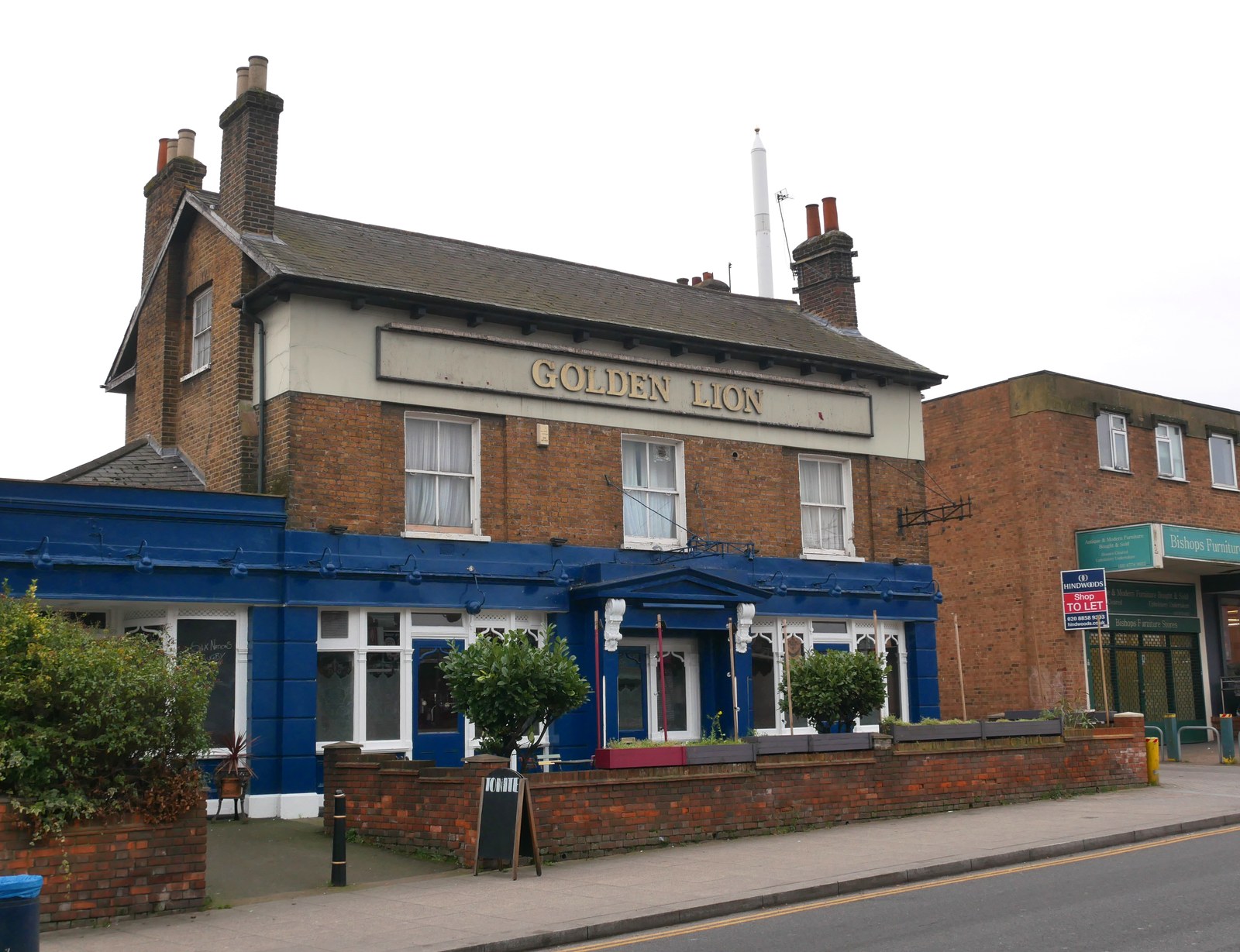
At 9:40 p.m. on Tuesday 10 March 1987, Daniel Morgan was found dead in the rear car park of the Golden Lion pub in Sydenham, south-east London. He was 37 years old, a private investigator, and he had been struck in the head with an axe. His wallet was still full. Nothing had been stolen. He was lying beside his BMW, in the dark, behind a pub where he had been drinking with his business partner an hour earlier.
Nearly forty years later, no one has ever been convicted of killing him. Five separate police investigations have tried and failed. A murder trial at the Old Bailey collapsed in 2011. And in 2021, an independent inquiry concluded that the Metropolitan Police — the force charged with finding his killer — had itself been institutionally corrupt in its handling of the case, concealing its own failings to protect its reputation. Daniel Morgan’s murder is not just an unsolved killing. It is the most damaging unsolved murder in modern British policing.
A private investigator
Daniel John Morgan was born on 3 November 1949 in Monmouthshire, Wales. He worked as a private investigator in London, and in the 1980s he co-founded a detective agency called Southern Investigations with his business partner, Jonathan Rees. The firm did a great deal of work for newspapers, above all for the News of the World, and its methods were those of the trade at the time: surveillance, tip-offs, and information bought from police officers and other sources.
By early 1987, Morgan and Rees were arguing. Morgan was said to be unhappy about the firm’s work, and about Rees’s dealings, and there were reports that he was planning to expose police corruption — possibly to the press, possibly to the authorities. What exactly he knew, and what he intended to do with it, has never been established. But the timing has always looked significant: the man who was reportedly about to expose corruption was murdered, and the investigation into his murder was then compromised from within the very force he was said to be about to expose.
On the evening of 10 March, Morgan and Rees had been drinking at the Golden Lion. Rees left first. Morgan stayed, and then went out to the car park. That was where he was found, with an axe embedded in his skull.
The first investigation
The Metropolitan Police opened a murder investigation immediately. Detective Sergeant Sid Fillery, based at Catford police station, was allocated to the case. Within a month, in April 1987, Rees was arrested on suspicion of murder, along with Fillery himself, Morgan’s future replacement at Southern Investigations, and two brothers, Glenn and Garry Vian. None of them was charged.
The first inquiry was, by the Met’s own later admission, compromised. Fillery was himself a suspect, and he was also investigating the case. Evidence was lost. Lines of inquiry were not followed. Witnesses were not properly interviewed. In the years that followed, three more police inquiries were conducted, and each of them ran into the same wall: allegations of police corruption, drug trafficking, and robbery, and a culture inside the force that protected its own.
In 2006, Jennette Arnold, a London Assembly politician, described the unsolved murder as a reminder of the culture of corruption and unaccountability within the Metropolitan Police. The case’s profile was raised by the investigative journalist Peter Jukes, who worked on it with Alastair Morgan, Daniel’s brother, producing a podcast and a book. Alastair Morgan’s campaign for answers would last for decades.
The trial that collapsed
In 2008, the Met launched a fifth investigation, headed by Detective Superintendent David Cook, after the Commissioner, Sir Ian Blair, acknowledged that the first inquiry had been compromised. In 2009, Rees, Fillery, the Vian brothers and a builder, James Cook, appeared at the Old Bailey charged with Morgan’s murder. It was the first time anyone had been put on trial for the killing, twenty-two years after it happened.
The trial collapsed in March 2011. The prosecution’s case depended heavily on evidence from supergrasses — criminals who had agreed to give evidence in return for leniency — and the court ruled that evidence inadmissible. Prosecutors then abandoned the case, citing disclosure failures and police corruption. The defendants walked free. No one has been charged with Daniel Morgan’s murder since.
The collapse was also connected to a much larger scandal. Jonathan Rees had reinvented himself after Morgan’s death as one of Britain’s most connected private investigators, working for the News of the World as an illegal information broker. The same web of corruption that had shielded Morgan’s killers was later exposed in the phone-hacking scandal that closed the newspaper in 2011. The Daniel Morgan case and the phone-hacking scandal turned out to be two faces of the same story: a market in illegally obtained information, in which police officers, private investigators and journalists all had a stake.
The independent panel
After the trial collapsed, the Metropolitan Police acknowledged that police corruption had hampered the original investigation. In 2013, the Home Secretary established the Daniel Morgan Independent Panel to examine the circumstances of the murder, the handling of the case, and the effect of corruption on the investigations. The panel, chaired by Baroness O’Loan, took eight years to report.
Its report, published in June 2021, ran to more than 1,200 pages, and its findings were damning. The panel concluded that the Metropolitan Police had been “institutionally corrupt” in its handling of the case — not because officers had necessarily been involved in the murder, but because the force had concealed or denied its own failings, placed the protection of its own reputation above the need for accountability, and maintained a culture of institutional defensiveness. The panel found that crucial lines of inquiry had been blocked, evidence destroyed, and whistleblowers silenced.
The panel did not find evidence that police officers were involved in Daniel Morgan’s murder, nor evidence that he was murdered to conceal police corruption. That distinction matters, and the panel was careful to make it. What it found was something different, and in some ways worse: that the investigation had failed not because of a single corrupt act, but because of a system that could not confront its own corruption.
The then Commissioner, Cressida Dick, disputed aspects of the report, triggering a public argument with the panel. In 2022, the Independent Office for Police Conduct reviewed matters arising from the report and concluded there were no new avenues that could then lead to criminal or disciplinary proceedings. In December 2025, a separate IOPC investigation addressed documents the Metropolitan Police had failed to disclose to the panel.
What remains
Daniel Morgan’s murder remains unsolved. No one has been successfully prosecuted or convicted for it. His brother Alastair has campaigned for a full public inquiry for nearly forty years, and has repeatedly called for compensation for the family and for a fundamental overhaul of how institutional corruption is dealt with in Britain.
The case matters because of what it revealed. Most unsolved murders are unsolved because the evidence ran out. Daniel Morgan’s case is different: the evidence was there, or could have been there, and the investigation failed anyway — not once, but five times, over more than thirty years. The 2021 report’s conclusion, that the Metropolitan Police was institutionally corrupt in its handling of the case, is the most serious finding ever made about a British police force in a murder investigation.
For the Morgan family, the report was both a vindication and a disappointment. It confirmed what they had said for decades: that the investigation had been corrupted from within. But it did not name a killer, and it did not bring a prosecution. Daniel Morgan was killed in a pub car park in 1987, and the question of who killed him is still open — not because no one knows, but because the system that was supposed to find out spent thirty-four years protecting itself instead.
What is documented — and what is not
Documented: Daniel John Morgan, 37, a private investigator and co-founder of Southern Investigations, was murdered with an axe in the car park of the Golden Lion pub in Sydenham, London, on 10 March 1987; his body was found at 9:40 p.m. beside his BMW. In April 1987, his business partner Jonathan Rees, Detective Sergeant Sid Fillery, and brothers Glenn and Garry Vian were arrested on suspicion of murder; none was charged. Five police investigations were conducted. In 2009, Rees, Fillery, the Vians and James Cook were charged with murder at the Old Bailey; the trial collapsed in March 2011 after supergrass evidence was ruled inadmissible and prosecutors cited disclosure failures and police corruption. The Daniel Morgan Independent Panel, established in 2013, published its report in June 2021, concluding that the Metropolitan Police had been institutionally corrupt in its handling of the case. No one has ever been convicted of Morgan’s murder.
Unverified or unproven: Who killed Daniel Morgan is unknown. That Morgan was planning to expose police corruption is reported but has never been established as fact, and the Independent Panel found no evidence that he was murdered to conceal police corruption, nor evidence that police officers were involved in the murder. The suggestion that the killing was a professional hit is an inference from the method, not a finding. Jonathan Rees, Sid Fillery, the Vian brothers and James Cook were all acquitted in the sense that the trial collapsed before any verdict; none has been found guilty of the murder.