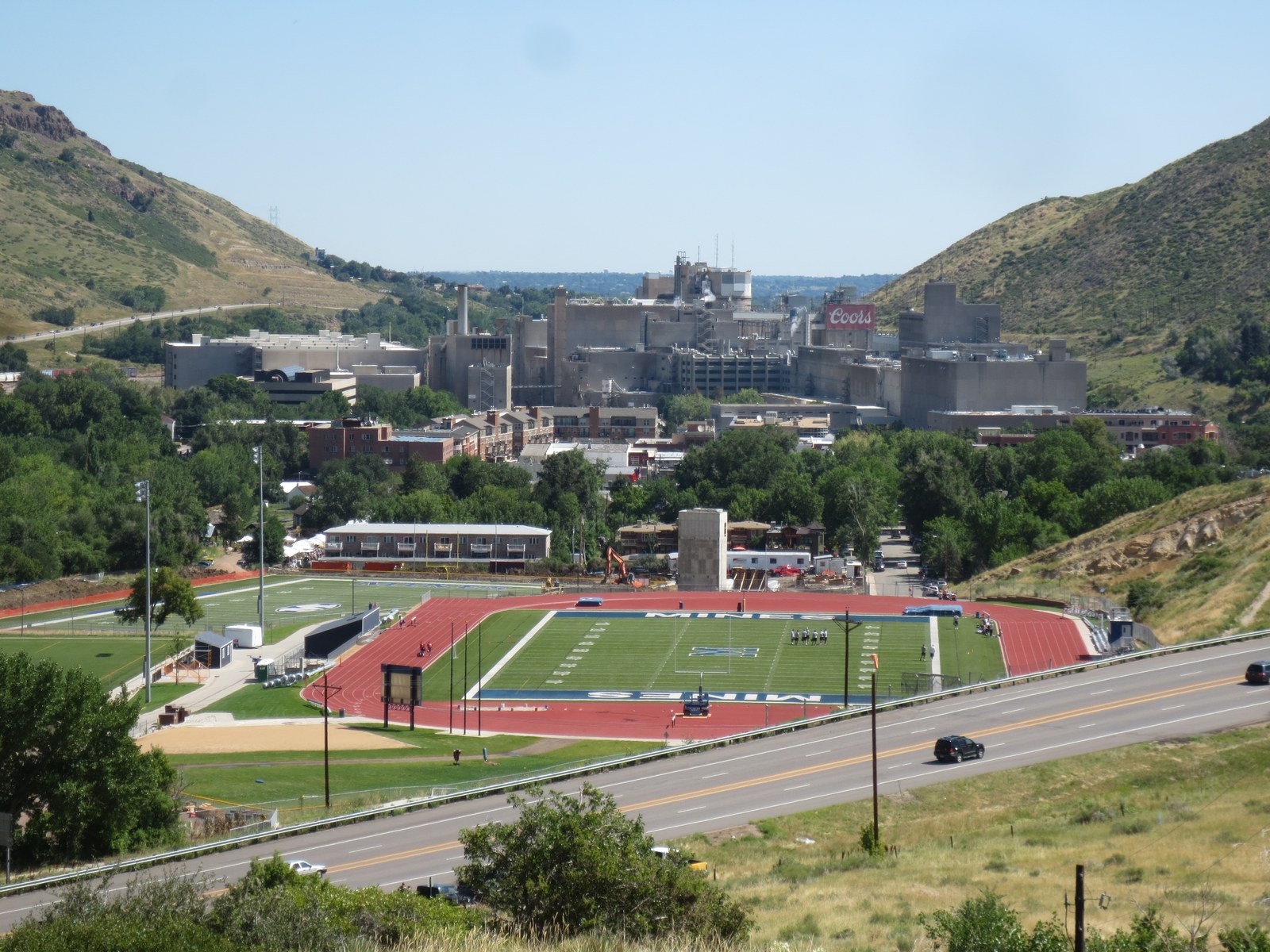
On the morning of 9 February 1960, Adolph Coors III left his ranch home near Morrison, Colorado, and drove toward his office at the Coors brewery in Golden, as he did every working day. He was forty-five years old, the grandson of the brewery’s founder and the chairman of the company that bore his family’s name. He never arrived. A delivery driver found his station wagon abandoned on Turkey Creek Bridge, its engine still running, a door open, and blood on the ground nearby. The most powerful brewing family in Colorado was about to learn that its heir had been the target of a kidnapping for ransom — and that the plan had gone wrong within minutes.
What followed was the largest FBI manhunt since the Lindbergh baby kidnapping of 1932, a seven-month search for a missing man, and a fugitive hunt that ended in Canada. It is a case about wealth, patience, and a single violent moment on a country bridge that changed everything.
The Heir to a Brewing Empire
Adolph Coors III was born on 12 January 1915, the grandson of Adolph Coors, the German immigrant who had founded the Coors Brewing Company in Golden, Colorado, in 1873. By 1960, Coors was one of the largest breweries in the United States, and its chairman was a prominent figure in Colorado business and civic life. He lived with his wife, Mary, on a ranch near Morrison, in the foothills southwest of Denver, and drove himself to work each morning along Turkey Creek Road.
He was not a man who travelled with bodyguards or drivers. His routine was fixed and widely known: the same road, the same time, the same car. That routine, investigators later concluded, was exactly what made him a target.
The man who waited was Joseph Corbett Jr., born in Seattle on 25 October 1928. Corbett had already killed once. In 1955, in California, he had shot and killed an Air Force sergeant, a crime for which he was convicted of second-degree murder and imprisoned. He escaped from a minimum-security prison in California and, living under the alias Walter Osborne — the first and middle names of his older brother — he made his way to Colorado. There, according to the investigation, he spent months watching Coors, learning his routine, and planning to seize him and demand a ransom of $500,000, a sum worth several million dollars today.
The Ambush on Turkey Creek Bridge
Roadworks had been under way near Turkey Creek Bridge since January 1960, and on the morning of 9 February, Coors had to take a detour across the bridge. Corbett had parked his car in the middle of the bridge, posing as a stranded motorist. When Coors stopped to help, Corbett tried to seize him. There was a struggle at the bridge railing, and Coors’s glasses and cap fell into the creek below. As Coors turned and ran back toward his own car, Corbett shot him twice in the back.
Corbett loaded the wounded man into his car and drove away, leaving Coors’s station wagon standing on the bridge with its engine running. A milkman found the car a short time later and raised the alarm. The next day, a ransom note arrived at the Coors home, demanding $500,000 for his return. The note had been typed, and the typewriter used to write it would later become a key piece of evidence. But no further contact followed, and no exchange was ever arranged.
The Largest Manhunt Since Lindbergh
The FBI entered the case on 10 February 1960, invoking the federal kidnapping statute. Director J. Edgar Hoover designated the investigation — code-named “COORNAP” — a top priority, and deployed more agents than in any case since the Lindbergh kidnapping. Hundreds of agents, roadblocks, interviews, and searches swept Colorado and beyond.
Investigators worked from the few traces Corbett had left. A car matching the description of one seen near the Coors property was found burned out in Atlantic City, New Jersey, just over a week after the abduction. Corbett had bought a typewriter of the exact model used to type the ransom note. And the alias Walter Osborne unravelled when agents traced an insurance policy that named Joseph Corbett as the beneficiary. Once the real identity was known, Corbett’s record — the California murder conviction and the prison escape — fell into place.
On 30 March 1960, Corbett was added to the FBI’s Ten Most Wanted Fugitives list, the 127th person to receive that designation. By then, the search for Coors himself had become a search for a body. For seven months, search parties combed the foothills and countryside south of Denver without success.
The Discovery in the Hills
On 11 September 1960, hikers found human remains in a remote area south of Denver. Dental records and other evidence identified the body as Adolph Coors III. He had been shot twice in the back, and the remains had been at the site for months. The precise date of his death could not be determined from the remains.
The discovery closed one phase of the case and opened another. Corbett was now wanted for murder as well as kidnapping. But Corbett had vanished. He had crossed into Canada and was living quietly in Vancouver, British Columbia, under another assumed name, working in a kitchen and keeping to himself.
He was caught because two Canadian citizens recognised him from a November 1960 article in Reader’s Digest about the FBI’s most wanted fugitives. On 29 October 1960, Canadian police arrested him in Vancouver, seven months after the body was found and nearly nine months after the morning on the bridge. He was returned to the United States to face trial.
Trial, Conviction, and a Long Silence
Because Coors’s remains had been found within Colorado, the state charged Corbett with murder, and he was not tried on federal kidnapping charges. His trial opened in Golden, Colorado, in March 1961. Corbett did not testify in his own defence. The prosecution’s case rested on the physical evidence — the typewriter, the car, the insurance policy, and the trail of the alias — and on the account of the struggle on the bridge, reconstructed from the scene and from forensic evidence.
On 29 March 1961, the jury convicted Corbett of first-degree murder. The following day, he was sentenced to life imprisonment. He was sent to the Colorado State Penitentiary at Cañon City, where he remained for nineteen years. He was paroled and released on 12 December 1980.
Corbett lived the rest of his life quietly in the Denver area, in a small apartment about ten miles from the bridge where he had ambushed Coors. He never admitted to killing Coors and never offered an account of what had happened that morning. In 2009, at the age of eighty, he died by suicide in the apartment he had occupied for twenty-five years. He had been diagnosed with cancer.
The Family and the Company
For the Coors family, the case was a private tragedy played out in public. Mary Coors, who had received the ransom note the day after her husband vanished, lived with months of uncertainty before the body was found. The company continued under other members of the family, and the brewery in Golden, which the victim had been driving to on the morning he died, remains one of the largest in the world.
The case also left a mark on American law enforcement. The COORNAP investigation became a textbook example of a federal kidnapping inquiry: the rapid deployment of agents, the use of the Ten Most Wanted list, and the painstaking linking of small pieces of evidence — a typewriter model, an insurance beneficiary, a burned-out car on the far side of the country — into a single identity. It also showed the limits of that machinery: despite the largest manhunt since Lindbergh, it took seven months to find the victim, and the killer was found not by the manhunt itself but by two members of the public who recognised a magazine photograph.
Why the Case Endures
The kidnapping of Adolph Coors III is remembered because it showed how a fixed daily routine could become a vulnerability for a wealthy and prominent man, and how quickly a plan built on ransom could collapse into murder: the scheme, months in the planning, failed in a few minutes on a bridge, because the victim fought back. It is also a case with an unresolved core. Corbett never explained himself — never said why he chose Coors, what he did with the body, or where he went after the shooting. The evidence convicted him, but the details rest on inference from the scene rather than on any account from the man who committed it, and that silence has kept the case alive in books and documentaries, most notably Philip Jett’s 2017 book The Death of an Heir.
Sixty-six years on, the bridge over Turkey Creek still carries traffic between Morrison and Golden, and the brewery at the end of that road still brews beer under the family name.
What is documented — and what is not
Documented: Adolph Coors III, born 12 January 1915, chairman of the Coors Brewing Company, was abducted on the morning of 9 February 1960 on Turkey Creek Bridge near Morrison, Colorado, after stopping to help a man posing as a stranded motorist, and was shot twice in the back during a struggle. A ransom note demanding $500,000 was delivered to his wife the next day. The FBI investigation, code-named COORNAP, was the largest since the Lindbergh case. Joseph Corbett Jr., a convicted murderer who had escaped from prison in California and was living under the alias Walter Osborne, was added to the FBI’s Ten Most Wanted list on 30 March 1960. Coors’s remains were found on 11 September 1960. Corbett was arrested in Vancouver on 29 October 1960 after being recognised from a Reader’s Digest article, was convicted of first-degree murder on 29 March 1961, and was sentenced to life imprisonment. He was paroled on 12 December 1980 and died by suicide on 24 August 2009, aged eighty.
Not documented / unverified: Some accounts state that Corbett had stalked Coors for four years before the crime; others describe the surveillance as lasting months. The exact length is not established in the court record. Corbett never admitted the crime or gave an account of his movements after the shooting, so any detailed reconstruction of what he did with the body or where he went in the days after 9 February 1960 is inference from the evidence, not his own testimony. The precise date of Coors’s death cannot be fixed from the remains, which were found seven months after the abduction.
Sources
- https://en.wikipedia.org/wiki/Adolph_Coors_III
- https://en.wikipedia.org/wiki/Joseph_Corbett_Jr.
- https://gizmodo.com/on-the-run-from-one-murder-he-accidently-committed-ano-1730576372
- https://www.lawweekcolorado.com/article/adolph-coors-failed-kidnapping-that-led-to-murder/