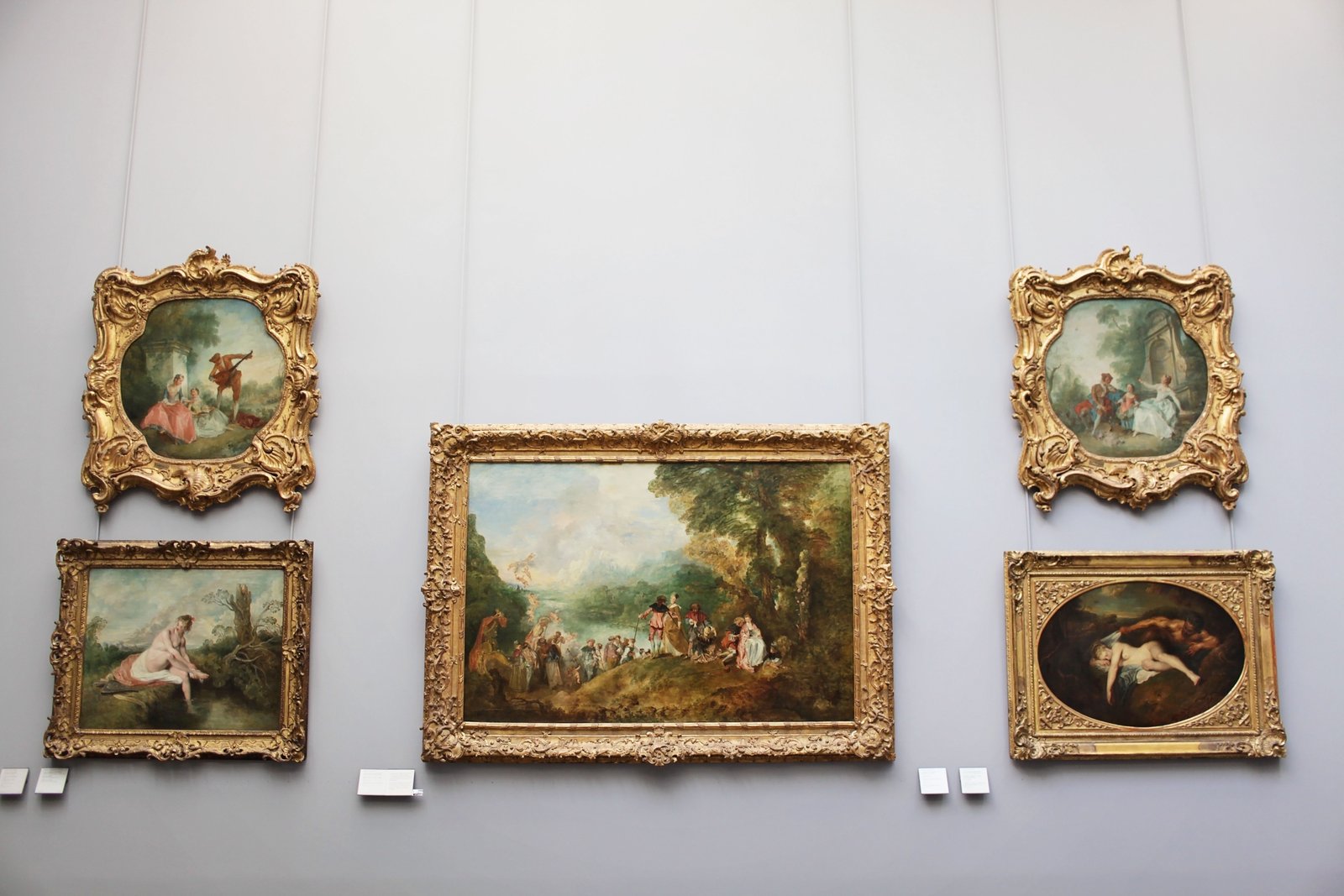
In the early hours of 18 March 1990, two men arrived at the Isabella Stewart Gardner Museum in Boston. They said they were police officers responding to a disturbance. The guard on duty, Rick Abath, admitted them. Within minutes, he and the second guard on duty were bound with duct tape and handcuffs. The men spent 81 minutes inside the museum. When they left, they had taken thirteen works of art, valued by the FBI at more than $500 million. It was, at the time, the largest property theft in American history.
More than thirty-five years later, nothing has been recovered and no one has been arrested. The empty frames from which the paintings were cut still hang in the museum’s Dutch Room, as they have since the morning after the theft. They are the most visible reminder of a case that has outlasted theories, investigations and rewards.
What was taken
The best-known work stolen that night was Rembrandt’s Christ in the Storm on the Sea of Galilee, painted in 1633. It was Rembrandt’s only seascape, a large painting of Christ calming the storm, with the disciples struggling in a boat. Also taken were Rembrandt’s A Lady and Gentleman in Black and a small Rembrandt self-portrait etching.
The other major loss was Johannes Vermeer’s The Concert, painted in about 1664. Vermeer is one of the rarest artists in the world: only about 34 to 36 of his paintings are known to survive. The Concert, showing three musicians in a domestic interior, was one of the finest of them, and it was the most valuable painting stolen that night. Its loss is still described by art historians as one of the greatest losses in the history of art theft.
The thieves also took Govert Flinck’s Landscape with an Obelisk, works by Edgar Degas and Édouard Manet, a Chinese bronze gu — a ritual vessel — and an eagle finial, a decorative top piece from a flagpole. The list is a mixture of masterpieces and smaller objects, and that mixture has puzzled investigators ever since. The thieves took some works of enormous value and left other valuable works behind. They cut paintings from their frames, a crude and damaging method that suggests they were in a hurry, or that they did not care about the condition of the works, or both.
Eighty-one minutes
The details of the night itself are well established, because the guards were able to describe what happened, and because the museum’s security system recorded the movements of the thieves. The two men arrived in the early hours of Sunday 18 March 1990, when the museum was closed and only two guards were on duty. They identified themselves as police officers responding to a report of a disturbance. Rick Abath, the guard at the door, admitted them.
Once inside, the men overpowered the guards, bound them with duct tape and handcuffs, and left them in the basement. The guards were not seriously hurt, but they were unable to raise the alarm. The thieves then moved through the museum, taking paintings from the Dutch Room and other galleries. They spent 81 minutes inside. They left through a side door, taking the works with them. The guards were found later, when other staff arrived, and the theft was discovered.
The simplicity of the entry is part of what has made the case so difficult to accept. The museum was not broken into with force. The men were let in. The guards followed a procedure that, in hindsight, was a vulnerability: a claim of police business, late at night, with no independent check. The museum has since changed its security, but the fact remains that the most valuable art theft in American history began with a knock on the door and a plausible story.
The investigation
The Federal Bureau of Investigation took the lead in the investigation, working with the Boston Police Department and the museum. The case has remained open ever since. The FBI has described it as an active investigation, and the museum continues to offer a reward of $10 million for information leading to the recovery of the works.
Over the years, the FBI has made public statements about the case that have been widely reported, and widely disputed. In 2013, the FBI said that it knew the identities of the thieves, but it did not name them. In 2015, the FBI named two men, George Reissfelder and Lenny DiMuzio, as suspects. Both men had died within a year of the robbery. Those statements should be treated as FBI statements, not as established fact. No one has been charged, and no evidence has been presented in court to prove who carried out the theft. The naming of suspects who are dead, and therefore cannot be tried or questioned, has been criticised by some commentators, and the FBI’s claims have not been independently verified.
What the record shows
In the early hours of 18 March 1990, two men posing as police officers responding to a disturbance were admitted to the Isabella Stewart Gardner Museum in Boston by guard Rick Abath. The guards were bound with duct tape and handcuffs. The men spent 81 minutes inside and stole thirteen works, valued by the FBI at more than $500 million — at the time the largest property theft in United States history. The stolen works included Rembrandt’s Christ in the Storm on the Sea of Galilee (1633), his only seascape, A Lady and Gentleman in Black, and a small self-portrait etching; Vermeer’s The Concert, one of only about 34 to 36 known Vermeers; Govert Flinck’s Landscape with an Obelisk; works by Degas and Manet; a Chinese bronze gu; and an eagle finial. The case remains unsolved. No arrests have been made and nothing has been recovered. The museum offers a $10 million reward. The empty frames still hang in the Dutch Room. In 2013 the FBI said it knew the identities of the thieves but did not name them; in 2015 it named George Reissfelder and Lenny DiMuzio as suspects, both of whom had died within a year of the robbery. Those are FBI statements, and they are disputed.
Sources
- FBI, “Inside the FBI Podcast: The Isabella Stewart Gardner Museum Heist”: https://www.fbi.gov/news/podcasts/inside-the-fbi-podcast-the-isabella-stewart-gardner-museum-heist
- Wikipedia, “Isabella Stewart Gardner Museum theft”: https://en.wikipedia.org/wiki/Isabella_Stewart_Gardner_Museum_theft
- Isabella Stewart Gardner Museum, “The Theft”: https://www.gardnermuseum.org/about/theft