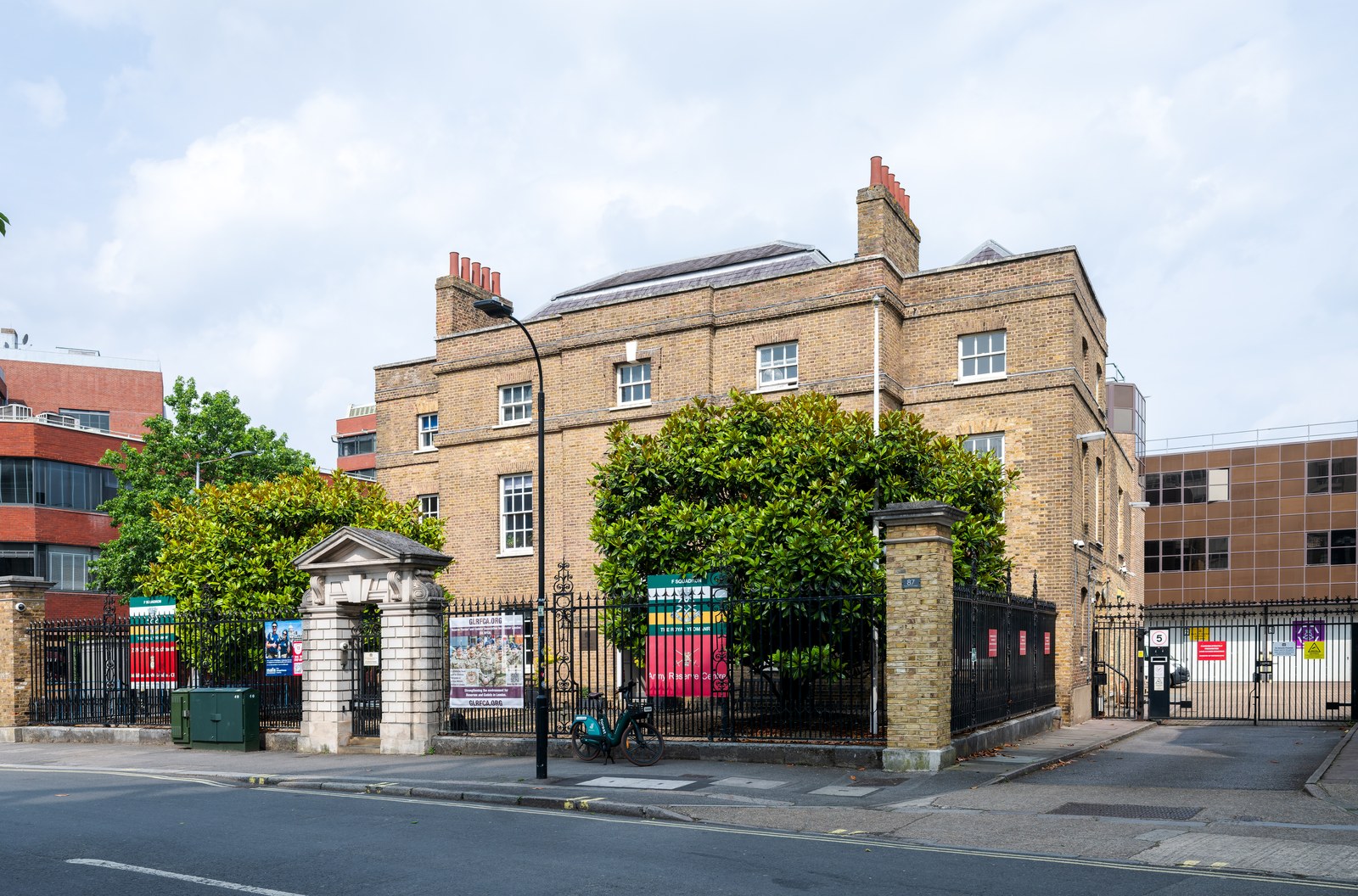
On Monday 28 July 1986, a 25-year-old estate agent left her office in Fulham, west London, to show a client around a house. She told her colleagues she would be back soon. She never returned. Her body has never been found, no one has ever been charged in connection with her disappearance, and forty years on, the case remains one of Britain’s most haunting unsolved mysteries.
Suzy Lamplugh
Suzy Lamplugh was 25 and worked as an estate agent for the firm Sturgis and Sons in Fulham. She was, by the accounts of those who knew her, fun and full of life. She lived with her parents in south-west London and was building an ordinary working life in the city.
On the morning of 28 July 1986, she noted an appointment in her work diary: a 12:45 p.m. meeting with a client recorded only as “Mr Kipper” at a property in Shorrolds Road, Fulham. She left the office at about 12:30 p.m. When she did not return, her colleagues raised the alarm.
Her car, a white Ford Fiesta, was later found parked in Stevenage Road, Fulham, some distance from the Shorrolds Road property. Her purse was inside the car. There was no sign of Suzy herself, and no credible sighting of her after she left the office has ever been confirmed.
One of the Largest Missing-Person Inquiries
The disappearance prompted one of the largest missing-person investigations ever undertaken in the United Kingdom. The Metropolitan Police inquiry, known as Operation Phoebus, involved hundreds of officers. Detectives searched houses, gardens, and open ground, traced the diary entry, and appealed repeatedly for information about “Mr Kipper” — a name no one at the estate agency recognised, and which has never been explained.
In 1987, after her bank account showed no activity and no credible sightings emerged, detectives reclassified the case as a murder inquiry. Suzy Lamplugh was legally declared dead, presumed murdered, in 1993, seven years after she vanished. Her body has never been recovered, so the precise circumstances of her death cannot be established. That absence — no body, no confirmed crime scene, no confirmed witness to what happened after midday on 28 July — has defined the case ever since.
The investigation has been reviewed many times. Fresh public appeals were issued in 2018 and 2020. In July 2026, the force announced a final push to trace around 30 potential witnesses over the following year, before the case is expected to move to an “inactive phase” — meaning new information would still be followed up, but the team would no longer actively work on it.
John Cannan: Prime Suspect, Never Charged
The man police came to regard as their prime suspect was John Cannan, a convicted murderer. Cannan was born in 1954. By the mid-1980s he had a criminal record including burglary and firearms offences, and he had been released from prison in the months before Suzy disappeared, working on day release in the Fulham area.
In October 1987, a little over a year after Suzy vanished, Cannan abducted and murdered 29-year-old Shirley Banks in Bristol. He was arrested in October 1987 and in 1989 was convicted of her murder, along with other offences including rape and abduction, and received life sentences.
Detectives reopened the Lamplugh case in May 2000. Cannan was interviewed in connection with Suzy’s disappearance in 2000 and 2001, and in 2002 the Metropolitan Police publicly named him as their prime suspect — at one point describing him as the “only suspect”. A file of evidence was submitted to the Crown Prosecution Service in 2002, but prosecutors concluded there was insufficient evidence to charge him.
This distinction matters and must not be blurred: John Cannan was named by police as the prime suspect in Suzy Lamplugh’s disappearance. He was never charged with, tried for, or convicted of any offence in connection with her. Any statement that he killed Suzy Lamplugh is an allegation, not a proven fact.
Cannan always denied any involvement. Police have said that no forensic evidence has ever been found linking him directly to Suzy’s disappearance. A smudged fingerprint found on the rear-view mirror of her car has never been identified. A hair recovered from her car was examined using mitochondrial DNA techniques, but no usable profile was obtained. Handwriting samples were said to show partial similarities to the “Mr Kipper” diary entry, but that is not proof of authorship, and the identity of “Mr Kipper” has never been established.
Cannan died in prison at HMP Full Sutton on 6 November 2024, aged 70, while serving his sentences for the murder of Shirley Banks and other offences. His death ended any prospect of a confession or a trial in the Lamplugh case. Detectives leading the cold-case team have said the case “haunts” them, and that their wish remains to “bring Suzy home” — to find her body and give her family answers.
Why the Case Still Matters
It also illustrates the limits of circumstantial evidence. Police have consistently said they believe the weight of the circumstances points to Cannan. The Crown Prosecution Service, applying the test for charging, concluded the evidence was not sufficient. Both of those things can be true at the same time, and both are part of the record.
What Is Documented — and What Is Not
Documented: Suzy Lamplugh, aged 25, left her Fulham estate agency office at about 12:30 p.m. on 28 July 1986 for a 12:45 p.m. appointment with “Mr Kipper” at a property in Shorrolds Road, and was never seen again. Her car was found in Stevenage Road with her purse inside. The case was reclassified as murder in 1987; she was legally declared dead, presumed murdered, in 1993. Her body has never been found. John Cannan was named by the Metropolitan Police as the prime suspect in 2002; a file was submitted to prosecutors, who decided there was insufficient evidence to charge him. He died in prison on 6 November 2024. No one has ever been charged in connection with her disappearance.
Not documented: What happened to Suzy Lamplugh after she left her office, who “Mr Kipper” was, where her body lies, and whether Cannan — or anyone else — was responsible. The suggestion that Cannan killed her is a police suspicion, not a finding of a court. Reports that forensic tests placed Suzy in a car owned by Cannan are unconfirmed in the public record and should not be treated as established fact.
Forty years after that July afternoon, the file remains open. The family has waited longer than Suzy lived for an answer that may now never come.
Sources
- https://www.thetimes.com/uk/crime/article/final-push-suzy-lamplugh-investigation-before-case-shelved-5lswccvnh
- https://www.theoldhamtimes.co.uk/news/national/26414439.cold-case-squad-haunted-unsolved-disappearance-suzy-lamplugh/
- https://internewscast.com/crime/suzy-lamplugh-murder-what-happened-to-her-who-is-her-real-killer/
- https://www.informingbritain.com/policeappeals/suzy-lamplugh-disappearance-40-years-on-and-the-final-phase-of-the-investigation-informing-britain-on-crime
- https://commons.wikimedia.org/wiki/File:1079814_II_87_FULHAM_HIGH_STREET_Hammersmith_and_Fulham_London_20250609_0001.jpg