At about 1:30 p.m. on Easter Sunday, 26 March 1967, Jim Thompson stepped out of the Moonlight bungalow in Malaysia’s Cameron Highlands and set off down the road for an afternoon walk. He waved goodbye to his hostess and to his old friend Connie Mangskau, and they watched him go. He left behind his cigarettes and the pills he took for gallstone pain. He was five days past his 61st birthday, and he was one of the most famous Americans in Asia. Nobody has seen him since.
More than 500 people searched the hills for eleven days, and sporadic searching went on for months. There was no body, no ransom note, and no clear trace of any kind. Nearly sixty years later, the question is still open: did Thompson get lost in the jungle, meet with an accident on the road, get taken by someone who knew his wartime past, or walk away by choice? Each answer has its defenders. None of them has any evidence.
The Silk King
James Harrison Wilson Thompson was born in Greenville, Delaware, on 21 March 1906, into a wealthy family. He studied architecture at Princeton, worked in New York, and served in the United States Army during the Second World War. In 1945, still only 39, he arrived in Thailand as an officer of the Office of Strategic Services, the wartime precursor to the CIA. When the war ended, he stayed.
Thailand’s silk industry was then a struggling cottage trade, unable to compete with cheaper textiles from Europe and Japan. Thompson saw something in it that no one else did. In 1951, he founded the Thai Silk Company with his partner George Barrie, with only 25,000 dollars in capital, insisting the venture remain majority Thai-owned. The business took off when the designer Irene Sharaff used his silks for the costumes of the Rodgers and Hammerstein musical The King and I, first on Broadway in 1951 and then in the film five years later. By the mid-1950s, Thompson was shipping silk to couturiers and decorators around the world, and he had earned his nickname: the Silk King of Thailand. He was so well known in Bangkok that a letter addressed simply to “Jim Thompson, Bangkok” found its way to him in a city of three and a half million people.
Thompson was also an intensely private man, and that privacy fed the rumour mill. He had been an intelligence officer during the war, and many assumed he had kept quiet ties to American intelligence as he built his empire. He was a powerful American, ideally placed in a tense region, in the early years of the conflict in Vietnam. Some said he had sympathies for the communists. Others said the opposite. The truth, as far as anyone could establish, was that Thompson was a businessman who guarded his private life and enjoyed the company of a small circle of old friends.
Easter weekend in the highlands
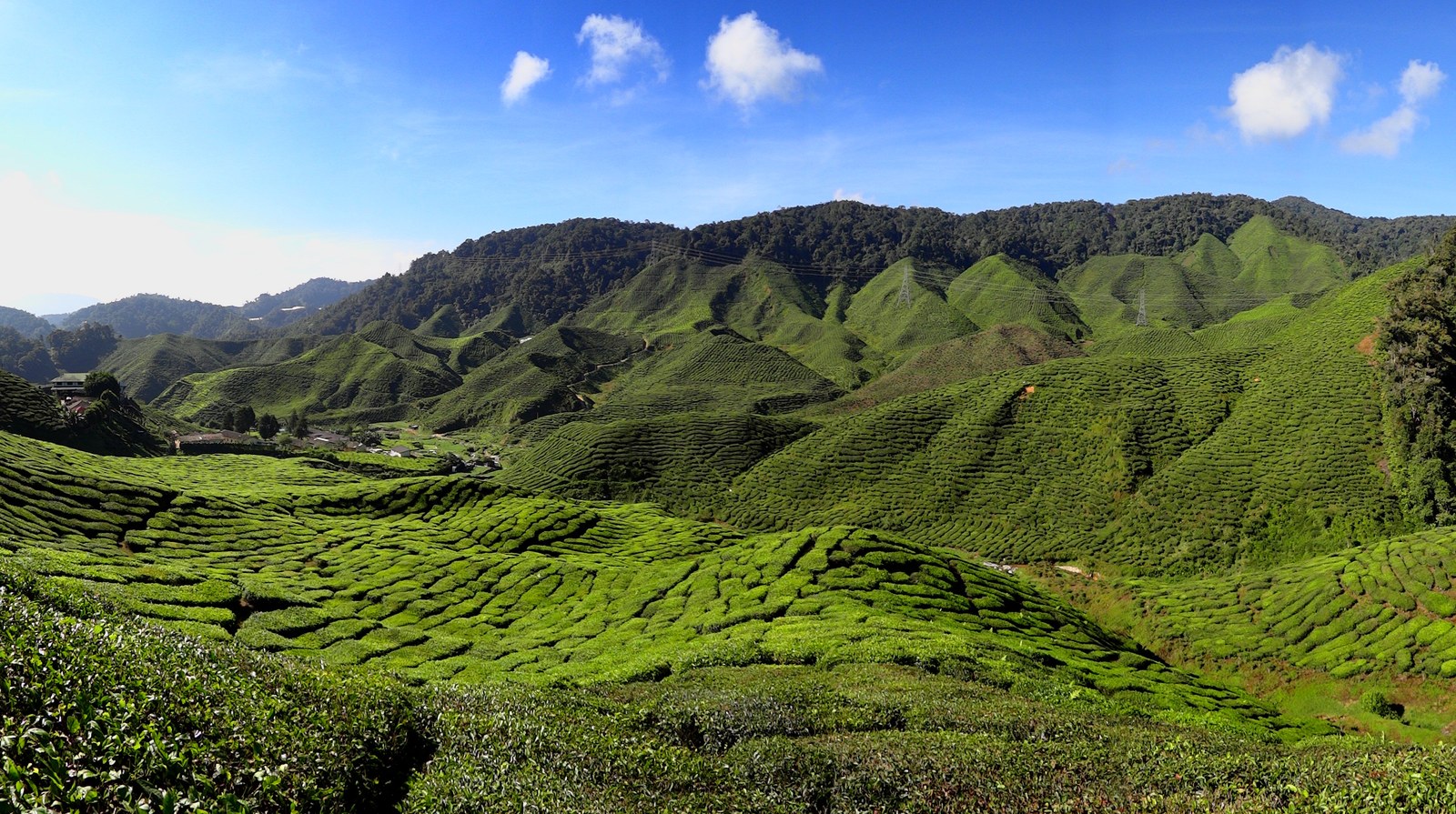
On 24 March 1967, Thompson flew to the Cameron Highlands in Malaysia for an Easter weekend with old friends. The highlands, a cool hill resort established by the British in the nineteenth century to escape the heat of Kuala Lumpur, were a favourite retreat: tea plantations, strawberry farms, and misty jungle trails. The group stayed at the Moonlight Cottage, a bungalow on a quiet road outside the town of Tanah Rata.
Thompson was in good spirits. He spent the weekend walking, talking, and enjoying the company of friends he had known for years. On Easter Sunday, after lunch, he said he was going for a walk. It was a habit of his — he liked to walk alone in the afternoon — and no one thought anything of it. He went down the only access road, Jalan Kamunting, and out of sight.
He was seen briefly about two kilometres away, near Jalan Besar. A cook at a nearby mission bungalow spotted him at around 4 p.m. Then nothing. When he had not returned by nightfall, concern turned to alarm.
The search
The search that followed was one of the largest ever mounted in Malaysia. More than 500 people took part: the Malaysian army, the police field force, Orang Asli trackers, Gurkha soldiers, British servicemen convalescing at the resort, missionaries, American school students, tourists, residents, scouts, and even mystics and psychics. Bloodhounds were brought in. Helicopters hovered over the jungle. A reward of 10,000 dollars was offered by the Thai Silk Company for information leading to Thompson’s recovery.
The official search lasted eleven days and delivered about 1,448 person-days of searching. A later analysis, carried out in 2015 by the search-and-rescue specialist Llewellyn Toulmin, estimated that this was probably not enough to cover all of the 17.7 square miles of jungle that had been identified as the search area, and put the search’s probability of success at roughly 30 to 43 per cent or less. Sporadic searching went on for months afterwards. No trace of Thompson was ever found: no clothing, no footprints, no sign of a struggle, no body.
By 1970, three years of intensive investigation had failed to turn up even one positive fact that had not been known on the evening of the first day. Thompson was declared legally dead in 1974, after the seven-year interval required by Thai law.
The theories
The theories about what happened to Jim Thompson fall into four broad groups: that he met with an accident in the jungle, that he was involved in political intrigue, that he was kidnapped for ransom, or that he took his own life. None of them has any evidence behind it.
The simplest theory is also the one most investigators have favoured: that Thompson, a man in his sixties who suffered from gallstones, went for a walk in steep, unfamiliar jungle and met with an accident — a fall, a heart attack, a snake bite — and that his body was never found because the search, for all its size, could not cover the whole area. The jungle in the Cameron Highlands is dense, the ravines are deep, and a body can disappear quickly.
The more dramatic theories have proved more durable in the public imagination. Communist insurgents left over from the Malayan Emergency must have kidnapped him, some said. Business rivals in the silk trade had him removed, said others. The CIA had extracted him, or had him killed, because he knew too much about American operations in Southeast Asia. There was even a suggestion that he had been hit by a car on one of the winding mountain roads, and that the driver had hidden the body. A tiger attack was proposed, and a fall into an animal trap. None of these theories produced a witness, a body, or a single piece of physical evidence.
Hopes were briefly raised in 1985, when Orang Asli settlers found skeletal remains, without a skull, in a grave at the edge of a vegetable plot off the main road in Brinchang. A researcher, Philip J. Rivers, learned of the find from a health officer in 2007 and argued that the bones might be Thompson’s. But the remains were never conclusively identified as human, let alone as Thompson’s, and they have since disappeared during an office move, so they can never be tested. To this day, there has been no confirmation that the bones belong to Thompson.
What remains
Jim Thompson’s disappearance has become one of the great unsolved mysteries of the twentieth century, and it has stayed that way because of what it lacks. There is no crime scene, no suspect, and no body. There is only a man who went for a walk on a Sunday afternoon and did not come back, and a search that found nothing at all.
The case has also become a kind of mirror for the anxieties of its time. Thompson was an American intelligence officer turned businessman in Cold War Asia, and every theory about his fate reflects a different fear of that era: communists, spies, business rivals, the jungle itself. The historian Edward Van Roy, writing about the case, called the attempt to prove a conspiracy behind the disappearance “a storm in a teacup” — and the evidence, such as it is, supports him. The most likely explanation remains the simplest one, and the least satisfying: a man went for a walk in the jungle and never came back.
The cottage where Thompson stayed is known today as the Jim Thompson cottage, and the Cameron Highlands Resort now operates a mystery trail that retraces the walk he is believed to have taken. Visitors follow the road he took down Jalan Kamunting, past the tea plantations and into the mist. The trail ends where the search ended: with nothing to show for it, and a question that has been open for nearly sixty years.
What is documented — and what is not
Documented: James Harrison Wilson Thompson, born 21 March 1906 in Greenville, Delaware, an American businessman who revitalised the Thai silk industry, vanished in Malaysia’s Cameron Highlands on 26 March 1967. He left the Moonlight Cottage at about 1:30 p.m. for a walk, leaving behind his cigarettes and gallstone pills, and was last seen at about 4 p.m. near a mission bungalow. More than 500 people searched for eleven days, delivering about 1,448 person-days of searching, and found no trace of him. He was declared legally dead in 1974. Skeletal remains found near Brinchang in 1985 were never confirmed to be his, and have since been lost.
Unverified or unproven: Every explanation for Thompson’s disappearance is unproven. Theories of an accident in the jungle, kidnapping by communist insurgents, murder by business rivals, CIA involvement, a road accident, a tiger attack, or suicide have all been advanced, and none has any supporting evidence. The claim that the 1985 Brinchang remains were Thompson’s has never been confirmed. No body, no ransom note, and no witness to any crime has ever been found.