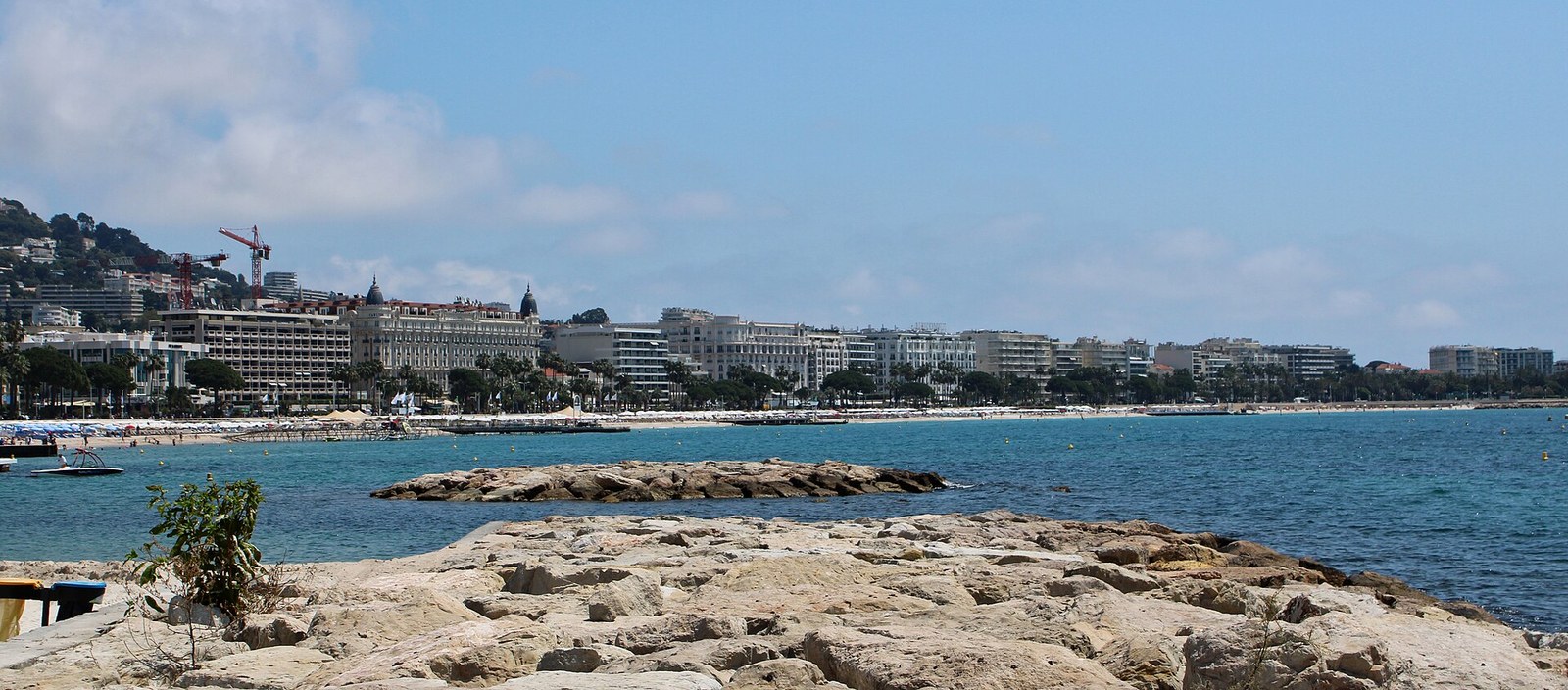
The Carlton Intercontinental hotel stands on the Croisette, the palm-lined promenade that runs along the beach at Cannes, on the French Riviera. It is a grand, white, Belle Époque building, famous in its own right as a setting for Alfred Hitchcock’s 1955 film To Catch a Thief, a story about a jewel thief on the Riviera. On Sunday 28 July 2013, it became the scene of a real jewel theft that, in its simplicity, outdid the fiction.
At lunchtime, a single man walked into the hotel, threatened the staff and guests of a diamond exhibition with a handgun, gathered up the jewels on display, and walked out again. The whole robbery took about ninety seconds. The haul was ultimately valued at €103 million — about $136 million, or £89 million — making it the biggest jewel heist in French history, and possibly the biggest heist of all time.
The exhibition
The jewels were on display as part of an exhibition called “Extraordinary Diamonds”, showing pieces belonging to the Leviev diamond house, owned by the Israeli billionaire Lev Leviev. The exhibition was held in a private salon in a wing of the hotel, with direct access to the street.
The security arrangements were, by any measure, inadequate for the value of what was on display. The guards at the exhibition were unarmed, and they had been instructed not to intervene in the event of a robbery. More strikingly, the police in Cannes said they had not been told that the exhibition was taking place at all — something they said was standard procedure for items of such high value. Hotel staff later complained about the security at the exhibition, and about the fact that it was held in a wing with direct street access.
The display contained seventy-two jewels, thirty-four of which were described as exceptional, including diamond-encrusted rings, pendants, earrings and watches. Some individual pieces were worth millions of euros on their own.
Ninety seconds
The man entered the salon through French doors, which may have been forced or left open. He wore a baseball cap and a scarf covering his face, and gloves. He was carrying a handgun — described in contemporary reporting as a semi-automatic pistol — which he pointed at the staff and guests.
No shots were fired, and no one was hurt. The man gathered the jewels into a bag — some accounts say a suitcase — and left the hotel on foot. The robbery was over in about a minute and a half. Outside, on a summer Sunday, tourists on the Croisette were unaware that anything had happened.
The first estimates of the loss were far below the final figure. Police initially put the value at around €37–40 million, or about $53 million. It was only after a full inventory of the exhibition, counting a second room that had not at first been taken into account, that the total was revised upwards: €103 million, or about $136 million. The local prosecutor in Grasse, Philippe Vique, said the complete inventory put the figure at “far closer” to £90 million.
A pattern on the Riviera
The Carlton heist was the third high-profile jewellery theft on the Riviera in a short period. Earlier in the summer of 2013, jewels worth $1.4 million had been stolen from the Cannes Film Festival, and a necklace worth $1.9 million had also been taken.
The investigation
French police launched a manhunt, with roadblocks, camera searches and a nationwide response. But they had little to work with. The thief had worn a cap and a scarf, and had left no obvious forensic trail. The exhibition’s own security had not been designed to stop a determined robber, and the police had not been given the chance to plan for the event.
Ten days after the heist, SW Associates, acting for the insurers Lloyd’s of London, offered a reward of up to €1 million — about $1.3 million — to the first person to provide information leading to the recovery of the stolen items, and released images of some of the stolen jewellery. The reward produced no recovery.
Attention quickly turned to the Pink Panthers, an international network of jewel thieves, named after the Peter Sellers comedy films, who are blamed for a series of audacious robberies across Europe. The network, whose members are largely drawn from the former Yugoslavia, is credited by Interpol with hundreds of robberies. The Carlton heist — fast, professional, carried out in daylight in a crowded place — fitted the pattern.
One name was raised more than any other: Milan Poparic, a known member of the Pink Panthers, who had escaped from a Swiss prison on 25 July 2013, three days before the heist, while serving a sentence of almost seven years for a 2009 robbery at a jewellery store. He was the third Pink Panther to escape from a Swiss prison since May 2013. Poparic was suggested in reporting as a potential suspect. He has never been charged in connection with the Carlton heist, and the suggestion remains exactly that — a suggestion, not a finding.
Reporting by the investigative journalist Ryan Jacobs has noted that most of those who have studied the case believe the thief was unlikely to have been acting entirely alone, given the scale and the value of the haul, and the need to dispose of it. But no accomplice has been identified in the sources consulted, and no arrests have been made in connection with the robbery.
What Is Documented — and What Is Not
Documented: The date and place of the robbery; the “Extraordinary Diamonds” exhibition and its owner, the Leviev diamond house; the seventy-two jewels taken, thirty-four of them described as exceptional; the initial estimate of around €37–40 million and the revised total of €103 million (about $136 million / £89 million) after a full inventory; the unarmed guards, the direct street access and the fact that Cannes police said they had not been told about the exhibition; the €1 million reward offered by Lloyd’s of London through SW Associates ten days later; the earlier Riviera thefts of $1.4 million and $1.9 million in 2013; and the fact that no arrests have been made in the sources consulted.
Unverified or uncertain: Milan Poparic’s connection to the heist is suspicion only — he escaped from a Swiss prison three days before the robbery and is a known Pink Panther, but he has never been charged in connection with it, and this article does not present him as the thief. The suggestion that the thief did not act alone is an assessment by investigators and journalists, not an established fact. Some online retellings claim that fragments of the loot were later recovered or that people were later convicted in connection with the case; those claims were not confirmed in the reliable sources consulted for this article and are not repeated here. The precise duration of the robbery is given as about ninety seconds in the Guinness World Records account, while other reports describe it more loosely as a few minutes; the article uses the ninety-second figure and flags the variation.
Sources
- https://en.wikipedia.org/wiki/2013_Carlton_Cannes_heist
- https://en.wikipedia.org/wiki/Pink_Panthers_(organized_crime_group)
- https://capitalfm.africa/cannes-jewellery-heist-worth-about-136-million/
- https://capitalfm.africa/lloyds-offers-million-euro-reward-for-stolen-cannes-jewels/
- https://www.professionaljeweller.com/value-of-cannes-diamond-theft-triples-to-89m/
- https://theculturetrip.com/europe/france/articles/the-most-outrageous-cannes-jewellery-heists-and-robberies
- https://allaboutshipping.co.uk/2013/07/30/all-that-glistens-2/