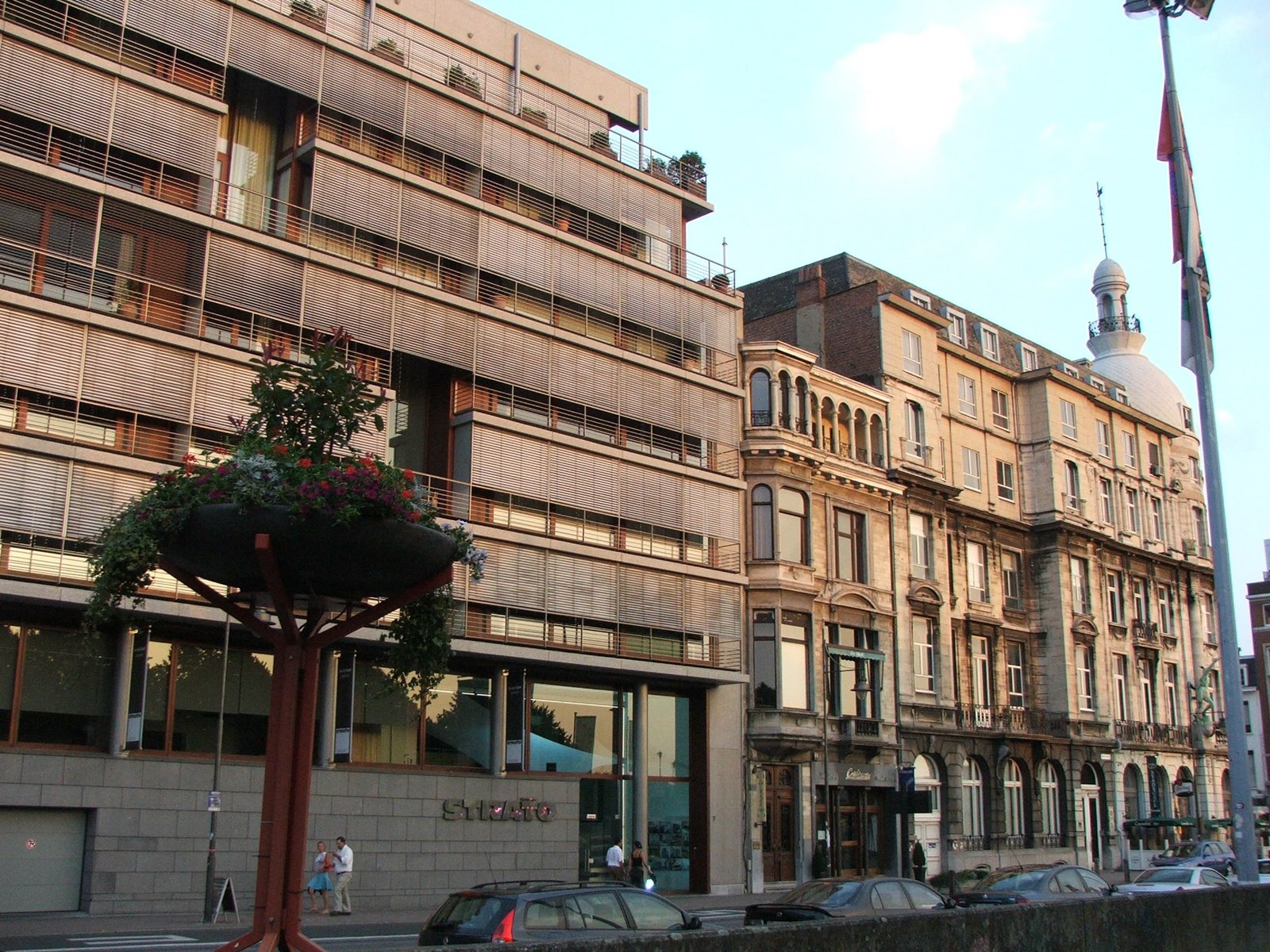
Antwerp’s Diamond District is one of the most closely watched few streets in Europe. Roughly 85 per cent of the world’s rough diamonds have passed through the city at one time or another, and the vault beneath the Antwerp Diamond Center — two floors underground, behind a combination lock, infrared heat sensors, a seismic sensor, Doppler radar and a magnetic field detector — was supposed to be among the most secure places on the continent.
Over the weekend of 15–16 February 2003, thieves walked into that vault, opened 109 of its 189 safe deposit boxes, and walked out with loose diamonds, gold, silver, jewellery, cash and securities valued at more than $100 million. It was the largest diamond heist in history, and it is still called the “heist of the century.” Most of the loot has never been recovered.
Two years of preparation
The man at the centre of the heist was Leonardo Notarbartolo, an Italian career thief born in Palermo in 1952. Around 2000 — more than two years before the robbery — he rented an office in the Antwerp Diamond Center at 9/11 Schupstraat, in the heart of the Diamond District, and presented himself as an Italian gem importer. The office gave him legitimate access to the building and to a safe deposit box in the vault below. Over the following months he met dealers, learned the building’s routines, and studied its security.
He did not work alone. Notarbartolo was part of a loose network of Italian thieves known as the “School of Turin” (La Scuola di Torino). For the Antwerp job he brought in at least four others, whom he later described only by nicknames: “Speedy”, a long-time friend he described as anxious and paranoid; “the Monster”, a tall, strong man said to be an expert lock picker; “the Genius”, a specialist in alarm systems; and “the King of Keys”, an older man described as one of the best key forgers in the world. Belgian police believe the first three were Pietro Tavano, Ferdinando Finotto and Elio D’Onorio. The true identity of the “King of Keys” has never been established.
Getting past the security
The vault’s defences were formidable, and the crew’s methods — pieced together by investigators and described in Notarbartolo’s own later interviews — were patient and low-tech. On a routine visit before the robbery, he is said to have sprayed hairspray over the thermal-motion sensor to dull it.
The magnetic lock on the vault door was defeated in advance: while the magnetic field was inactive earlier in the week, the crew loosened the screws holding two plates together and kept them in place with adhesive tape, then used a custom aluminium plate to hold the plates together — and the magnetic field intact — while the door was opened. To get through the door itself they used its combination and a long, custom-made two-part key. Inside, one thief used a polystyrene shield to block his body heat from the infrared sensor, and the ceiling light sensor was covered with tape so the lights could be switched on.
Once inside, the crew used a custom-made, hand-cranked device to break open the safe deposit boxes, each fitted with its own key lock and a three-letter combination lock. They worked through the night, filling bags with the contents of 109 boxes. Early reports put the number at 123 of 160 boxes; the corrected figure, established later, is 109 of 189.
The sandwich that solved it
The heist itself went almost perfectly. What undid it was the clean-up. After the robbery, Notarbartolo and an accomplice drove out of Antwerp and dumped bags of rubbish from the heist — tools, tape, video cassettes, documents — in a patch of woodland near the E19 motorway between Antwerp and Brussels. The next morning the landowner, August Van Camp, found the discarded bags and called the police.
Among the debris was a partially eaten salami sandwich. DNA from the sandwich was linked to Notarbartolo, along with other items in the rubbish that pointed directly to him. Detectives from Antwerp’s Diamond Detective Squad arrested him on 21 February, five days after the heist, when he returned to the Diamond Center.
Notarbartolo was found guilty of orchestrating the heist. In 2005 the court of appeal in Antwerp sentenced him to ten years in prison; Tavano, D’Onorio and Finotto each received five years. Notarbartolo was released on parole in 2009. In 2011 a European arrest warrant was issued after he was found to have breached his parole conditions — including the requirement that he compensate the victims, which he never did. He was arrested again in 2013 at Charles de Gaulle Airport in Paris during a layover and made to serve the remainder of his sentence, until 2017.
A smaller haul — or an insurance fraud?
Notarbartolo has always disputed the official version of the loot. In a 2009 interview with Wired magazine, conducted from prison, he claimed that a diamond merchant had hired the crew, that they had actually stolen only about €18 million (around $20 million) worth of goods, and that the robbery was part of an insurance fraud — with the implication that some diamonds had been removed before the robbery and then claimed on insurance.
That account is widely doubted. Experts have pointed out that the vault itself had been refused insurance cover because of security weaknesses, which would have made an insurance fraud impractical or impossible. The official valuation of more than $100 million therefore stands, while the true total may never be known with certainty — because most of what was taken has never been found.
What the record shows
- Documented: Over the weekend of 15–16 February 2003, thieves opened 109 of 189 safe deposit boxes in the vault beneath the Antwerp Diamond Center and stole diamonds, gold, silver, jewellery, cash and securities valued at more than $100 million. Most of the loot remains unrecovered.
- Documented: Leonardo Notarbartolo rented an office in the building around 2000 and spent more than two years preparing. He was arrested on 21 February 2003 after DNA from a partially eaten salami sandwich found in dumped rubbish was linked to him. He was sentenced to ten years in 2005; his three identified accomplices received five years each.
- Documented: Notarbartolo was released on parole in 2009, rearrested in 2013 for breaching parole conditions, and served the remainder of his sentence until 2017. The identity of the “King of Keys” remains unknown.
- Disputed: Notarbartolo’s claim that the haul was only about €18 million and that the heist was an insurance fraud arranged by a diamond merchant. Experts consider this implausible, noting the vault had been denied insurance cover; no evidence of a third-party employer has been found.
- Uncertain: Early reports gave the number of boxes opened as 123 of 160; the corrected figure is 109 of 189. Some details of the crew’s methods — such as the hidden camera above the vault door — come from Notarbartolo’s own account and have not been independently confirmed.