In the early 1850s, during the California Gold Rush, a name began to appear in newspapers and in the talk of mining camps: Joaquin Murrieta. He was said to be a young man from Sonora, in northern Mexico, who had come to California to dig for gold and had been driven to banditry by the violence of American miners. He was said to rob the rich and spare the poor, to ride with a band of followers, and to have killed the men who had wronged him and his family. Within a few years he was one of the most famous outlaws in America — and historians have been arguing ever since about whether he ever existed.
The problem is the evidence. There is no birth record for Joaquin Murrieta, no photograph, and no document that can be shown to have been written by him or about him during his lifetime. The first full account of his life appeared in 1854, a year after his supposed death, in a novel by John Rollin Ridge called The Life and Adventures of Joaquín Murieta, the Celebrated California Bandit. Ridge, a Cherokee writer living in California, said his book was based on true stories he had heard. But it was a novel, and it mixed fact with invention in ways that can no longer be separated.
The Legend
According to the legend, Murrieta came to California in 1849 or 1850 with his wife, Rosita, and his brother. He worked a mining claim in the Stanislaus River country, and he was doing well until a group of American miners accused him of stealing a horse, tied him to a tree, whipped him, and assaulted his wife. His brother was hanged on a similar charge. Rosita died of her injuries. Murrieta, the story goes, swore revenge, and for the next three years he led a gang that robbed and killed across the mining country, targeting the men who had wronged him and the wealthy, while sparing ordinary miners and the poor.
The legend made Murrieta a hero to many Mexicans in California, who saw him as a man who fought back against the discrimination and violence that followed the American takeover of California in 1848. The Foreign Miners’ Tax of 1850, which charged non-American miners a monthly fee, and the violence of the gold camps gave the story a real grievance to feed on. Whether Murrieta was real or not, the anger he represented was genuine.
The Rangers and the Head
In 1853, the California legislature authorised a company of rangers under Captain Harry Love to capture the bandit. In July 1853, Love’s men reported that they had killed Murrieta and several of his followers in a fight at Arroyo Cantua, in the San Joaquin Valley. As proof, they brought back a head, preserved in a jar of alcohol, which they said was Murrieta’s. The head was displayed in San Francisco and Stockton, where people paid to see it, and it was later reported lost in the San Francisco earthquake of 1906.
The trouble is that no one could agree that the head was Murrieta’s. Witnesses who claimed to know him gave conflicting accounts, and some said the dead man was someone else entirely — another Joaquin, one of several men of that name in the gold country. The state paid Love and his men a reward, but the identification was never verified by any reliable means. Modern historians are divided: some believe there was a real bandit called Joaquin Murrieta, others believe the name covered several different men, and some believe he was largely Ridge’s invention.
Why the Story Lasted
Whatever the truth, the story of Joaquin Murrieta has lasted for more than 170 years. It has been retold in novels, plays, films, and songs, and it has shaped how California remembers the Gold Rush. The Mexican writer Carlos Fuentes, the Chilean writer Isabel Allende, and many others have used Murrieta as a symbol of resistance. In 2015, the California legislature passed a resolution acknowledging the historical mistreatment of Mexicans during the Gold Rush, and Murrieta’s name was part of that discussion.
The story lasted because it answered a need. The Gold Rush was a violent and unequal time, and the people who lost out — Mexican miners, Chinese miners, Native Californians — needed a hero who fought back. Murrieta, real or invented, gave them one. The historian’s job is to say what can be proved and what cannot, and in Murrieta’s case the honest answer is that very little can be proved. The legend, though, is a historical fact in itself: it shaped how Californians understood their own past.
What Is Documented — and What Is Not
Documented: The first full account of Joaquin Murrieta appeared in John Rollin Ridge’s 1854 novel The Life and Adventures of Joaquín Murieta. In 1853, the California legislature authorised a company of rangers under Captain Harry Love, who reported killing Murrieta at Arroyo Cantua in July 1853 and displayed a head said to be his. The Foreign Miners’ Tax of 1850 and the violence of the Gold Rush camps are well documented. No birth record, photograph, or contemporary document identifies Murrieta with certainty.
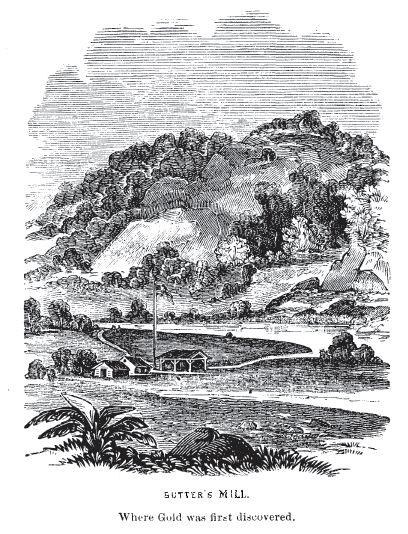
Not documented / unverified: Whether Joaquin Murrieta existed as a single person is disputed by historians; some believe the name covered several men, and some believe he was largely invented by Ridge. The story that American miners whipped Murrieta, assaulted his wife, and hanged his brother comes from Ridge’s novel and later retellings, not from contemporary records. The claim that the head displayed in San Francisco was Murrieta’s was never verified, and the head was reported lost in 1906. The image used with this article shows Sutter’s Mill, where the Gold Rush began — no portrait of Murrieta is known to exist.