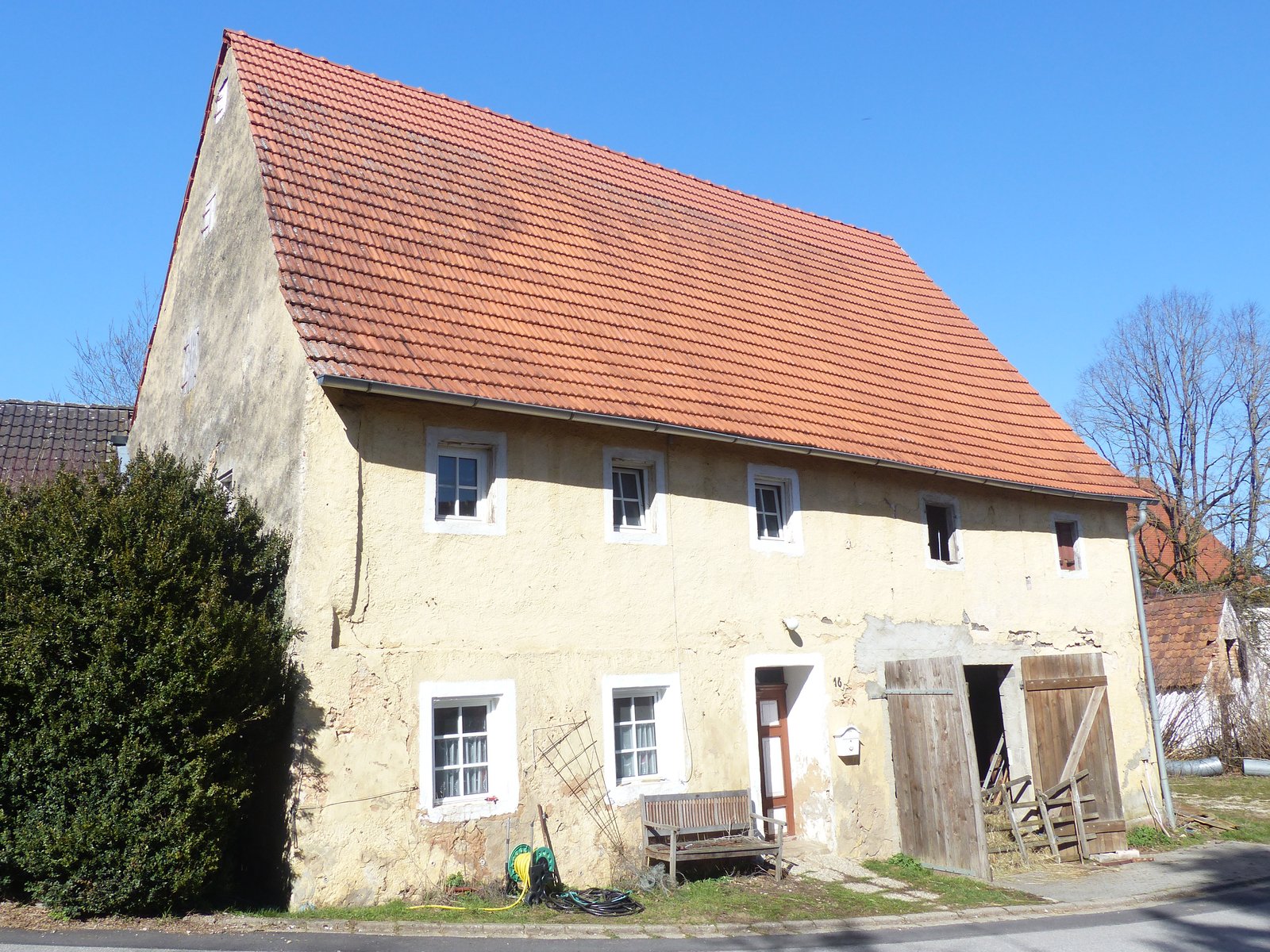
Hinterkaifeck was not a village. It was a single farmstead, standing about a kilometre behind — “hinter” — the hamlet of Kaifeck, near Gröbern in Bavaria, roughly 70 kilometres north of Munich. Six people lived there in the spring of 1922: Andreas Gruber, aged 63, and his wife Cäzilia, aged 72; their widowed daughter Viktoria Gabriel, aged 35; Viktoria’s children, Cäzilia, aged seven, and Josef, aged two; and their maid, Maria Baumgartner, aged 44, who had arrived at the farm only the day before.
On the evening of Friday 31 March 1922, all six were killed. Their bodies were not found until Tuesday 4 April. More than a century later, no one has ever been charged with their deaths, and the case remains one of the most discussed unsolved crimes in German history.
The strange days before
In the days before the killings, Andreas Gruber told several neighbours that something was wrong at the farm. In fresh snow he had found footprints leading from the forest to the farm’s machine room — and, as he described it, no footprints leading back out. He had also found a newspaper from Munich on the property that no one in the household had bought, and that no one nearby subscribed to. One of the farm’s two house keys had gone missing. At night the family heard footsteps in the attic; Andreas searched with a lamp and found no one.
These accounts come from what Andreas told neighbours, and from statements taken afterwards. They were not reported to police at the time, and the footprints themselves were not preserved for later examination. They are part of the record because witnesses repeated what Andreas had said — not because investigators were able to verify the tracks themselves. That distinction matters, because the footprints have become one of the most retold details of the case.
There was an earlier warning, too. The family’s previous maid, Kreszenz Rieger, had left the farm about six months earlier. She later said she had heard unexplained noises in the house, including footsteps in the attic, and had come to believe the farm was haunted. Her account was recorded long after the events, and it is reported here as her recollection, not as an established fact.
Four days of silence
On Saturday 1 April, young Cäzilia did not arrive at school. On Sunday, the family did not appear at church, where Viktoria sang in the choir. A mechanic who came to repair an engine found no one there, and the postman noticed mail accumulating.
On Tuesday 4 April, neighbour Lorenz Schlittenbauer, concerned by the silence, went to the farm with two other men, Jakob Sigl and Michael Pöll. Finding the front door locked, they went to the barn. There they found four of the bodies — Andreas, Cäzilia, Viktoria and young Cäzilia — lying together, covered with hay and a broken door. Inside the house, they found the other two: Maria Baumgartner and two-year-old Josef, in their beds.
All six had been killed with a mattock, a heavy farm tool with a pick-like blade. The autopsies, conducted on 5 April by court physician Dr. Johann Baptist Aumüller, found that all six had died from blows to the head. The mattock was found hidden in the loft of the barn when the farmstead was demolished in 1923.
The scene held a further, unsettling detail. Whoever had killed the family appeared to have stayed on the farm for several days afterwards. The animals had been fed. Food had been eaten. Neighbours reported smoke rising from the farmhouse chimney over the weekend. The killer, it seemed, had not fled into the night but had remained in the house of the people he had killed, keeping the farm running.
No money or valuables had been taken, which argued against robbery as a motive. That, and the apparent familiarity with the farm and its routines, led investigators to consider that the killer knew the household — but knowing the farm and knowing the family are not the same thing, and the investigation never established either.
The investigation
The nearest large police force was in Munich, about 70 kilometres away, and the investigation was led by Munich inspector Georg Reingruber. It was hampered from the start. By the time police arrived, neighbours, onlookers and others had already moved through the farm, and the scene had been badly disturbed. Evidence that might have been recovered in the first hours was lost.
Over the course of the investigation and its later re-examinations, more than a hundred people were considered as possible suspects. Among them was Lorenz Schlittenbauer, the neighbour who had led the discovery of the bodies. He was suspected in part because of a long-standing connection with the family — he was said by some to be the father of young Josef — and because his behaviour at the scene struck some observers as odd. That suggestion about Josef’s father has never been proved, and Schlittenbauer was never charged. The suspicion attached to him says more about the pressure on investigators to find someone than it does about his guilt.
Another early suspect was Adolf Gump, identified within days of the murders because of his links to a far-right paramilitary organisation, the Freikorps Oberland. He, too, was never charged, and no evidence connecting him to the farm was established.
The family’s own history complicated the case. Years earlier, Andreas Gruber and his daughter Viktoria had been convicted in connection with an incestuous relationship; Andreas served a prison sentence, and Viktoria was also punished. This is a matter of court record, and it fed speculation about motive — including suggestions that Josef was Andreas’s son, and that the killings were connected to the family’s secrets. None of those theories was ever supported by evidence from the investigation, and they remain speculation. The conviction is documented; a link between it and the murders is not.
What the record shows
What is documented is this: on the evening of 31 March 1922, six people — Andreas Gruber, Cäzilia Gruber, Viktoria Gabriel, her children Cäzilia and Josef, and the newly arrived maid Maria Baumgartner — were killed at the Hinterkaifeck farmstead in Bavaria; four bodies were found in the barn and two in the house when neighbours entered the farm on 4 April; all six died from blows to the head from a mattock; the farm’s animals had been fed and the house occupied in the days after the killings; nothing of value was taken; and despite an investigation that considered more than a hundred suspects, no one was ever charged.
What is not documented is who killed them, in what order, or why. The footprints in the snow, the newspaper no one had bought, the missing key and the noises in the attic are reported in the words of the people who described them; they were never verified by police at the time. The suggestions that a neighbour fathered Josef, or that the family’s past explained the murders, are unproven. In 2007, police academy students re-examined the surviving file and concluded it could not be solved with the material that remained; they did not publicly name a suspect. The investigation had formally been closed in 1955, with final interrogations as late as 1986. A century on, Hinterkaifeck remains unsolved — not for lack of attention, but because the evidence that survives cannot carry the case to an answer.
Sources
- https://en.wikipedia.org/wiki/Hinterkaifeck_murders?wprov=sfti1
- https://www.mentalfloss.com/crime/chilling-story-hinterkaifeck-killings-germanys-most-famous-unsolved-crime
- https://casepin.org/case/hinterkaifeck-murders-1922
- https://www.forfoxs.com/2026/03/the-hinterkaifeck-murders-who-made.html
- https://theghostinmymachine.com/2014/11/10/unresolved-the-hinterkaifeck-murders/