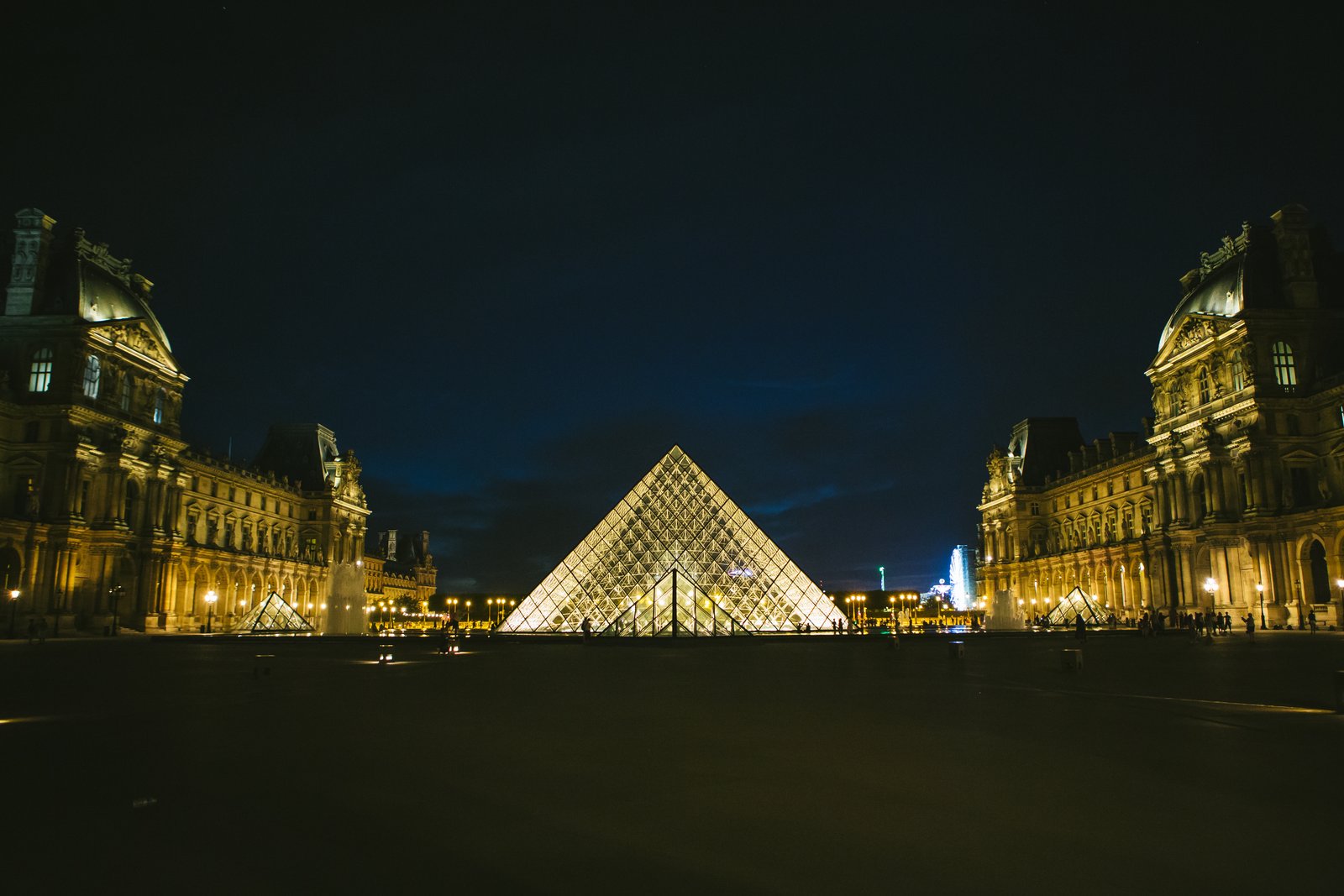
On the morning of Monday, 21 August 1911, the most famous painting in the world disappeared from the wall of the Louvre in Paris — and for more than a day, nobody noticed. There was no smashed glass, no alarm, and no chase through the streets. A man who had once worked in the museum simply lifted Leonardo da Vinci’s Mona Lisa off its pegs, walked out through a service door, and carried it home to his small Paris apartment, where it stayed hidden for over two years.
It is often described as the greatest art theft of the twentieth century.
A worker who knew the building
The thief was Pietro Vincenzo Antonio Peruggia, born on 8 October 1881 in Dumenza, a small village in northern Italy near the Swiss border. He had moved to Paris in 1908 and found work at the Louvre as a decorator and glazier, cleaning and reframing paintings. Part of his job involved building protective cases for artworks, including very likely the one that held the Mona Lisa.
By the summer of 1911, Peruggia was no longer employed at the museum, but he still knew its routines, its stairways and its staff entrances. On 21 August, a Monday, the Louvre was closed to the public for its weekly closure day during the summer holidays, and the building was nearly empty. According to Peruggia’s later account to police in Florence, he entered at around 7 a.m. through the door used by museum workers, wearing one of the white smocks that Louvre employees customarily wore. In that smock, he was indistinguishable from the other workers coming in that morning.
The quiet morning in the Salon Carré
The Mona Lisa hung in the Salon Carré, between Correggio’s Mystical Marriage and Titian’s Allegory of Alfonso d’Avalos. When the room was empty, Peruggia lifted the painting — a modest wooden panel measuring about 53 by 77 centimetres — off the four iron pegs that held it to the wall. He carried it to a nearby service stairway, where he removed the protective glass and frame, hiding the discarded pieces behind some student artworks stored on the landing.
How he got the panel out of the building is one of the details on which accounts differ. Some early reports said he hid it under his smock, but Peruggia was only about 160 centimetres tall, and the panel was too large to conceal that way. According to the account recorded in his interrogation, he used a service door: a plumber, believing him to be an employee, unlocked it for him, and he walked out with the painting. He then hid it in his apartment in Paris, in a trunk with a false bottom.
The theft was not discovered until the following day, when a painter who had come to copy the Mona Lisa found an empty space on the wall. At least sixty police officers searched the Louvre. It would take more than two years.
A hunt that caught the wrong people
The investigation that followed was wide, frantic, and, for a long time, wrong. The poet Guillaume Apollinaire was arrested in September 1911 after being linked to an earlier theft of two small statues from the Louvre, and the painter Pablo Picasso was questioned in connection with the same matter. Both men were eventually cleared.
Peruggia himself was questioned twice by police in the autumn of 1911. Officers visited his apartment, and on one occasion a detective finished writing his report while leaning on the very table under which the painting was hidden in a cavity. Peruggia had left a thumbprint on the glass that had protected the painting, and his fingerprints and photograph were already in police files from an earlier arrest. But the police forgot to add his name to the list of fingerprints to be checked against the records, and he was not treated as a prime suspect.
The letter from Florence
After more than two years, it was Peruggia’s own impatience that ended the mystery. In late 1913 he wrote to Alfredo Geri, an art dealer in Florence, signing himself “Leonardo Vincenzo” and offering to bring the painting to Italy for a reward of 500,000 lire. Geri contacted Giovanni Poggi, the director of the Uffizi, who authenticated the painting. Police then arrested Peruggia at his hotel in Florence. Sources differ slightly on the date, giving 11 or 12 December 1913; the arrest itself is not in doubt. The painting was exhibited in Italy for several weeks — crowds of tens of thousands turned out to see it in Florence — before being returned to the Louvre in January 1914.
Patriot or profiteer?
Peruggia’s motive has been disputed ever since. At his trial in Florence in June 1914, he said he had acted out of patriotism: he wanted to return the painting to Italy, believing it had been stolen from Italy by Napoleon during his campaigns. The court accepted this to some extent and gave him a lenient sentence of one year and fifteen days; on appeal he served only seven months.
Historians have questioned that version. Leonardo da Vinci himself had brought the painting to France as a gift for King Francis I in the sixteenth century, some 250 years before Napoleon was born — so the claim that Napoleon stole it was simply wrong. More tellingly, Peruggia had tried to sell the painting for a large reward, and in letters to his father written months after the theft he spoke of making his fortune in one stroke.
Peruggia was released from prison, served in the Italian army during the First World War, and spent two years as a prisoner of war. He later married, had a daughter, and returned to France, where he worked again as a painter-decorator. He died of a heart attack on 8 October 1925 — his forty-fourth birthday — in Saint-Maur-des-Fossés, outside Paris. He never profited from the theft.
What the record shows
- Documented: Peruggia stole the Mona Lisa from the Louvre on 21 August 1911, hid it in his Paris apartment for over two years, and was arrested in Florence in December 1913 after contacting the dealer Alfredo Geri. He was sentenced in June 1914 to one year and fifteen days and served seven months. The painting was returned to the Louvre in January 1914.
- Documented: The police questioned Peruggia twice in 1911 without identifying him as the thief, and a thumbprint he left on the glass was never matched because his name was omitted from the fingerprint checks. Apollinaire was arrested and Picasso questioned; both were cleared.
- Disputed: Peruggia’s motive. He claimed patriotism; the court and the letters he wrote to his father point to profit as well. The Valfierno mastermind theory is unconfirmed, resting on a single 1932 article.
- Uncertain: Some details of how he left the museum — whether the painting was hidden under his smock or simply carried out through a service door — differ between accounts, and sources give 11 or 12 December 1913 for the arrest.