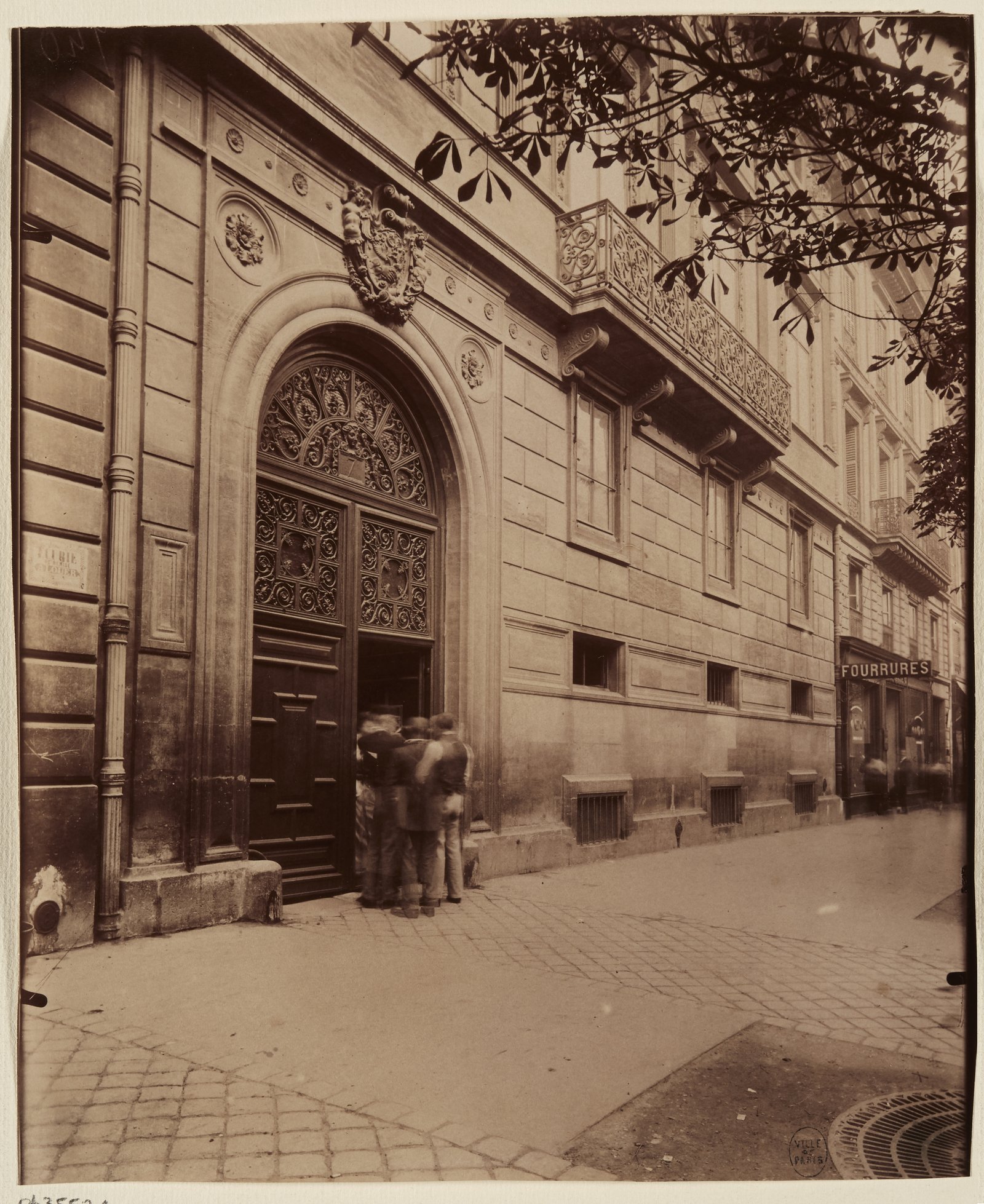
It was the most famous robbery of the decade, and it took less than an hour. On the night of 2 October 2016, during Paris Fashion Week, Kim Kardashian was alone in her suite at the Hôtel de Pourtalès, an elegant private residence-hotel on rue Tronchet in the 8th arrondissement of Paris. Men dressed as police officers forced their way in, bound her at gunpoint, and took jewellery worth more than $6 million — including a diamond engagement ring worth about $4 million. They left her locked in a bathroom, unharmed but terrified. She would later call it the most terrifying experience of her life.
The robbery made headlines around the world, not only because of who the victim was, but because of who the robbers turned out to be. When the case finally came to trial, nearly nine years later, the defendants were mostly men in their 60s and 70s. The French press gave them a nickname that stuck: “les papys braqueurs” — the grandpa robbers.
The night at the Hôtel de Pourtalès
Kardashian was in Paris for Fashion Week, staying at the Hôtel de Pourtalès, a discreet building with no visible security, no doorman and no reception desk in the usual sense — the kind of place chosen precisely because it was private. Her bodyguard had gone out with her sister, and she was alone in the apartment.
Shortly after 2 a.m., five men arrived at the building. Two of them, dressed as police officers, forced the night receptionist to take them up to Kardashian’s apartment, holding him at gunpoint. Inside, they bound her hands and feet with zip ties and tape, put her in the bathroom, and took the jewellery: a diamond ring, a necklace, earrings, watches and other pieces, worth more than $6 million in total. The most valuable single item was the 20-carat diamond engagement ring she had received from her then-husband, Kanye West, valued at about $4 million.
The men left within minutes. Kardashian freed herself and called her bodyguard. The police were called, and the investigation began. The robbers had been careful — they wore gloves and left little forensic evidence — but they had made mistakes. One of them left DNA on the tape used to bind Kardashian. Others were caught on CCTV, and on their phones.
The long road to trial
Arrests followed within months. The gang, investigators said, was led by Aomar Aït Khedache, a 69-year-old career criminal with a long record. Around him were men of a similar generation: former criminals, drivers, lookouts and fences, most of them in their 60s and 70s. The French press, noting their ages, called them “les papys braqueurs.”
But the case moved slowly through the French courts. Years passed. Some of the accused spent time in pre-trial detention. Others were released under supervision. It was not until May 2025 — eight and a half years after the robbery — that ten defendants finally stood trial in Paris, before a panel of three judges and six jurors.
Kardashian returned to Paris to testify in person on 13 May 2025, facing the men accused of robbing her for the first time. She told the court she had believed she was going to die that night. She also told Aït Khedache, the man identified as the ringleader, that she forgave him — while making clear that forgiveness did not erase what had happened to her.
The verdict
On 23 May 2025, the court found eight of the ten defendants guilty of crimes connected to the robbery, including armed robbery, kidnapping and criminal conspiracy, and acquitted two. Aït Khedache received the stiffest sentence: eight years in prison, with five years suspended — three years to serve. Three others received seven-year sentences with five years suspended. The rest received shorter or mostly suspended terms, and one was fined on a weapons charge.
But none of the eight convicted defendants went back to prison. The court took account of the time they had already spent in pre-trial detention, and of their ages and health — the oldest defendant was 79 — and of the nearly nine years that had passed between the robbery and the trial. The chief judge, David De Pas, said the sentences “aren’t very severe,” and explained that the defendants’ ages and the long delay had weighed on the court’s decision. None of the convicted defendants appealed the verdict.
The story had one last chapter. In September 2026, a Paris court awarded Kardashian a symbolic €1 in civil damages — the exact amount she had asked for. Her friend Simone Harouche, who had been with her in Paris, also received €1. The night receptionist, who had been held at gunpoint and said he suffered lasting psychological consequences, received about €109,516, and the hotel received €50,000.
How the gang was caught
The robbers had been careful, but not careful enough. They wore gloves and left little behind, but one of them left DNA on the tape used to bind Kardashian, and the gang’s movements were caught on CCTV around the hotel. Phone records helped investigators piece together who had been where, and when. Arrests began within months of the robbery, and the net closed slowly over the following years, as the case moved through the French courts.
The trial, when it finally came, was one of the most watched in France in years. Cameras camped outside the Paris courthouse for the full three weeks. Kardashian’s testimony, on 13 May 2025, was broadcast and reported around the world — a celebrity, under oath, describing the night she believed she was going to die, and facing the men accused of doing it to her.
The robbery changed Kardashian’s life in ways that went beyond the courtroom. After the attack, she withdrew from public life for months, stopped posting on social media, and overhauled her security — no longer sharing her location in real time, travelling with a larger team, and avoiding the kind of discreet, unguarded hotel that had made the robbery possible. The Hôtel de Pourtalès, for its part, was exposed as a place with no visible security at all: no doorman, no reception desk in the usual sense, nothing to stop five men from walking in dressed as police officers and asking to be taken to a guest’s room.
For the men who carried out the robbery, the long delay before trial was, in the end, their good fortune. By the time they stood in court, they were old, some of them ill, and the years they had already spent in pre-trial detention counted against their sentences. The judge’s leniency was not mercy, exactly — it was arithmetic. Nine years had passed, and the law decided that was enough.
What was never recovered
Almost none of the jewellery has ever been found. The diamond engagement ring, the necklace, the watches — all of it vanished. Investigators believe at least some of the pieces were melted down or broken up and sold soon after the robbery, their stones separated from their settings. The ring, one of the most recognisable pieces of jewellery in the world, has never surfaced.
The case left its mark on the world Kardashian inhabits. After the robbery, she withdrew from public life for months, stopped posting on social media, and changed how she travelled and how she was protected. The Hôtel de Pourtalès, for its part, became famous for the wrong reason — a discreet address that had proved too discreet, with no security to stop five men from walking in dressed as police officers.
And the “grandpa robbers” became a strange footnote in criminal history: a gang old enough to be grandfathers, who pulled off one of the most lucrative robberies of the decade, and walked out of court as free men — because justice, in the end, took so long to arrive that the law decided they had already paid for it.
What is documented — and what is not
Documented: On the night of 2 October 2016, men dressed as police officers robbed Kim Kardashian at gunpoint at the Hôtel de Pourtalès in Paris, taking jewellery worth more than $6 million, including a diamond engagement ring valued at about $4 million. Ten people stood trial in Paris in May 2025; on 23 May 2025, eight were convicted and two acquitted. Aomar Aït Khedache, identified as the ringleader, was sentenced to eight years with five suspended. Because of time already spent in pre-trial detention, none of those convicted returned to prison, and none appealed. In September 2026, a Paris court awarded Kardashian €1 in civil damages, the amount she requested. Most of the jewellery has never been recovered.
Unverified or unproven: The exact fate of the stolen jewellery — investigators believe some pieces were broken up and sold, but no recovered piece has confirmed this. The full role of each member of the gang, including how the robbery was planned and who received the proceeds. Claims made in the press about the gang’s organisation beyond what was established at trial.
Sources
- https://www.lawcommentary.com/articles/kim-kardashian-awarded-1-euro-paris-court-2016-robbery
- https://entertainment.inquirer.net/611719/kim-kardashians-robbers-found-guilty-in-paris-wont-face-prison-time/amp
- https://usa.inquirer.net/172414/kim-kardashians-robbers-found-guilty-in-paris-but-wont-face-prison-time
- https://www.khaleejtimes.com/entertainment/kim-kardashian-symbolic-one-euro-paris-robbery