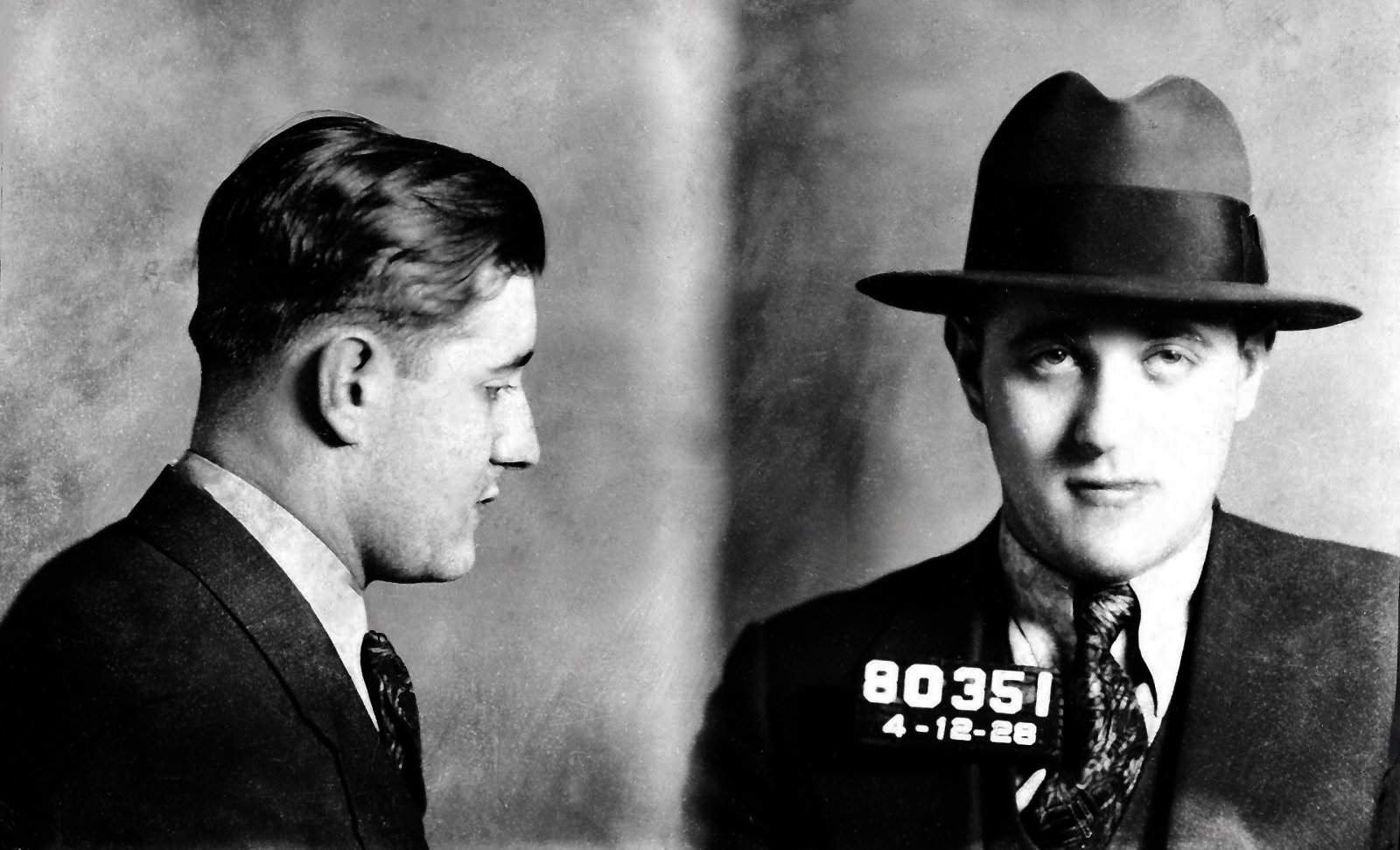
Benjamin “Bugsy” Siegel began as a street thug in Brooklyn and ended as the man who, more than anyone else, created modern Las Vegas. In between, he was one of the most feared hitmen in American organised crime. He was 41 when he was shot dead in a Beverly Hills living room in 1947. His murder has never been solved, and his dream — a luxury resort in the Nevada desert — outlived him by decades.
Brooklyn beginnings
Siegel was born in 1906 in Brooklyn, New York, the son of Jewish immigrants from the Austro-Hungarian Empire. He grew up in the Williamsburg neighbourhood, left school early, and by his teens was running with a gang that extorted pushcart vendors. He formed a close partnership with Meyer Lansky, a fellow Jewish gangster from the Lower East Side, and together they built a bootlegging operation during Prohibition.
Siegel’s reputation was built on violence. He was associated with Murder, Inc., the enforcement arm of the New York underworld, and was suspected of involvement in a series of killings in the 1930s — though he was rarely charged and never convicted of murder. The nickname “Bugsy” — from “bugs”, slang for crazy — was one he hated, and those who knew him used it at their peril. Its exact origin is disputed; one account says it came from his volatile temper, another from his recklessness.
The move west
In the late 1930s, Siegel moved to California, where he became the West Coast representative of the eastern crime syndicates, running gambling ships off the coast, bookmaking and the racing wire service. He lived in Hollywood, cultivated film stars, and presented himself as a legitimate businessman. In 1945, he turned his attention to Nevada, where gambling had been legal since 1931 and a small desert town called Las Vegas was beginning to grow.
Siegel saw what others did not: that Las Vegas could be more than a stopover for gamblers. He took over a stalled project, the Flamingo, a hotel and casino on what would become the Strip, and poured money into it — far more than anyone had planned. The Flamingo’s costs ballooned, reportedly from about $1 million to around $6 million, as Siegel demanded the finest materials, imported fixtures and a luxury finish that the desert had never seen. The money came from the eastern syndicates, and they were watching.
The Flamingo and the fall
The Flamingo opened on 26 December 1946, in the middle of a rainstorm, and it lost money from the start. The opening was a disaster — the hotel was unfinished, the weather was bad, and the high rollers Siegel had promised did not come. Within weeks, the casino was closed for renovations, and Siegel’s backers in New York were demanding answers about where their money had gone.
Siegel reopened the Flamingo in the spring of 1947, and this time it began to make money. But it was too late. On the evening of 20 June 1947, Siegel was sitting in the living room of the Beverly Hills home of his girlfriend, Virginia Hill, reading a newspaper, when a gunman fired through the window. He was hit several times and died almost instantly. He was 41. No one was ever charged with the killing.
The legacy
Within a few years, the Flamingo was profitable, and Las Vegas grew into the city Siegel had imagined — a place where luxury hotels, casinos and entertainment drew visitors from across the country. Siegel did not live to see it. His murder is usually attributed to his fellow gangsters, angered by the Flamingo’s cost overruns and the suspicion that he had skimmed money from the project, but no evidence has ever been produced to prove who ordered or carried out the killing.
Siegel’s Hollywood years were part of the act. He lived in a grand house in Beverly Hills, counted film stars among his friends, and presented himself as a sportsman and businessman. His girlfriend, Virginia Hill — an Alabama-born woman with her own connections to the underworld, who had been a courier for the Chicago Outfit — moved in his circles and was with him in Las Vegas during the Flamingo’s construction. Hill was later called before the Kefauver Committee investigating organised crime, and her testimony — in which she denied knowing anything — became famous for its defiance.
The money behind the Flamingo came from the eastern syndicates, and the question of where it went has never been answered. The project’s costs rose far beyond its budget, and the syndicates’ accountants could not account for the difference. Whether Siegel skimmed the money, or whether the costs were genuine — the Flamingo was, by the standards of the desert, an extraordinarily lavish building — is still argued. What is certain is that the men who had financed the hotel were not the kind of investors who accepted losses gracefully.
What the record shows
- Benjamin Siegel was born in Brooklyn in 1906 and rose through Prohibition-era bootlegging in partnership with Meyer Lansky. He was associated with Murder, Inc., the enforcement arm of the New York underworld, but was never convicted of murder.
- In the late 1930s he moved to California as the West Coast representative of the eastern crime syndicates.
- In 1945–46 he took over the Flamingo hotel and casino project in Las Vegas. Costs rose from about $1 million to around $6 million. The Flamingo opened on 26 December 1946 and lost money at first; it reopened in spring 1947 and began to turn a profit.
- On 20 June 1947, Siegel was shot dead through the window of Virginia Hill’s home in Beverly Hills. He was 41. No one was ever charged.
- Disputed/unverified: The origin of the nickname “Bugsy” is not settled. The exact cost of the Flamingo varies between accounts. The claim that Siegel skimmed money from the project — the usual explanation for his murder — has never been proven, and no evidence has identified who ordered the killing.
- Unresolved: The murder of Bugsy Siegel remains unsolved.