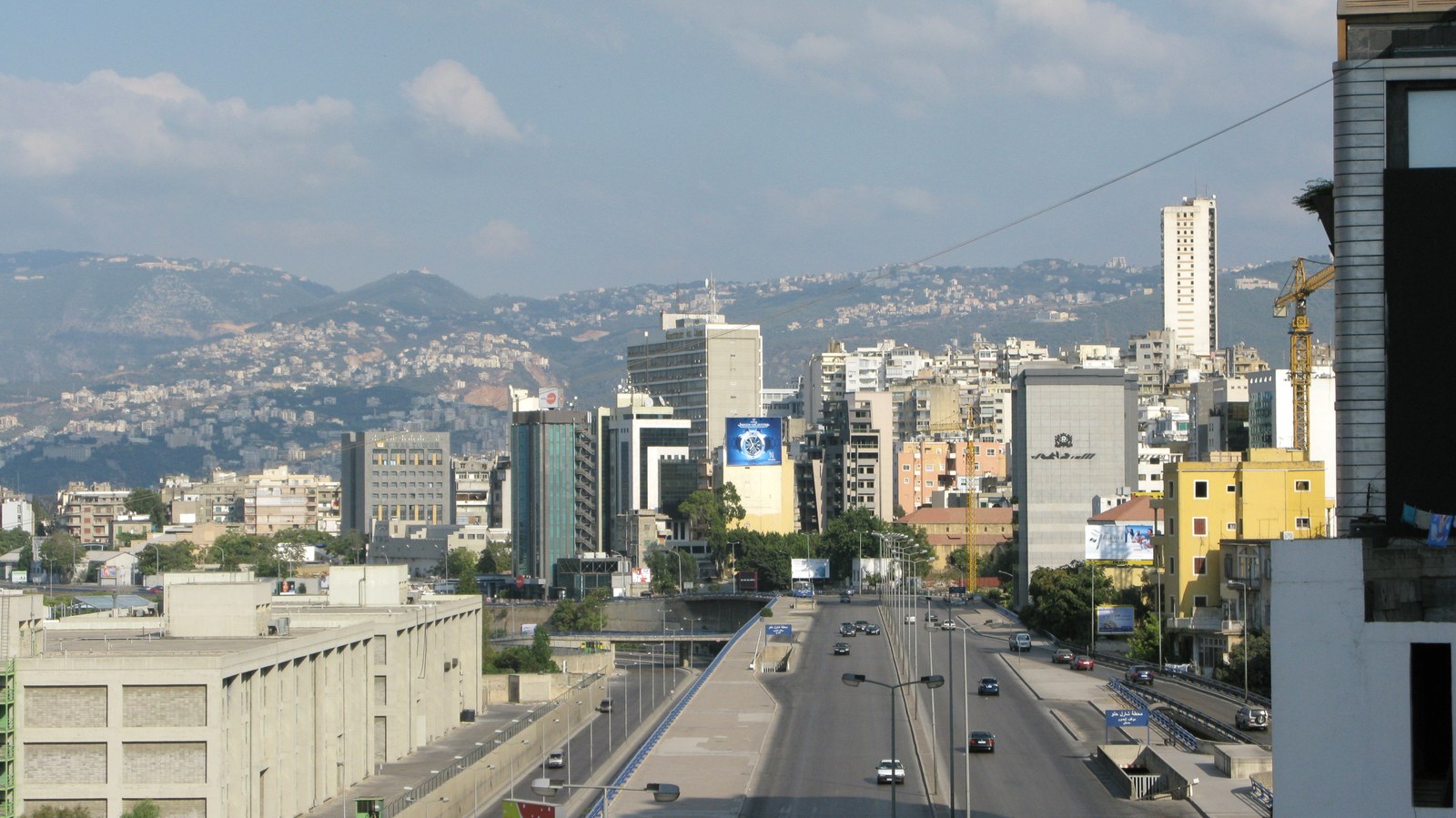
On the morning of Saturday 16 March 1985, Terry Anderson played tennis in Beirut. It was his day off. He was the chief Middle East correspondent for the Associated Press, and he had spent the morning on the court with Don Mell, an AP photographer. Afterwards, he drove Mell home. He stopped the car outside Mell’s house, and before he could drive away, armed men surrounded the vehicle. They dragged Anderson from his car at gunpoint and forced him into a Mercedes. He was blindfolded and beaten. By the time the car drove away, he had become a hostage.
Terry Alan Anderson was born on 27 October 1947 in Lorain, Ohio, and grew up in Batavia, New York. He served with the United States Marine Corps as a combat correspondent in Vietnam, then became a journalist, reporting for the Associated Press in the United States, South Africa, and Japan before being assigned to Lebanon in 1982. He was thirty-seven years old when he was taken, a veteran reporter in a city at war. He would not see freedom again for almost seven years.
A city at war
Beirut in 1985 was in the middle of the Lebanese Civil War, a conflict that had begun in 1975 and would last until 1990. The city was divided, its streets were dangerous, and Westerners were leaving. Four days before Anderson was kidnapped, on 12 March 1985, the United States had ordered Americans working for international agencies to leave Beirut. Anderson and other journalists stayed. They believed their work mattered, and they believed, as journalists often do, that their neutrality would protect them. It did not.
Anderson’s captors were members of the Shia Muslim group Hezbollah, operating under the name of the Islamic Jihad Organization. The group was supported by Iran, and its campaign of hostage-taking was aimed, in part, at driving American military forces and influence out of Lebanon. Nearly one hundred foreigners were seized during what became known as the Lebanon hostage crisis, and Anderson became its longest-held victim.
He was not the only American taken. Over the following years, Hezbollah and its allies abducted academics, priests, diplomats, and other journalists. Among them were Thomas Sutherland, an academic at the American University of Beirut, and Father Lawrence Jenco, a Catholic priest. Terry Waite, the envoy of the Archbishop of Canterbury, arrived in Lebanon to try to negotiate Anderson’s release and was himself taken hostage. Anderson was held longer than any of them.
Two thousand four hundred and fifty-four days
Anderson was held captive for two thousand four hundred and fifty-four days, six years and nine months. He was moved constantly, from one hiding place to another, to avoid detection by American intelligence and to frustrate any rescue attempt. He was kept in about twenty different locations in Beirut, in South Lebanon, and in the Bekaa Valley. He was blindfolded, chained to a wall, beaten, and threatened with death. He was often kept in solitary confinement for long periods, in barely lit cells, with little to eat and nothing to read.
He later described the conditions in his memoir, Den of Lions, published in 1993. He wrote of the beatings, the chains, and the guns held to his head. He wrote of the boredom and the fear, and of the small acts of defiance that kept him sane. He was, by his own account, a combative captive, and he fought with his jailers. He also wrote of the moments of humanity: the guards who were kind, the books he was allowed to read, and the Bible that Hezbollah leaders sometimes permitted him to keep. His Catholic faith, he said, was tested to its limits.
During his captivity, his life outside went on without him. His wife, Madeleine Bassil, a Lebanese citizen, gave birth to their daughter, Sulome, while he was a hostage. He did not meet his daughter until after his release. His sister, Peggy Say, became his most tireless advocate, lobbying the American government and the public for his freedom. She travelled, she spoke, and she refused to let the world forget him. Without her, and without the families of the other hostages, Anderson’s name might have faded from the news. It did not.
The politics of a hostage
Anderson’s kidnapping was never only about Anderson. His captors hoped to pressure the Reagan administration into secretly facilitating the illegal sale of weapons to Iran, a scheme that later became known as the Iran-Contra Affair. The administration had planned to use the proceeds from the arms sales to subsidise the Contra rebels in Nicaragua. The hostages in Lebanon were, in effect, bargaining chips in a much larger and more secret game.
The connection between the hostages and the arms sales was not publicly understood at the time. It emerged later, through investigations and revelations, and it remains one of the most troubling aspects of the case. Anderson himself learned about the world he had missed only after his release. He wrote in Den of Lions of hearing the news from a fellow hostage: the Berlin Wall falling, communism collapsing in Eastern Europe, free elections in the Soviet Union, and movement towards multiracial government in South Africa. He thought the man was joking. He had been locked away for so long that the world had changed without him.
The American government, for its part, maintained that it did not negotiate with terrorists, while at the same time engaging in secret dealings that the hostages’ families would later condemn. Anderson was not bitter in public, and he said he had forgiven his captors. But the record of the Iran-Contra Affair shows that his freedom, and the freedom of the other hostages, was entangled with policies and decisions that had nothing to do with them.
Release
Terry Anderson was released on 4 December 1991. He was the last of the American hostages to be freed in Lebanon. He had been held for six years and nine months, longer than any of his fellow captives. When he walked free, he was forty-four years old. His daughter was six. He had missed her entire childhood.
His return to the United States was a public event. He was welcomed home, he gave press conferences, and he appeared on the cover of Time magazine. He wrote Den of Lions, which became a bestseller, and he sued the Iranian government for his captivity. In 2000, a United States federal court found that Iran, through Hezbollah, was responsible for his kidnapping and imprisonment. He was later awarded a multimillion-dollar settlement, paid from frozen Iranian assets. The money could not return the years he had lost, but it was an acknowledgement, in law, of what had been done to him.
The life after
After his release, Anderson led a restless life. He taught journalism at several universities, gave public speeches, and at various times operated a blues bar, a Cajun restaurant, a horse ranch, and a gourmet restaurant. He struggled, behind the scenes, with post-traumatic stress disorder. He met with leaders of Hezbollah, the organisation responsible for his capture, although he said he never saw the faces of his actual captors. He forgave them, publicly and repeatedly, and he said so without bitterness. It was a position that surprised many people, and it was entirely his own.
Terry Anderson died on 21 April 2024, at his home in Greenwood Lake, New York, aged seventy-six. He died of complications from recent heart surgery, his daughter Sulome told the Associated Press. The AP’s obituary called him one of America’s longest-held hostages, and remembered him as a globe-trotting correspondent who had become a symbol of the plight of Western hostages in Lebanon. He had lived for thirty-three years after his release, longer than he had lived before his kidnapping, and he had spent those years telling his story, teaching, and trying to make sense of what had happened to him.
Why the case still matters
Terry Anderson’s kidnapping matters for two reasons. The first is the sheer length of it. Two thousand four hundred and fifty-four days is an almost unimaginable span of captivity. It is longer than most prison sentences for serious crimes, and it was inflicted on a man who had committed no crime at all. He was taken because he was an American, because he was a journalist, and because he was there. That is the whole of it.
The second reason is what the case revealed about the politics of hostage-taking. Anderson was not held by criminals seeking a ransom. He was held by a political movement, backed by a foreign government, as part of a strategy to pressure the United States. His freedom was tied to arms sales, to secret negotiations, and to a scandal that damaged an American presidency. He was, as the AP put it, a political pawn, and he knew it.
His memoir, Den of Lions, remains the most important first-hand account of the Lebanon hostage crisis. It is a book about endurance, about faith, and about the strange, small details of a life lived in a cell. It is also a book about journalism, about why a reporter stays in a dangerous city when everyone else is leaving. Anderson stayed because he believed the story mattered. The story, in the end, became his own.
What is documented — and what is not
Documented: Terry Anderson, Associated Press chief Middle East correspondent, was kidnapped in West Beirut on 16 March 1985 after playing tennis with AP photographer Don Mell; he was held for 2,454 days, six years and nine months, in about twenty locations in Beirut, South Lebanon, and the Bekaa Valley; his captors were associated with Hezbollah and the Islamic Jihad Organization; he was released on 4 December 1991, the last American hostage freed in Lebanon; he published the memoir Den of Lions in 1993; a United States federal court found Iran responsible for his kidnapping; he died on 21 April 2024 in Greenwood Lake, New York, aged seventy-six, of complications from heart surgery.
Not established: Anderson’s year of birth is given as 1947 by the Associated Press and Wikipedia, but some university and reference sources give 1949; the figure 1947 is used here, following the AP obituary. The precise role of the Iran-Contra arms dealings in prolonging or shortening his captivity is a matter of historical interpretation, not settled fact, and the exact number of hiding places is reported as about twenty in most sources.
Sources
- https://en.wikipedia.org/wiki/Terry_A._Anderson
- https://law.justia.com/cases/federal/district-courts/FSupp2/90/107/2479016/
- https://findingaids.lib.iastate.edu/spcl/manuscripts/MS272.html
- https://www.poynter.org/commentary/2024/associated-press-reporter-terry-anderson-lebanon-captive/
- https://www.wvlt.tv/2024/04/21/terry-anderson-ap-reporter-abducted-lebanon-held-captive-years-has-died/